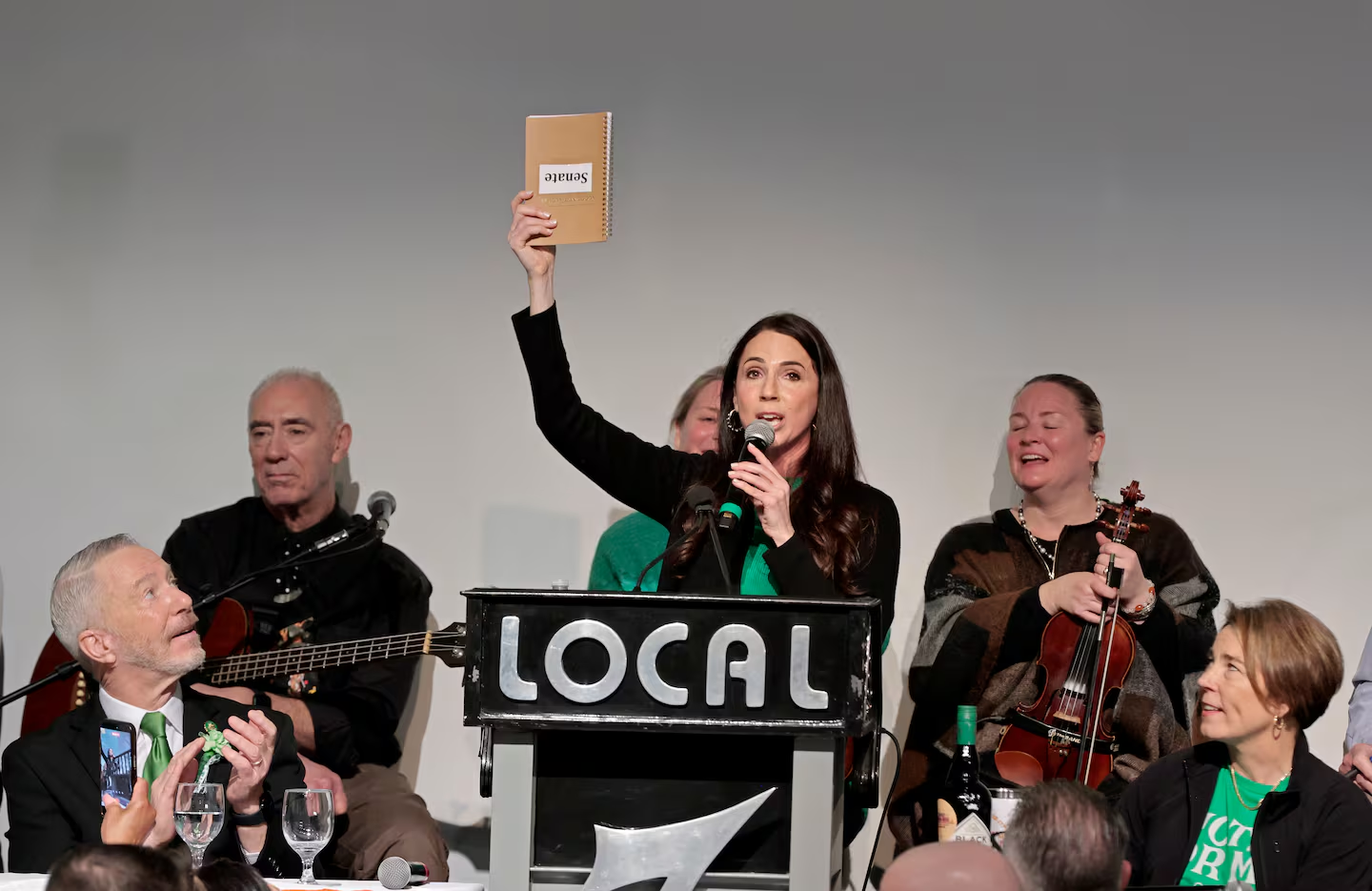
The fight on Beacon Hill over the legislative audit is a messy one. Here’s what to know.
State Auditor Diana DiZoglio’s effort to audit the state Legislature is a long, winding political tale that can be hard to keep track of — even for those plugged into Beacon Hill.
More than 72 percent of Massachusetts voters backed a ballot question in 2024 allowing DiZoglio to probe the Legislature. But in the year-plus — about 500 days actually — that it’s been law, most of the developments have involved DiZoglio and top Democratic leaders at the State House — and DiZoglio and Attorney General Andrea Campbell — waging messy and, at times, personal battles.
Here’s a rundown on the state of play in the legislative audit saga:
So what’s the law in the first place?
Massachusetts voters overwhelmingly approved a ballot question two years ago that granted DiZoglio the power to investigate the state Legislature, made up of 200 lawmakers between the House and Senate who write and make state law.
The idea of a legislative audit stretches back well before that vote. DiZoglio made probing the House and Senate a key part of her 2022 campaign for the auditor’s office, and announced her intention to start digging into the two legislative branches weeks into her term in 2023.
She was met with immediate pushback from state lawmakers, and eventually launched the ballot question campaign in a bid to explicitly get the authority under state law to crack open their books.
DiZoglio even embarked on a 141-mile walk across the state to promote the 2024 audit ballot question, and poured more than $100,000 of her own campaign money into it.
What’s actually at stake here?
Supporters of the legislative audit have used DiZoglio’s battle as a broader symbol of the fight for government transparency in Massachusetts, which is often considered one of the most opaque state governments in the country.
Part of the dispute revolves around the specific documents DiZoglio wants the Legislature to cough up.
In her most recent request, DiZoglio demanded that both chambers turn over their “official budgets.” She also wantscopies of other official audits and a list of “monetary” agreements with current and former employees since fiscal year 2021.
Legislative leaders argue that much of that information is already public. But they’ve argued that DiZoglio could seek to go much further, raising the prospect of treading on the constitutional limits meant to protect the branch.
Who is on either side of the issue?
It’s Democrats versus Democrats, with Republicans largely cheering on DiZoglio from the sidelines.
DiZoglio, a Democrat from Methuen, is leading the legislative audit charge. House Speaker Ron Mariano of Quincy and Senate President Karen Spilka of Ashland, both Democrats, oppose the legislative audit, arguing that DiZoglio’s push is unconstitutional and violates separation-of-powers principles between the two coequal branches of government.
Republicans — including the party’s two candidates for governor, Mike Minogue and Brian Shortsleeve — have used the legislative audit as a rallying cry in campaigns against elected Democrats.
And as the legislative audit has found itself mired in the courts, Campbell, a Democrat, has sparred with DiZoglio over various legal and procedural issues.
What’s the deal with DiZoglio and Campbell?
DiZoglio is trying to sue the Legislature to force it to comply with her legislative audit demands. But she has run into a roadblock in the form of Campbell.
Read more She hated her fifth-grade teacher. Decades later she decided to save his life.
Campbell has argued that only she can greenlight DiZoglio’s request for legal action, and has sought more information about the scope of DiZoglio’s proposed audit.
DiZoglio, however, in an attempt to circumvent Campbell and force Spilka and Mariano to hand over documents, filed a lawsuit directly with a single justice of the Supreme Judicial Court.
Campbell maintained that DiZoglio had no authority to file the legal challenge with the high court and described the lawsuit as “another ploy to sidestep the required approval of my office.”
The debate over whether DiZoglio has the authority to even sue lawmakers — let alone audit them — landed before the full Supreme Judicial Court this spring, and justices heard oral arguments last week.
How long will it take to figure this out?
It’s anyone’s guess.
The Supreme Judicial Court this month gave Campbell 30 days to decide whether she will represent DiZoglio in court.
In a letter last week, Campbell said she planned to let DiZoglio use an outside lawyer, though she wanted the auditor to drop her current lawsuit before the Supreme Judicial Court and file a new, narrower legal challenge.
DiZoglio said Monday she planned to refile her case to specifically seek a more limited set of documents focused on the Legislature’s budgets, audits, and agreements. She also said Campbell officially appointed labor attorney Shannon Liss-Riordan — and Campbell’s former rival for the attorney general’s seat — as DiZoglio’s “conflict counsel.”
It’s unclear how long it will take the high court to rule on DiZoglio’s legal gambit, and when, or even if, the Legislature will willingly participate in a probe of their business is an open question.
Why does DiZoglio care so much about a legislative audit?
DiZoglio is a former lawmaker who regularly bucked Democratic leadership in both the House and Senate. She has openly criticized Mariano, Spilka, and other legislators involved in the legislative audit since taking over the auditor’s office.
She argues the Legislature is a secretive body that often makes consequential decisions behind closed doors. By opening up their books, DiZoglio contends, lawmakers will be forced to be more transparent and accountable for their actions.
Mariano and Spilka push back on that characterization. Top lawmakers pledged this session to make more committee votes and testimony public, changed internal rules to give more notice before hearings, and reworked the legislative calendar to avoid the end-of-session rush to reach deals on major bills.
The House also passed a rule to let DiZoglio pick an independent auditing firm to conduct a probe of the chamber’s finances.
The Legislature is not subject to the state’s public record or open meetings laws, though DiZoglio is pushing a separate ballot question this year that would subject the House, Senate, and governor’s office to the public records law. (But that’s a whole other story.)
Material from earlier Globe reporting was used in this report.


Post Comment