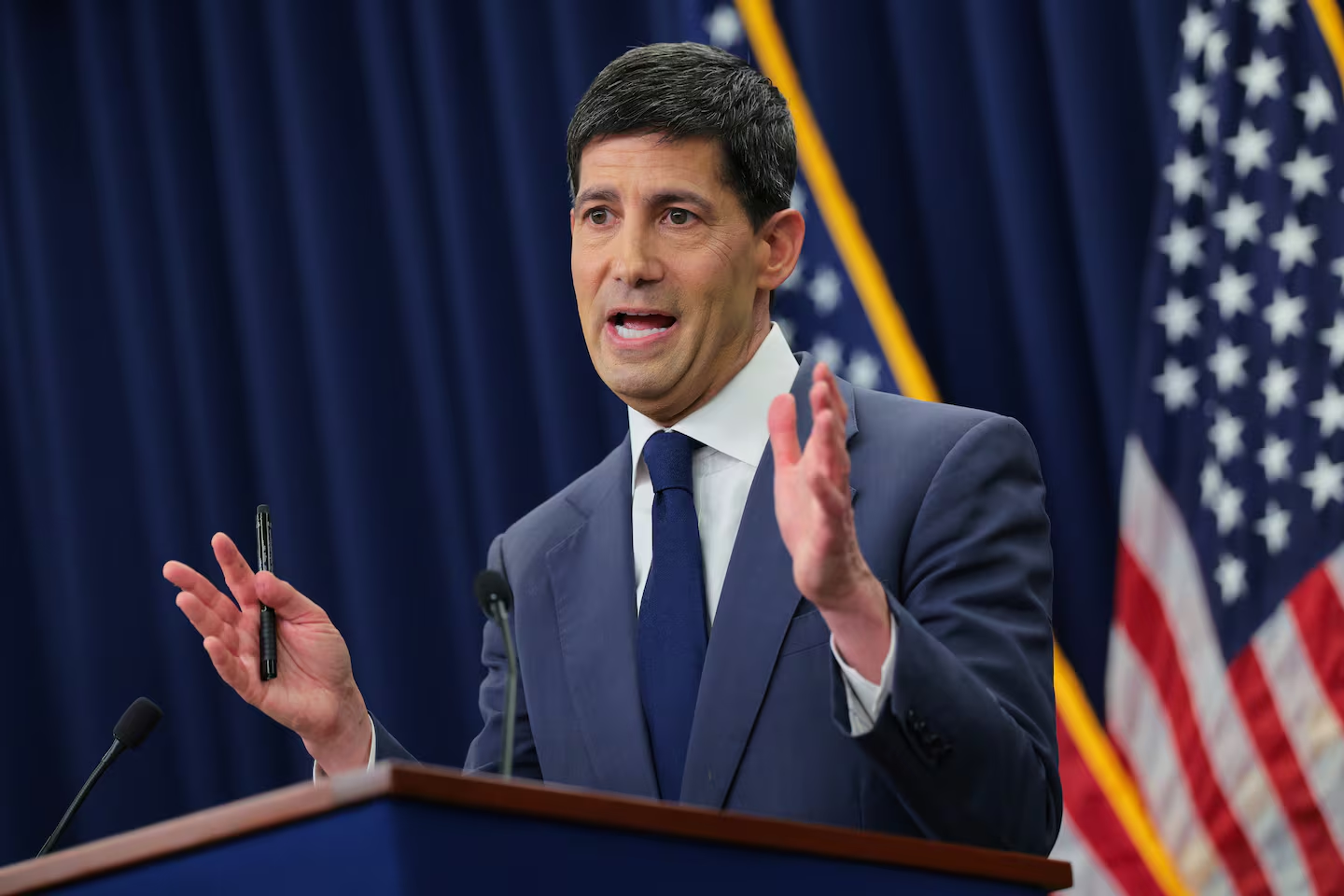
A terse new Fed chief delivers no interest rate cuts or guidance on when they might come
WASHINGTON — In his first news conference as Federal Reserve chair on Wednesday, Kevin Warsh showed he’s a man of few words.
Read more New England’s own Caroline Harvey goes No. 1 in PWHL Draft to the Goldeneyes
Unfortunately for President Trump, who appointed Warsh in hopes of getting significantly lower interest rates, none of those words were “rate cut.”
In fact, about half of the members on the Fed’s rate-setting committee indicated the Central Bank’s next move might be an increase in rates by the end of the year to try to squelch rapidly rising inflation.
So, despite a change atop the independent central bank, the seat remains hot as Warsh juggles Trump’s demands for lower rates with a US economy under strain from tariffs and the Iran war.
After a two-day meeting, Fed officials unanimously voted to hold their benchmark interest rate steady at a range between 3.5 and 3.75 percent as analysts had expected. The rate setting committee chaired by Warsh made the announcement in a terse written statement that was just 132 words — less than half of the 344-word statement issued in April after outgoing chair Jerome Powell’s last meeting.
Moreover, Warsh’s first post-meeting news conference was about 42 minutes long, down from the typical 50 to 60 minutes under Powell. The close-to-the vest style — eschewing any formal hints of future actions known as “forward guidance” — harkened back to the 1990s under legendary Fed Chair Alan Greenspan instead of the more open approach that began during the 2008 financial crisis.
“A change in leadership is a natural and timely opportunity to reaffirm [the Fed’s] mission, to review current practices, and to consider whether those practices best meet our objectives,” Warsh told reporters as he announced a series of task forces that will consider changes, including one on how the Fed communicates to the public.
One reason for not putting any forward guidance in the statement, or providing any of it himself, Warsh said, was the “elevated uncertainty” largely caused by the Iran war. With an interim deal between the US and Iran that would allow the flow of oil again from the Middle East, conditions are changing rapidly.
“We’ll be meeting again in six weeks,” Warsh said Wednesday. “I think we’re going to know more then.”
Warsh takes over from Jerome Powell, whose second four-year term as Fed chair expired on May 22. Trump leveled unprecedented public criticism at Powell for not lowering interest rates more aggressively. The Fed was uniquely designed by Congress to act independently and presidents in recent decades have taken a hands-off approach.
But Trump pressured Powell to resignand used the levers of government to turn up the heat. The Justice Department launched a criminal investigation last year into whether Powell lied to Congress about the Fed’s ongoing renovation of its Washington headquarters. Powell didn’t budge and even broke with tradition to remain on the Fed board after his term as chair ended. His term as a Fed governor expires in early 2028.
Told of the Fed’s decision while attending the Group of Seven summit in France, Trump told reporters, “It’s all right. Whatever.”
He said it was “hard to believe” the Fed might raise interest rates later this year, as some members indicated in the committee’s quarterly economic projections. But he expressed confidence in Warsh.
Warsh and Fed monetary policy officials are in a difficult situation amid rising inflation and broader economic turmoil caused by tariffs and the growth of AI.
“Donald Trump has put Kevin Warsh in a real box,” said Massachusetts Senator Elizabeth Warren, who led the Democrats’ opposition to his nomination. “Trump may want lower interest rates, but he has set up the economy where Warsh is going to have a real problem delivering on that.”
Read more Susan Collins laments Roe’s fall but doesn’t ‘regret’ confirming Kavanaugh
With Iran bottling up oil tankers in the Strait of Hormuz, gas prices have spiked in recent months and those higher costs have seeped into the economy. The consumer price index jumped to a 4.2 percent annual rate in May, the highest in three years and well above the Fed’s preferred 2 percent level.
In a Suffolk University/Boston Globe poll released this week, six in 10 Massachusetts voters said they were somewhat or very concerned about their personal finances. A third of respondents said the biggest hit to their finances was the cost of food and groceries, with 16 percent citing utility costs and 11 percent gasoline prices.
Fed officials try to look past temporary economic shocks, but there have been so many since the pandemic that forecasting is difficult, said Gregory Daco, chief economist at global consulting firm EY-Parthenon. In addition, those shocks have been to the supply of goods, such as oil, while monetary policy affectsdemand by consumers and companies through making loans more or less expensive.
“It’s complex because the Fed is having to deal with layered supply shocks that keep coming onto the US economy time after time after time,” he said. “From the Fed’s perspective, it’s very hard to calibrate monetary policy to deal with supply shocks.”
As the rest of the world has grappled with the higher oil prices from the Iran war, the European Central Bank and the Bank of Japan increased interest rates in the past week, although their rates still are lower than the Fed’s.
“When you see inflation picking up in the way it does, broadening throughout the economy … to us this is inflation that needs to be taken into account and that needs to be addressed,” ECB President Christine Lagarde told reporters after the rate hike to 2.5 percent last week.
Fed officials decided not to follow the ECB’s lead. But half of them indicated in their quarterly economic projections that the Fed’s benchmark interest rate would be at least a quarter percentage point higher by the end of the year.
Warsh, who has been critical of Fed projections, said he did not make one himself at the meeting as past chairs have done.
“For me, it’s not helpful in the conduct of policy,” Warsh said.
He has argued the Fed should say less about what it might do and his new communications task force will consider the future of those projections.
Diane Swonk, who follows the Fed closely as chief economist at audit and consulting firm KPMG, said the increased transparency in recent years has helped.
“There’s no easy answers about the economy right now, so to me, I think that it’s helpful to understand where the debate is shifting and how it shifts,” she said.
But Warsh offered little of that Wednesday. He also wouldn’t say if he had talked with Trump since being sworn in May 22. But Warsh confirmed hehas continued the long tradition of the Fed chair having breakfast with the Treasury secretary every week.
When asked directly why the Fed didn’t hike interest rates giving the rising inflation, he dodged the question. But when asked what he would tell an average American shopping for groceries, Warsh was more voluble and committed to getting inflation down to normal.
“What I would say to them is that we [the Fed]cannot have a very significant effect on particular prices,” he said. “But we do have a really important job there, and it’s to make sure that those changes in oil or beef or eggs or milk don’t broaden in the economy. … That’s our job, that’s our commitment, that’s our capability, and we’re going to deliver on it.”
Read more Takeaways from the G7: Trump’s new attitude toward allies buoyed by their praise for Iran deal


Post Comment