Recreational weed brings in nearly $300 million a year in taxes. What if a Mass. ballot initiative kills the industry?
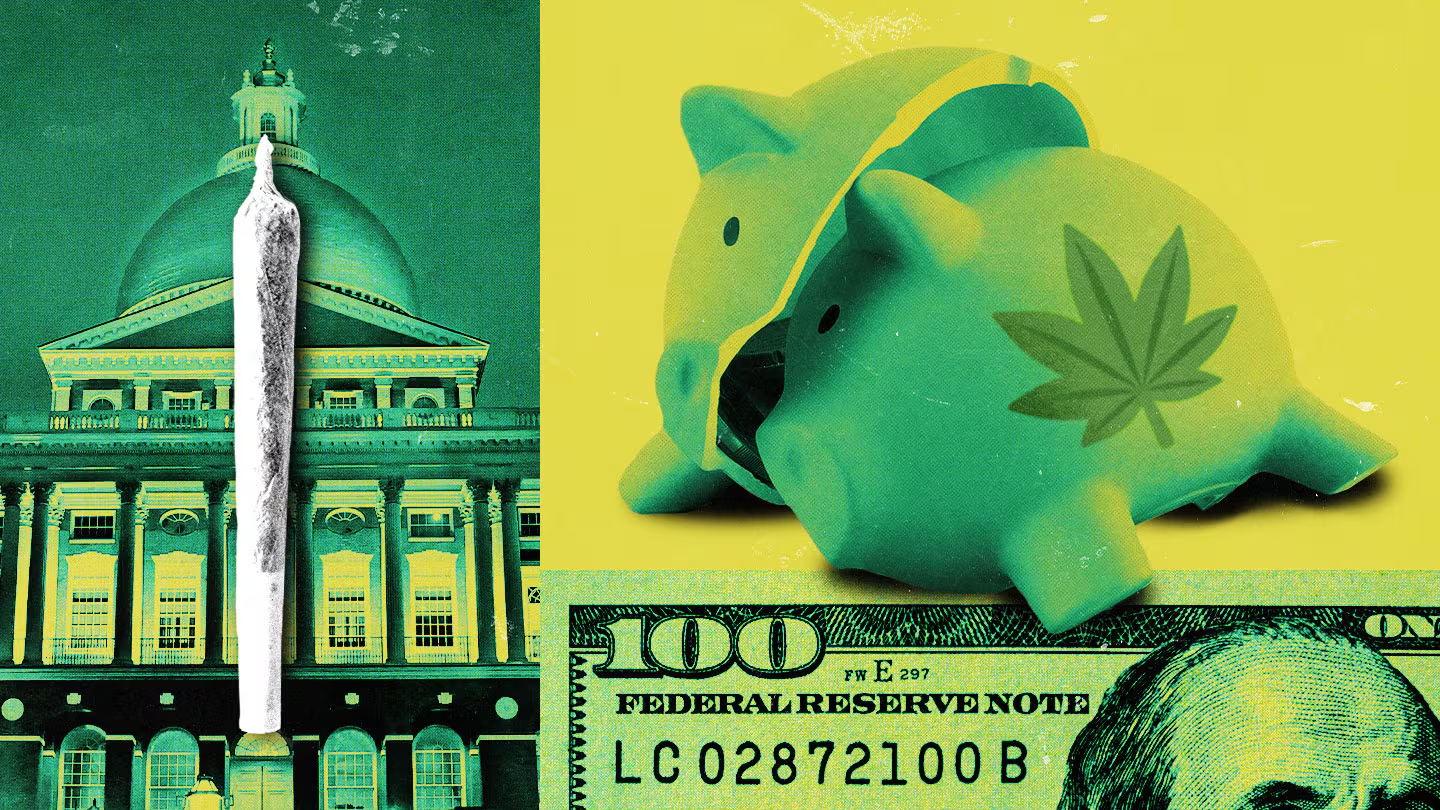
Tax revenue from recreational marijuana, one of the state’s most highly taxed consumer products, could vanish if a November ballot question seeking to eliminate the industry succeeds.
Read more She hated her fifth-grade teacher. Decades later she decided to save his life.
Last year, weed taxesraised $289 million for state government, the same as cigarettes — and nearly three times more than alcohol. Towns and cities, meanwhile, collected $50 million. Combined, cannabis taxes have almost surpassed$2 billion since pot shops opened eight years ago.
Pot taxes account for only around half a percent of Massachusetts’ total tax revenues, but losing that money could spell trouble for some towns and state efforts, especially addiction services. Surging inflation and health care costs are chokinggovernment budgets,prompting many towns and cities to ask voters for property tax overrides this spring.
“Like with every revenue stream in the Commonwealth, if you lose out on that . . . [the budget] gets squeezed,” said Jessica Troe, deputy director of research at Massachusetts Budget & Policy Center, a think tank.
The ballot initiative would end recreational cannabis sales, which are taxed at around 20 percent, but would allow tax-free medical marijuana to remain legal.
It remains to be seen how serious a threat the ballot question poses to the cannabis industry.The effort is backed by local and national groups that have raised safety questions about legal weed, while opponents of the measure argue repealing marijuana sales would put the market back under the control of unregulated, illegal dealers.
A recent poll found 63 percent of voters opposed the question. Repeal advocates must collect 12,429 more signatures by July 1 to qualify for the ballot.
State taxes
At the state level, pot taxes have funded the bulk of Massachusetts’ addiction services since 2019. Weed revenues also bolster the general budget, finance the state Cannabis Control Commission, and contribute to the Massachusetts Bay Transportation Authority and the Massachusetts School Building Authority.
“For a lot of jurisdictions, the tax revenue from cannabis was a very attractive feature [of legalization],” said Beau Kilmer, co-director of theRAND Drug Policy Research Center. “Massachusetts is also using this to offset some of the consequences associated with substance use.”
While pot sales have soared in recent years, prices have declined amid rising supply. Cannabis regulators have attempted to stop market free fall by recently approving a temporary freeze on new cultivation licenses, starting in June.
Last year, state excise taxes and fees from weed salesfunded over 70 percent of the budget for Bureau of Substance Addiction Services, Troe said. The bureaubankrolls recovery groups and oversees hundreds of treatment programs.
A Department of Public Health spokesperson said losing marijuana revenue could harm the bureau or other service areas, as rising costs and federal cuts have squeezed the budget.
Around 15 percent of cannabis excise revenues also pay for a social equity trust fund. Since 2024, the fund has designated over $57 million to be allocatedto cannabis entrepreneurs from communities disproportionately harmed by marijuana arrests.
“It would be devastating to lose access to that critical funding,” said Caroline Pineau, owner of Stem Haverhill, a dispensary that has been tapped to receive $800,000 from the fund.Pineau is also a plaintiff in a lawsuit arguing the ballot question overreaches by dismantling the social equity fund.
Local taxes
Towns and cities receive a 3 percent tax on pot sales. That money typically enters municipal general funds, paying for everything from firefighter salaries to road maintenance.
In many places,marijuana-related collections have either fallen or plateaued in recent years.
“A couple of first movers . . . really did gain a significant amount of money that they could use for local needs,” said Evan Horowitz, executive director for the center for state policy analysis at Tisch College of Tufts University, which has analyzed the upcoming ballot questions. “But that window’s closed.”
Boston, which raises the most cannabis taxes, took in $2.9 million for its general fund from marijuana levies last year. This marked an 18 percent drop in revenues from the previous year, according to state data. In Northampton, the state’s fourth biggest pot tax collector, revenues have dropped 30 percent since 2020.
Overall, local collections rose a modest 4 percent statewide, though state data project a 22 percent decrease this fiscal year.
Falling revenues have raised concerns among some residents about how they will fund their own public health initiatives.
Brookline — which opened Greater Boston’s first legal pot shop in 2019 — collected roughly $255,000 in marijuana taxes last year, an 86 percent drop in tax revenue since 2020.
The town’s marijuana taxes support the general budget, according to deputy town administrator Melissa Goff, which includes allocations for substance use and prevention work.
Brooklinerecently passed its sixth property tax override in roughly three decades, driven by rising costs.
Town Meeting member Susan Park said she’s unhappy with how cannabis revenues have been spent locally and not enough has been done to combat youth use.
Park said she has heard many community members express regret about allowing cannabis retail.
“It was a great tax opportunity for the town, but decisions aren’t black and white,” said Park,who previously led an initiative to cap the town’s nascent marijuana industry at four stores in 2023.
For years, the state has not allocated new funding to a public awareness campaign examining the health risks of marijuana health, despite such initiatives being required by state law to be funded with pot tax revenues, WCVB first reported in February.
Lawmakers allocated $3.7 million to the cause between 2019 and 2020, according to Massachusetts Budget & Policy Center, but none since. A supplemental state Senate budget released in April includes $1 million for this program, though it is still being reconciled with a House budget where that funding is absent.
Public health initiatives in Brookline received more than $1 million from marijuana companies in fees collected between 2017 and 2023, but those fees were subsequently ruled unnecessary by policy makers and ended.
Great Barrington, a small town in the Berkshires, is facing budget problems likely hastened by the decline in marijuana’s profitability, said Steve Bannon, chair of the Select Board and the School Committee.
Weed taxes accounted for over one-quarter of the town’s nonproperty tax revenues from 2020 to 2022, state data show. But as neighboring states andtowns rolled out pot shops, cannabis tax revenues declined 70 percent in three years.
This year, Great Barrington faces a $5 million shortfall. Voters last week shot down a proposed property tax override, which town officials said was needed to fund school district cost increases.
Marijuana taxes had previously offset rising costs and slowed the growth of residents’ property tax burdens, said Ed Abrahams,a former vicechair of the town’s Select Board.
To cover deficits, Bannon said the town must tap surplus funds, which once got a hefty boost from weed sales, but have become increasingly exhausted.
“We were spoiled at the beginning, but our eyes were wide open that it just wasn’t sustainable,” said Bannon. “Everything’s just come together at a really bad time.”
If recreational marijuana goes away, he said, it would “hurt, but wouldn’t be devastating for the town.”
In Fitchburg, eight weed shops and almost half a dozengrowers have helped boost the historic mill city’s tax revenues, said Mayor Samantha Squailia, who opposes the ballot question. One major grow facility, Revolutionary Clinics, shuttered in 2025, and one other pot shop failed to launch this year, she said.
Still, “when it comes to re-utilization of these old industrial spaces,” Squailia added, “cannabis did come and save the day.”
Read more Victor Wembanyama has 41 points, 24 rebounds and Spurs top Thunder double OT to open West finals


Post Comment