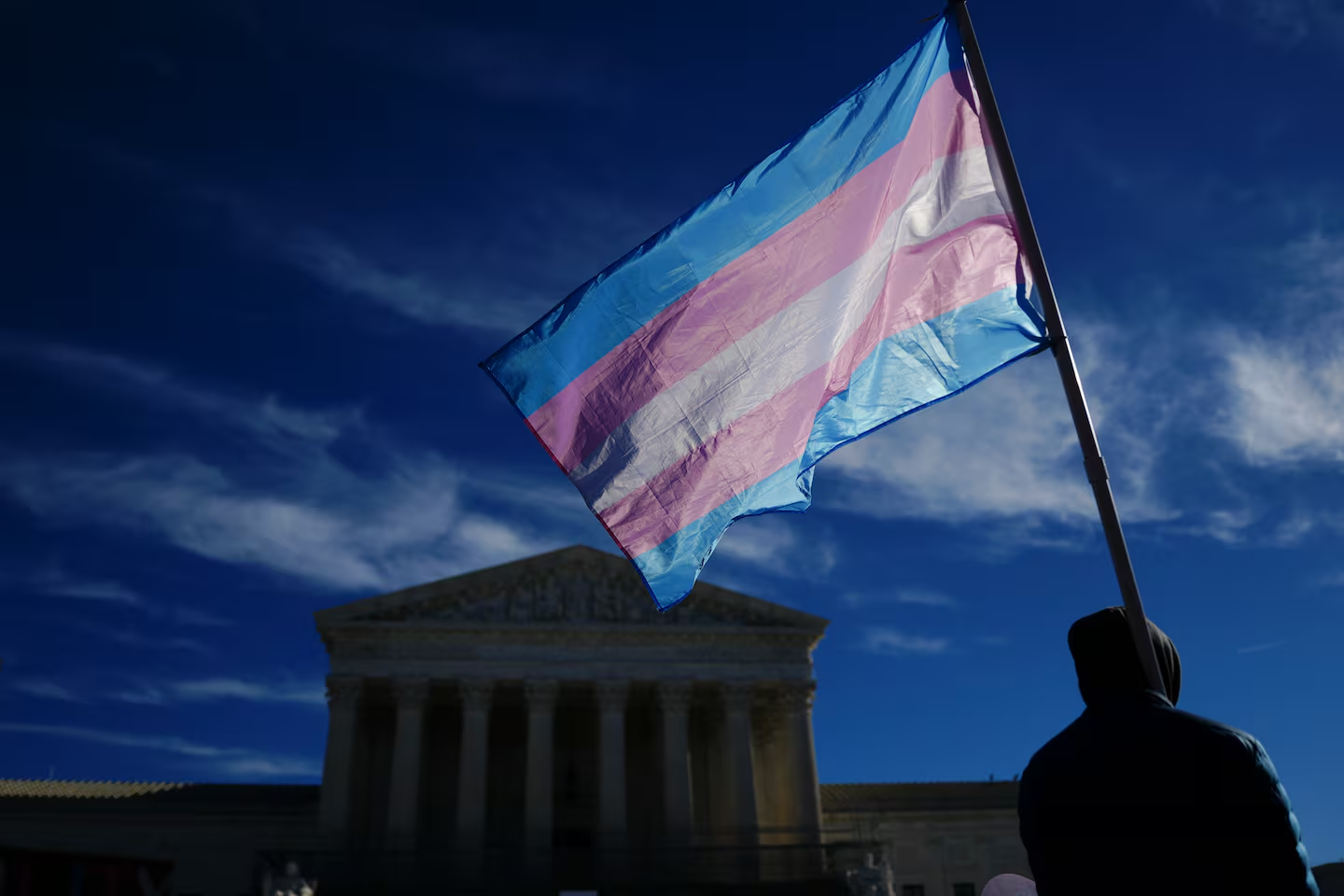
R.I. judge blocks DOJ from obtaining medical records of transgender youth, calling the demand a ‘drastic overreach’
PROVIDENCE — A Rhode Island judge blocked the US Department of Justice from obtaining medical records of transgender children and teens, hours before the deadline set by another judge for Rhode Island’s largest hospital system to hand the documents over.
Read more N.H. Senate committee guts Charlie Kirk act, replaces it with renewal of ‘divisive concepts’ law
In an order Wednesday evening, Judge Mary S. McElroy “quashed,” or voided, the subpoena the DOJ sent to Rhode Island Hospital in July 2025 demanding five years of medical records including the names, parents’ names, diagnoses, Social Security numbers and records of all minor patients treated for gender dysphoria.
The chief judge for the Northern District of Texas, Reed O’Connor, had previously ordered Rhode Island Hospital to comply with the subpoena by Thursday or face sanctions including being held in contempt.
The Trump administration has been trying to track down the records of transgender medical treatment of minors all across the country since last year, but has been blocked by judges in seven different federal districts, including Massachusetts. A federal grand jury has now subpoenaed NYU Langone hospital in New York City, the hospital system disclosed this week.
“The court determines that DOJ’s request for intimate medical details from one of this country’s most vulnerable populations constitutes a drastic overreach of its investigative authority,” McElroy wrote in a 24-page decision Wednesday.
McElroy slammed the DOJ for embarking on what she called a “fishing expedition” in the first place, and said it was issued for an “improper purpose in bad faith.”
She said the DOJ misled Judge O’Connor when asking him to enforce the subpoena on April 30, claiming that Rhode Island Hospital had not communicated with the DOJ about the subpoena since February. The hospital system and the DOJ had actually emailed about it two days prior.
“This reckless disregard for the duty of candor owed to a federal court is appalling,” McElroy said.
The Department of Justice did not immediately comment on the decision.
Previously, the DOJ had slammed Rhode Island Hospital for not complying with its demands to turn over records for “pediatric sex-rejecting procedures,” which prompted the agency to ask the Texas judge to enforce it.
McElroy’s order comes after a tense hearing on Tuesday where she laid into a DOJ attorney, Brantley Mayers, for “misrepresenting” the case to the Texas judge.
She also accused the DOJ of “shopping” the case to Texas despite the subpoena being issued to a Rhode Island hospital.
“We are at the end of our tether with the DOJ making false representations to this court,” McElroy said Tuesday, referencing a separate case where the federal government failed to disclose to Judge Melissa DuBose that an undocumented immigrant was wanted for murder in the Dominican Republic. Without that information, DuBose released the man, and now no one can find him.
Read more Aces trump Sun at Mohegan to keep Connecticut winless in WNBA
On Wednesday, McElroy wrote that “the discrepancy between the honorable conduct expected of federal prosecutors and DOJ’s tactics in this case is unsettling.”
She also criticized a senior attorney who was at the hearing and “sat silently by as his counterpart, a junior attorney who has been practicing law for approximately six months and had no relevant information, was forced to answer questions about DOJ’s blatant disregard for the proper course of negotiations.”
The DOJ has said its investigation is looking into alleged “misbranding” of FDA-approved drugs for non-approved uses, in this case, as puberty blockers for young people with gender dysphoria.
Doctors are legally allowed to prescribed FDA-approved drugs off-label, and commonly do so for conditions ranging from weight loss to cancer.
Mayers acknowledged Tuesday that off-label prescribing is legal, but said the agency was looking into whether pharmaceutical companies were providing “financial incentives” for the doctors to prescribe the drugs.
He said the DOJ preferred to get the names of the children and their parents so they could interview them in the case, though he acknowledged that the agency has settled for anonymous records in other states. In an affidavit filed Wednesday, DOJ attorney David Gunn said the agency was willing to receive anonymous records, but only if they could eventually “unmask” certain patients upon request.
McElroy rejected that as enough of a justification for the government to obtain the private medical records of transgender children in Rhode Island. She said the subpoena was issued in “bad faith,” rather than for a legitimate investigatory purpose.
“The administration has publicly characterized gender-affirming care for minors as abuse, directed the DOJ to bring its practice to an end, and celebrated when hospitals curtailed such programs as a result of this subpoena campaign,” McElroy said.
It was not immediately clear how the decision will affect the order from the Texas court. But McElroy said Tuesday that if she quashed the subpoena, it would no longer exist, and therefore the Texas court would have nothing to enforce.
The Rhode Island case was brought by the Child Advocate Katelyn Medeiros, who represents children in state care. Her office said turning over the records would violate the constitutional privacy rights of the children affected, and would out them as transgender to the Trump administration.
Read more Behind James Harden’s 30 points, Cavaliers rally past Pistons in OT for 3-2 series lead


Post Comment