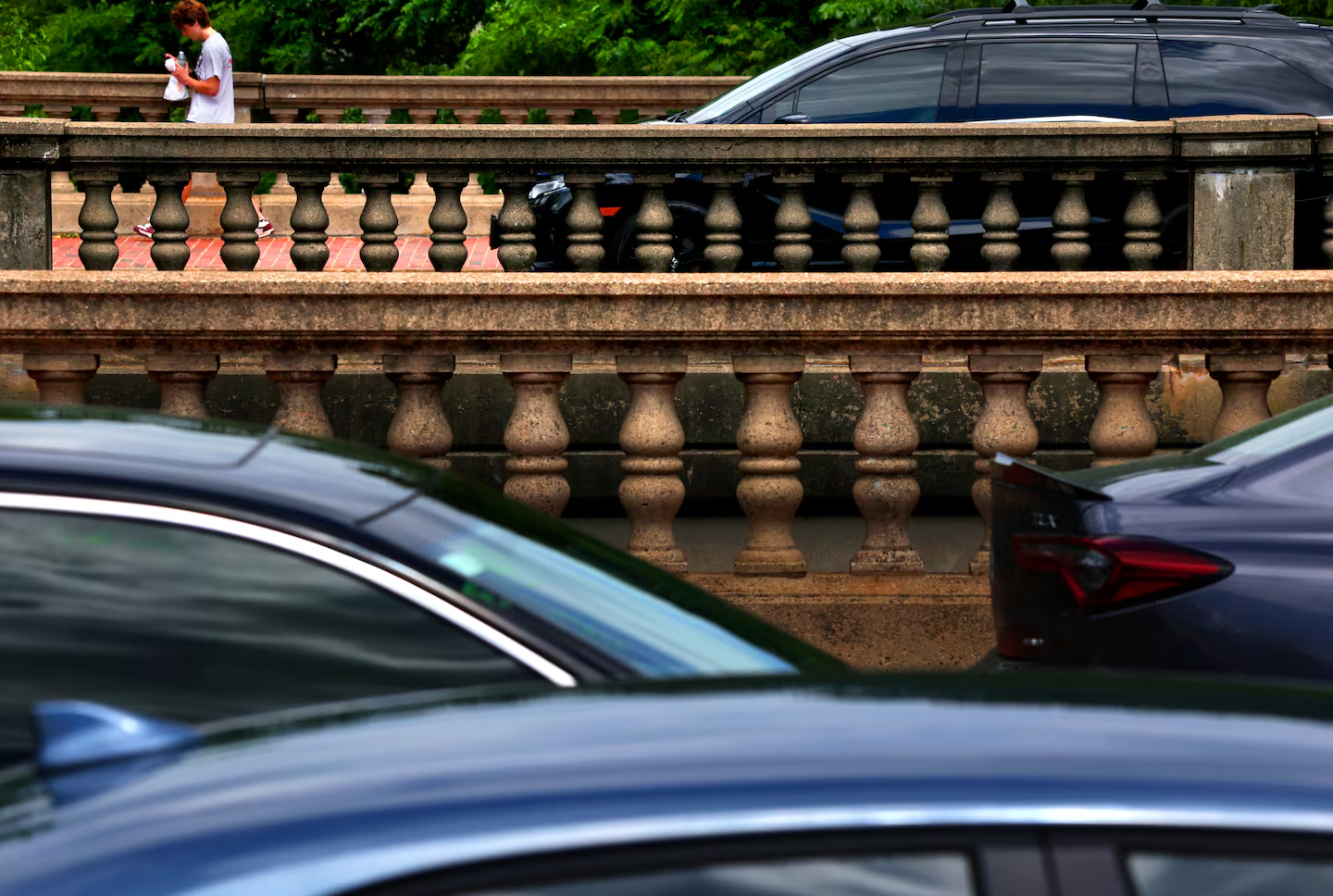
Most Mass. voters cool to congestion pricing, saying they oppose paying more to drive into Boston with less traffic
An overwhelming majority of Massachusetts residents said they would not want to pay extra to drive to downtown Boston if that meant less traffic, dealing a blow to the idea of introducing congestion pricing in New England’s largest city, according to a new Suffolk University/Boston Globe poll.
Read more Trump chose war. Vance gets the fallout.
Boston’s heavy traffic has long frustrated both commuters seeking to get into the city and climate activists who want to reduce reliance on cars to curb carbon emissions.
Under a city climate plan released in April, Mayor Michelle Wu said the city would study charging drivers to use roads in a bid to dissuade private vehicle trips.
More than 69 percent of the 500 registered voters surveyed in the Suffolk/Globe poll said they would not be willing to pay to drive to downtown Boston if there was less traffic. That far outpaced the 26 percent who said they would; 5 percent said they were undecided.
It’s not as if residents say driving around the state is getting any easier. Fewer than half of those polled — 46 percent — said their daily commutes have stayed the same over the last year, while another 32 percent said they had gotten “slightly” or “significantly” worse. Just 10 percent reported it had improved.
Patrick Mongeau, a second-grade teacher from Arlington, said he understands the arguments for policies to reduce traffic in Boston, but is not a fan of an extra fee to drive into the city.
He said he loves driving into Boston for events and concerts, and that for him, using his car is the “cheapest way” to get into the city.
“So making the cheapest way for me be more expensive . . . I would not love it,” said Mongeau, 42. “We don’t live close to any of the [train] stations. Getting to Alewife [Station] is almost as hard as getting to [Interstate] 93. There’s more traffic getting to Alewife than getting to 93.”
Wu’s climate plan includes a section of ideas to evaluate mechanisms to “reduce single-occupancy vehicle commuting,” including studying parking fees, tolls, and “congestion charges to discourage private vehicle trips, reduce congestion, and lower emissions.”
A spokesperson for Wu did not respond to a request for comment on the poll results and questions about whether the study had started.
Caitlin Allen-Connelly, the executive director of the advocacy group TransitMatters, said the pushback to a new fee on drivers could be a result of a “lack of awareness.” She pointed to the “success” New York City has experienced from congestion pricing.
In a January 2026 report, New York’s Metropolitan Transportation Authority said that 11 percent fewer vehicles entered the city between January and October of last year, and that the program had raised $468 million in net revenue through October 2025.
“There may be sort of a lack of information about what congestion pricing is . . . and what the benefits would be in terms of revenue,” Allen-Connelly said. “It could be a dedicated source for our . . . public transit system.”
New York City is the only major city in the United States that has enacted a comprehensive form of congestion pricing. Other areas in the country, such as northern Virginia, have dynamic pricing, where tolls or fees change in real time based on demand.
Lauren Brown, a 45-year-old chemistry professor at Boston University, said she drives into work from her Waltham home using Storrow Drive and supports congestion pricing. Brown said she noticed the benefits of having fewer cars on the road during the depths of the COVID-19 pandemic, when companies shifted to remote work and traffic thinned dramatically.
“Any sort of government incentive that can get us back into that scenario would make everyone’s life better,” Brown said. “I’d be willing to pay for [congestion pricing] because of other benefits.”
Brown said she would take public transit to work if it were more convenient.
“If the T were more reliable, I would use the T more to come in,” she said. “I really have stopped using it because of the service degradation over the years.”
In Massachusetts, some state lawmakers have pitched congestion pricing as a way to help the MBTA dig itself out of long-term financial problems.
But imposing new fees for drivers has drawn pushback from other political corners. Then-governor Charlie Baker called the idea “unfair” for drivers in 2019, and Governor Maura Healey rejected an idea floated by her former transportation secretary, Monica Tibbits-Nutt, to impose tolls on drivers crossing into Massachusetts.
A transportation funding task force that Healey set up in 2024 ultimately “contemplating” some changes, including “variable time-of-day pricing and congestion pricing models while considering example best practices, the cost of deployment and equity impacts.”
Peter Wilson, a senior policy director at Transportation for Massachusetts, said congestion pricing faces pushback because “no one likes to pay for something that they assume was already free.”
“It’s a difficult messaging thing to do,” he said. “But you also have to really focus on the results and the benefits and kind of make it tangible.”
Read more Most Americans see freedoms under threat but core to nation’s identity, AP-NORC poll finds


Post Comment