‘I couldn’t get in my own house’: Man fights to change R.I.’s abandoned property law
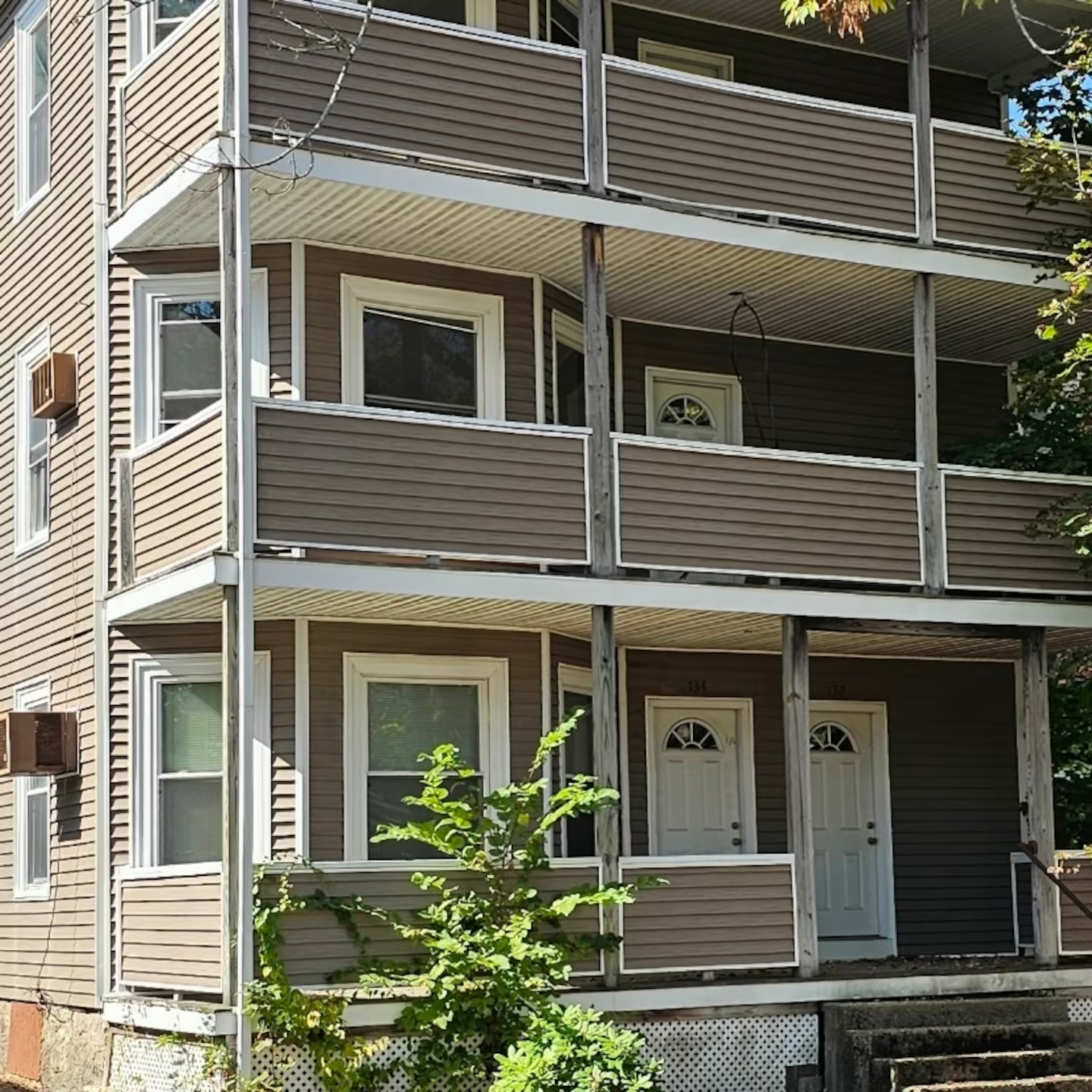
PROVIDENCE — ’s family has owned a triple-decker apartment building on Bennett Street in Woonsocket since 1974, and his father lived there until his death in February 2023.
While the vacant property has had a few code violations, Zagrodny said he had been in contact with Woonsocket officials, installed new siding, spent $3,000 to fix the chimney, and continued paying the property taxes.
So Zagrodny, who lives in Lincoln, was stunned when he visited the property in October and discovered that the locks had been changed. He said a notice — screwed to the new siding — informed him of a petition to appoint a receiver under the state’s Abandoned Property Act.
“I was shocked,” Zagrodny said in an interview May 5. “I tried my key in the lock, but my key wouldn’t fit. I couldn’t get in my own house. They locked me out, and I never got a warning.”
Now, Zagrodny is backing that amends the Abandoned Property Act, aiming to ensure that properties are actually abandoned and that owners are given adequate notice and the opportunity to address any issues before a receiver is appointed.
Representative June S. Speakman, a Warren Democrat, and Senator Jake Bissaillon, a Providence Democrat, have introduced the legislation. The voted May 5 to send the bill to the House floor this week.
RIHousing, the state’s quasi-public housing finance agency, is urging passage of the legislation, which would exempt the agency from the statute.
“When used appropriately, the receivership process under the Abandoned Property Act can be an important tool to help address blighted and problem properties,” RIHousing Executive Director Carol Ventura said in a statement. “However, when it is not implemented in alignment with the act as in recent years, homeowners unfairly risk the loss of their property and can incur thousands of dollars in expenses to defend against the faulty process.”
In written testimony, Ventura explained that the Abandoned Property Act allows municipalities, certain nonprofits, and neighboring landowners to intervene when a building becomes abandoned, unsafe, or in violation of building or minimum housing codes. The law allows the court to appoint a receiver to address those issues.
“However, in recent years, the absence of clear statutory standards has enabled the misuse of this process,” Ventura wrote. “Some entities have filed large petitions sweeping in dozens of properties at once — often without confirming whether the homes are actually abandoned or blighted.”
Ventura said the agency became aware of that problem when three homeowners with RIHousing mortgages found their properties included on one of these petitions. She said all of those homes had been purchased relatively recently and were in good condition with no code violations or other infractions.
Zagrodny said he received a notification about his property from a nonprofit called Helping Hands Community Partners. Between 2016 and 2025, Helping Hands filed at least 20 petitions that included hundreds of properties across the state, according to RIHousing.
In an interview, Bill Fegley, managing partner of Helping Hands, took no position on the legislation but defended the work of his Providence-based nonprofit.
Read more Wu: Fidelity returning to office 5 days a week is ‘great news’ for downtown Boston
“We are trying to do the right thing,” he said. “This is a way to get people to follow through on the commitment they made to the properties.”
As part of a “pre-receivership” process, Helping Hands locates abandoned homes and submits petitions to the court, he said. “The court does due diligence to see if the property is vacant and the status of the property,” he said.
If anyone is living in a building, the nonprofit will “drop it immediately,” Fegley said, and it looks to see if the homeowners have pulled permits to do work on the buildings.
“The court is not in the business of taking people’s property, nor is Helping Hands,” Fegley said. “The idea is to get things fixed.”
Abandoned buildings that are falling into disrepair can adversely affect neighbors and the surrounding community, he said.
With the state facing a housing crisis, Fegley said, “You can’t just build your way out of it. Our little part is trying to get people who own abandoned properties to fix them or move on from them.”
Attorney General Peter F. Neronha urged lawmakers to pass the bill. He said that while abandoned and derelict structures do pose public safety hazards, the current law fails to set out a clear process for determining whether a property is abandoned.
“This legislation would ensure the abandoned property statute is used as intended: to help cities and towns address problem properties and bring them back into productive use,” Neronha said in written testimony. “At a time when Rhode Island faces a growing housing crisis, it is especially critical that laws governing property use provide clarity.”
The bill would change the definition of “abandoned and public nuisance” to ensure that a property must first have been the subject of a notice of violation that the owner failed to address, Neronha said. The bill would also clarify that a receiver may not be appointed unless the owner has been notified of the petition, he said.
Zagrodny said he was forced to hire an attorney to appeal the petition for the Woonsocket building “despite the fact that my property is not abandoned and in fact I have invested significant resources into improving it.” He said he is still waiting to hear what has happened with the petition, and he is hoping to sell the property.
Zagrodny urged passage of the legislation, saying, “This bill will help to ensure that what happened to me will not continue to happen to other responsible property owners.”
Read more Campbell says she will let DiZoglio hire outside lawyer in audit lawsuit fight


Post Comment