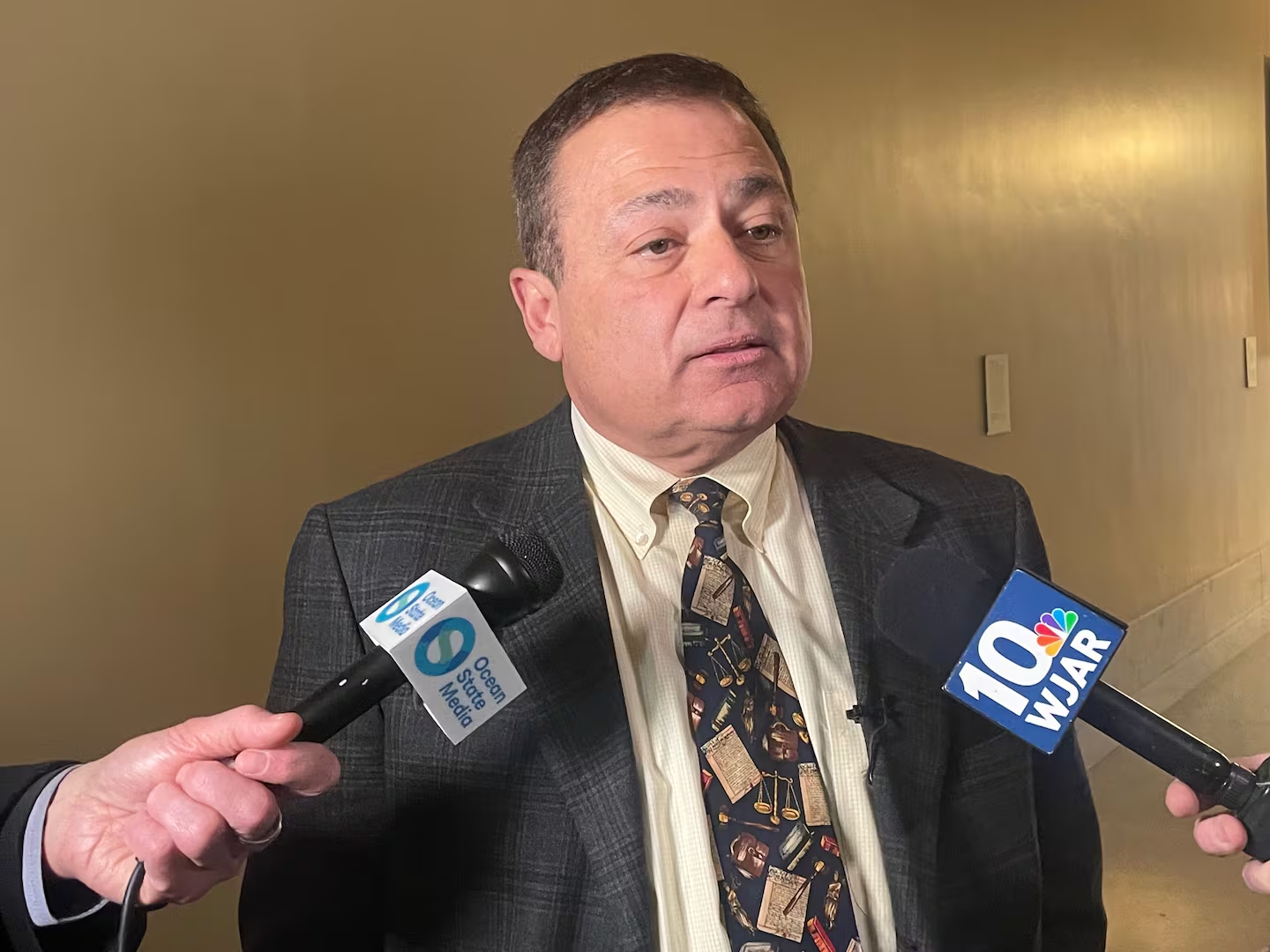
R.I. Ethics Commission will investigate complaint against former House Speaker K. Joseph Shekarchi
PROVIDENCE — The Rhode Island Ethics Commission on Tuesday decided to investigate a complaint that claims former House speaker K. Joseph Shekarchi violated the state’s “revolving door” ban by applying for a seat on the state Supreme Court.
The commission voted 6 to 1, with one recusal, to find that the complaint states facts that, if true, are sufficient to constitute an ethics code violation and to authorize a full investigation.
“An initial determination is a preliminary vote that should not be construed as an opinion regarding the truth of the facts alleged in the complaint but merely is a vote to conduct an investigation into the allegations raised,” commission Vice Chairwoman Holly J. Susi said.
Professor Michael J. Yelnosky, former dean of the Roger Williams University School of Law, filed the complaint, arguing that Shekarchi’s application to the Supreme Court “violated the code of ethics, which prohibits a state elected official, while holding state office and for a period of one year after leaving office, from seeking or accepting employment with any other state agency.”
Shekarchi, a Warwick Democrat, stepped down from the speaker’s position on May 7, while remaining in his House District 23 seat, as he applied for the seat left vacant by the retirement of Supreme Justice Maureen McKenna Goldberg.
Shekarchi has maintained that he did not violate the revolving door ban by applying to the Supreme Court. He has argued that the matter was settled in 2020 when another Warwick Democrat — then-Senate Judiciary Committee chairwoman Erin Lynch Prata — applied for a Supreme Court seat.
Ethics Commission staff concluded at the time that the revolving door provision of the state ethics code prohibited Lynch Prata from seeking a Supreme Court seat for a full year after leaving office. But the commission members voted 5-2 to reject the staff’s advice, opening the door for then-governor Gina M. Raimondo to appoint Lynch Prata to the Supreme Court.
Shekarchi has noted the Ethics Commission’s legal counsel, Herbert F. DeSimone Jr., disagreed with its staff in 2020, saying Lynch Prata could seek a Supreme Court seat because it’s a “constitutional court,” rather than a lower court.
Read more Wu, state officials reach deal on closing Summer Street ahead of World Cup matches
Yelnosky said the Ethics Commission never issued an advisory opinion that would set a precedent for Shekarchi’s situation. And the commission now has new members.
On Tuesday, Ethics Commission member Frank J. Cenerini, a retired state judge, cast the lone vote against conducting an investigation. Ethics Commission Chairman Loren E. Jones recused himself from the vote to avoid an appearance of impropriety because of his past business dealings with Shekarchi and because his law practice focused on appearing before the Supreme Court.
After Tuesday’s vote, Shekarchi said, “I have no comment until the Ethics Commission completes its due diligence.”
Yelnosky said, “I am pleased they have recognized that this is an open question. This is just an initial determination. The standard is whether my allegations describe a potential violation of the code, and they said that it did. I think that was the right decision. But it says nothing about how ultimately they will vote on the merits.”
John M. Marion, executive director of Common Cause Rhode Island, said that while it’s early in their process, the Ethics Commission vote is an important first step.
“Common Cause Rhode Island has long held that the revolving door prohibits legislators from seeking or accepting appointment to all state courts, including the Supreme Court, unless they’ve been out of office for a year,” Marion said. “We hope the Ethics Commission continues to agree with us as this moves forward.”
On July 28, the Judicial Nominating Commission plans to interview all five applicants for the lifetime appointment to the Supreme Court: Shekarchi, Superior Court Judge Luis M. Matos, Family Court Judge Laureen D’Ambra, Assistant Attorney General Christopher Bush, and attorney John E. Roberts.
Read more How Trump has used the presidency to benefit himself and his allies


Post Comment