Mass. House to vote on legislation subjecting the governor, but not itself, to state’s public records law
Facing a ballot question, a lawsuit from the stateauditor, and calls to broaden what they share with the public, the Massachusetts House on Tuesday unveiledlegislationDemocratic leaders said would make the Legislature more transparent, but stopped short of subjecting it to the state’s public records law.
Read more Wu, state officials reach deal on closing Summer Street ahead of World Cup matches
The new legislation, which the House plans to vote on Wednesday, would apply that law for the first time to the governor’s office, but not to lawmakers themselves, who are specifically exempt from following it.
Massachusetts is the only state in the country where the governor, Legislature, and judiciary all claim to be completely exempt from the state’s public records requirements.
Instead, the bill would create a new statute allowing the public access to a “legislative record,” a tranche of documents that includes a swath of information ranging from votes to calendars to fiscal reports — much of which the Legislature already publicizes.
House leaders indicated the proposal was a bid to stave off a proposal heading toward the November ballot that would apply the public records law to both the Legislature and Governor Maura Healey, who previously said she’s open to subjecting her office to the law with the “right exceptions.”
The bill also attempts to narrow specifically what state Auditor Diana DiZoglio is allowed to probe in the Legislature in a bid to head off litigation she filed to force lawmakers to comply with her audit demands.
Voters passed a ballot question in 2024 giving DiZoglio authority to audit the Legislature, but lawmakers have long resisted complying with her demands, contendingthat any such effort would violate the constitutional separation of powers between branches.
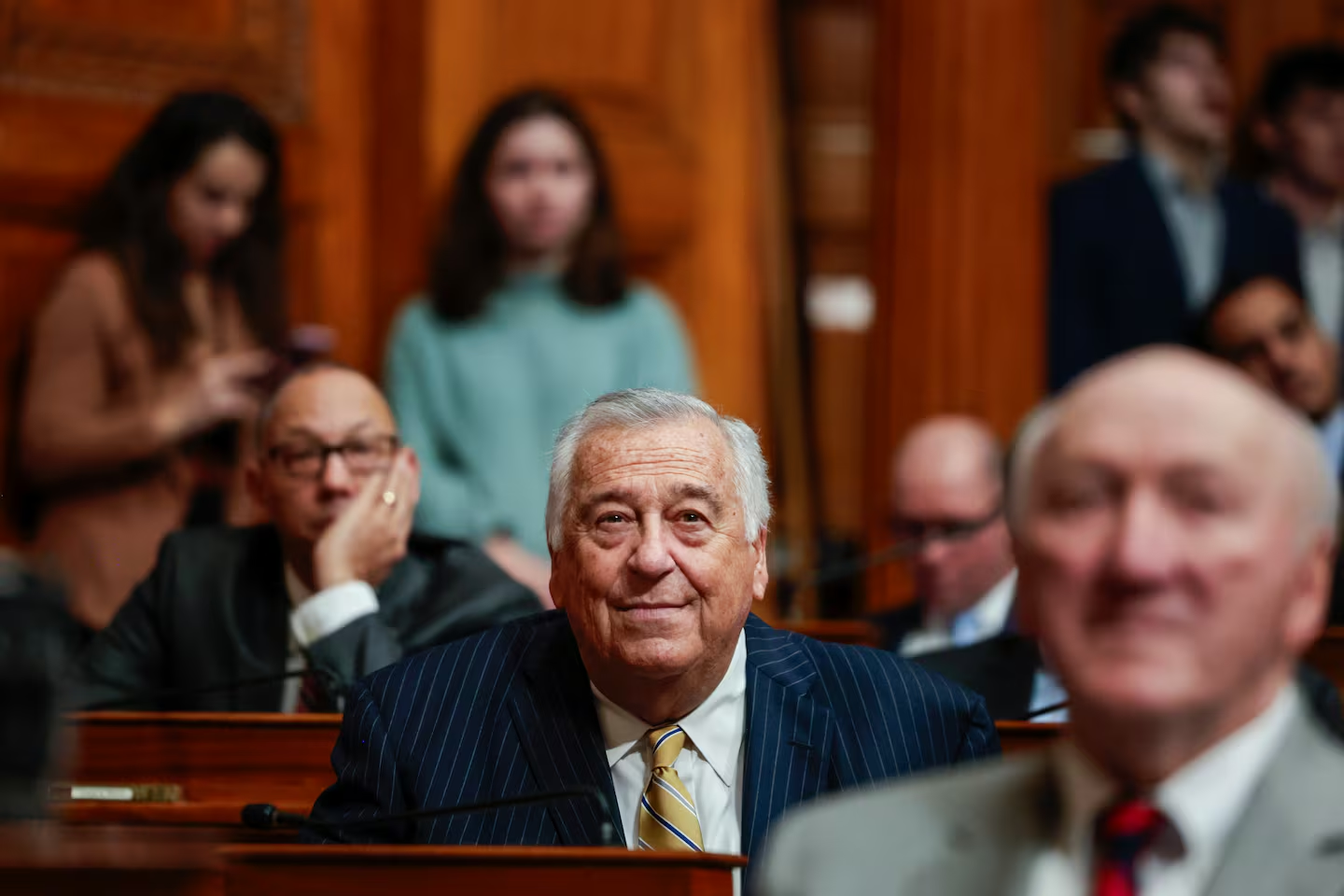
House Speaker Ron Mariano, a Quincy Democrat, said in a statement Tuesday thatthe bill would “increase access to public records from the executive and legislative branches, and establish a clear framework for legislative audits.”
The measures, he added, would both “ensure greater transparency while respecting legislative privilege and the separation-of-powers principles outlined in the state Constitution.”
“We hope this legislation will put an end to protracted litigation, address an issue that may otherwise come before voters on the ballot, and allow the Legislature to refocus on the real issues facing Massachusetts residents,” Mariano said.
Under the House bill, DiZoglio would need to put audit requests in writing to the “presiding officer” of the legislative branch or branches. Those officers would then have 60 days to respond with the requested records or an explanation for why they are not available.
More importantly, the bill would limit the scope of information the auditor couldexamine, which the House said they limited to align with parameters suggested by the Supreme Judicial Court.
Read more How Trump has used the presidency to benefit himself and his allies
Specifically, the auditor wouldonly be able to access information about “administrative functions” beginning in fiscal year 2021, which include the official budget for each chamber, copies of any official audit the Legislature conducts, all transactions “related to funds appropriated to the respective branch,” and all monetary settlement agreements.
DiZoglio has for months sparred with the lawmakers over the 2024 ballot question that would allow her to audit the Legislature.
The Massachusetts Senate voted last week to turn over records DiZoglio sought, though it clarified that it “does not concede” to an audit if senators believe it is unconstitutional.
DiZoglio quickly blasted the House’s effort, casting it as a figurative dumpster fire.
“With this proposed bill, and under the guise of transparency, your state representatives are not only throwing the 72 percent voter-mandated law in the dumpster — they’re taking a match and lighting that dumpster on fire, violating the People’s constitutional rights and undermining democracy,” DiZoglio said,referencing the share of voters who backed the 2024 proposal.
The bill also wouldrequire each chamber to appoint a “Legislative Records Access Officer” to coordinate records requests and “facilitate timely production.”
The bill dedicates $1 million to support “implementation costs,” giving $250,000 apiece to the offices of the governor, House, Senate, and Joint Legislative Operations to pay for technology upgrades, management systems, and staffing associated with the new measures.
The changes are aimed at neutralizing a question activists have fought to get on this fall’s ballot, with DiZoglio’s support.
The House legislation received support from a mix of groups that havesupported greater transparency from the Legislature, including the ACLU of Massachusetts, the Massachusetts Newspaper Publishers Association, and Common Cause Massachusetts, a nonpartisan good government group, whose leaders said the changes negate the need for the public records ballot question.
“Given the public’s demand for transparency, we believe this policy is best addressed directly by the legislature now to obviate the need for a ballot question,” said Geoff Foster, executive director of Common Cause Massachusetts. “Transparency is a tool to create strong legislation that serves our state. This approach puts the politics to the side and gets back to good policymaking.”
Read more White House correspondents’ dinner gets a second act after shooting



Post Comment