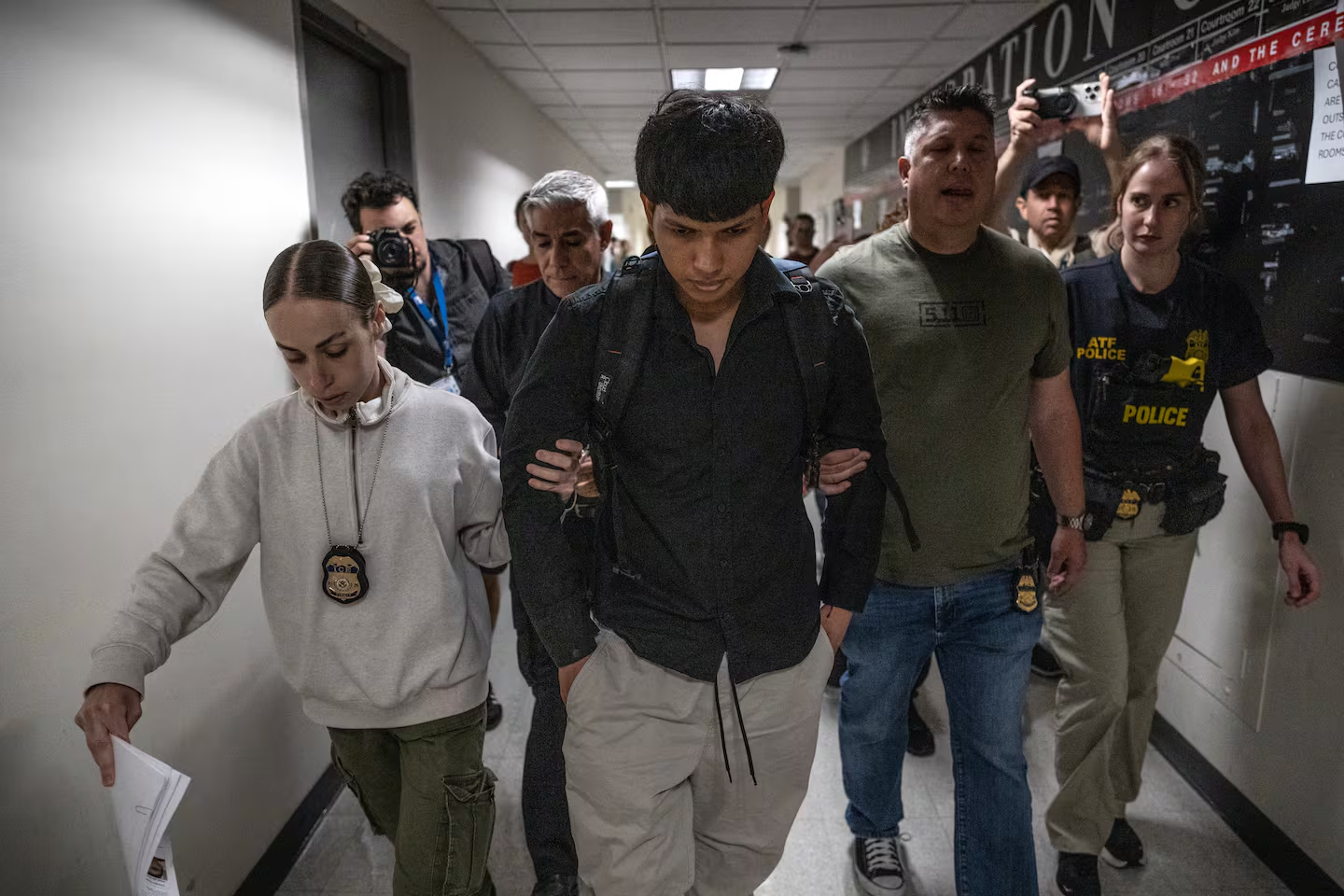
Trump squeezes immigrants by cutting them off from jobs, health care, and housing
WASHINGTON — For nearly three decades, Raquel Molina — an immigrant from El Salvador who has a valid Social Security number and permission to work in the United States — swabbed the toilets, wiped down the seats and vacuumed the aisles of airplanes at Boston’s Logan International Airport.
But last summer, Molina, 65, was abruptly fired from her $19.75-per-hour cleaning job, alongside dozens of other immigrants who have long legally worked at Logan. Her supervisor told her she no longer had clearance to enter secure areas at the airport. The Trump administration had decided that only U.S. citizens, green card holders and others with more permanent forms of residency should be granted access, according to a lawsuit that a labor union filed in federal court.
“I didn’t understand what was going on,” said Molina, who has been living legally in the United States under Temporary Protected Status, a humanitarian program that shelters people from troubled countries until they can safely return home. “I had worked hard at my job. This news put me in a state of shock.”
Her firing reflected a broader and methodically planned piece of President Donald Trump’s hard-line strategy to make the United States less welcoming to those from other countries.
For more than a year, administration officials have sought to pull every bureaucratic lever possible to cut off immigrants from jobs, medical care, financial services, tax credits and even from enrolling their children in daycare. The goal has been to compel immigrants to leave the country, and, in the long run, to eliminate incentives that draw many people to the United States in the first place.
The initiative underscores the president’s ability to reshape immigration policy through executive orders and the vast power of federal regulations while sidestepping Congress. And it shows how the administration has pursued more creative — and lower-profile — tactics after Trump’s militarized deportation raids into major cities prompted political backlash earlier this year.
The changes range from structural shifts in the immigration system to small-scale, regulatory tweaks taking away jobs or services from just a few thousand people like Molina. In her case, the administration no longer considered TPS a form of “authorized residency,” said Justin Long, a spokesperson for Customs and Border Protection, meaning Molina could not be “given official government credentials and granted unescorted access to secure airport areas.”
The administration’s strategy, along with the threat of arrest and imprisonment, has helped drive many immigrants underground, intimidating them from filing taxes, visiting doctors and even traveling. So far, more than 116,000 people without permanent legal status have voluntarily left the United States, including some through a government self-deportation program, according to internal Department of Homeland Security figures reviewed by The New York Times. Many others are believed to have departed without telling the government.
“It has been immensely effective,” said Daniel Delgado, a former senior DHS official who served in Republican and Democratic administrations and left government last year. “It’s truly widespread and far-reaching across all sides of the government. There are so many regulations that impact immigrant communities.”
Overseeing the effort is Stephen Miller, one of Trump’s most influential aides and the architect of his immigration agenda, who has argued that many newcomers to the United States are a threat to American identity, security and prosperity.
“At scale, migrants and their descendants recreate the conditions, and terrors, of their broken homelands,” he said on the social platform X last year.
Miller has asked White House officials to work with federal agencies to make sure they are using regulations against immigrants throughout the areas of American life they oversee, according to two former administration officials, especially to strip away the services that encourage what he calls “welfare migration.”
Abigail Jackson, a White House spokesperson, said in a statement that Trump’s immigration policy “will always be doing what’s best for the American people.”
Some of the legal immigrants affected by the strategy include permanent residents and people granted refugee status or asylum, as well as their families.
Federal officials are planning regulatory changes to prevent American-born children from receiving federal daycare subsidies if one or more of their parents are not citizens. They have banned all noncitizens, including green card holders, from obtaining government-backed, small-business loans. And they have issued a rule barring many immigrants from acquiring the commercial driver’s licenses needed to work as truckers.
The administration has also said it may require some green card applicants to return overseas, leading to confusion and fear.
Other changes have targeted the several million immigrants who have applied for asylum after fleeing their home countries. Asylum seekers are generally allowed to work while they wait for immigration courts to resolve their cases — a process that can take years.
But this year, U.S. Citizenship and Immigration Services proposed a rule that would effectively prevent people seeking asylum from receiving work permits. The move could be hugely consequential: Over the last fiscal year, more than 2 million asylum seekers received or renewed their permits, according to federal data.
The administration has also sought to cut off immigrants living in the U.S. illegally from financial services. This month, Trump signed an executive order urging banks to scrutinize the immigration status of their customers.
And federal agents initiated a wide-ranging investigation into whether immigrants were opening bank and credit card accounts through fraud, according to previously unreported records reviewed by the Times. Miller has expressed deep interest in the subject, according to people with knowledge of his comments who were not authorized to discuss them.
By law, immigrants lacking permanent legal status are allowed to open financial accounts, provided they present legitimate documents, such as consular identification cards, passports, or the identity cards or driver’s licenses issued mainly by Democratic-led states.
The investigation, called Operation Pickpocket, failed to document widespread fraud, instead finding that most people had lawfully opened the accounts with valid ID, according to records and a federal official not authorized to talk publicly about the matter.
While Miller contends that immigrants eligible for social welfare programs are a drain on taxpayers, research suggests they actually use public benefits less than native-born Americans, and provide needed labor.
People living in the U.S. without legal permission generally cannot enroll in federal health and welfare programs. But a Clinton-era policy has allowed them to gain access to some health programs, including about 1,600 federally funded community health clinics, which provide free or low-cost health and dental care.
Last July, the Trump administration announced it would roll back that policy. Patients would be required to submit documentation of their immigration status in order to receive treatment.
After 20 states and the District of Columbia sued, a federal court last summer paused those requirements. But some communities moved to enforce them anyway, out of fear of retribution by Trump.
The administration is also moving to restrict immigrants’ access to childcare. The policy change to ban immigrants lacking permanent legal status from community health clinics would also end their eligibility for Head Start, a free preschool program for poor children.
And while some legal immigrant children younger than 5 currently qualify for federal childcare subsidies, administration officials are planning to add a five-year waiting period, a step that would essentially ensure that the children age out of the benefit by the time they become eligible.
Trump’s signature policy bill also prevented the federal child tax credit from benefiting children who are U.S. citizens — if their parents are living in the U.S. illegally.
Gabriel and Ana Lorenzo have four American-born daughters. Three of the girls — ages 13, 11 and 7 — are young enough to qualify for the tax credit. Like millions of other immigrants living in the country illegally, the Lorenzos have filed taxes for years.
Without the credit, the family’s refund sank from $3,500 last year to a projected $302, according to tax documents they shared with the Times.
“We have rent and bills to pay,” said Gabriel Lorenzo, who works for a construction company.
Ana Lorenzo, who underwent a hysterectomy, had to return to her job as a cleaner earlier than her doctors had recommended, she said, to help make up the family’s financial shortfall.
Like the Lorenzos, many immigrants live in mixed families with spouses or children who are U.S. citizens.
This year, the Department of Housing and Urban Development said it planned to bar such mixed families from living in public housing. Under previous rules, only one member of a household had to be a legal resident. The department said the move could displace roughly 20,000 families.
Read more Judge reopens Trump IRS suit, questioning ‘weaponization’ fund
This article originally appeared in The New York Times.


Post Comment