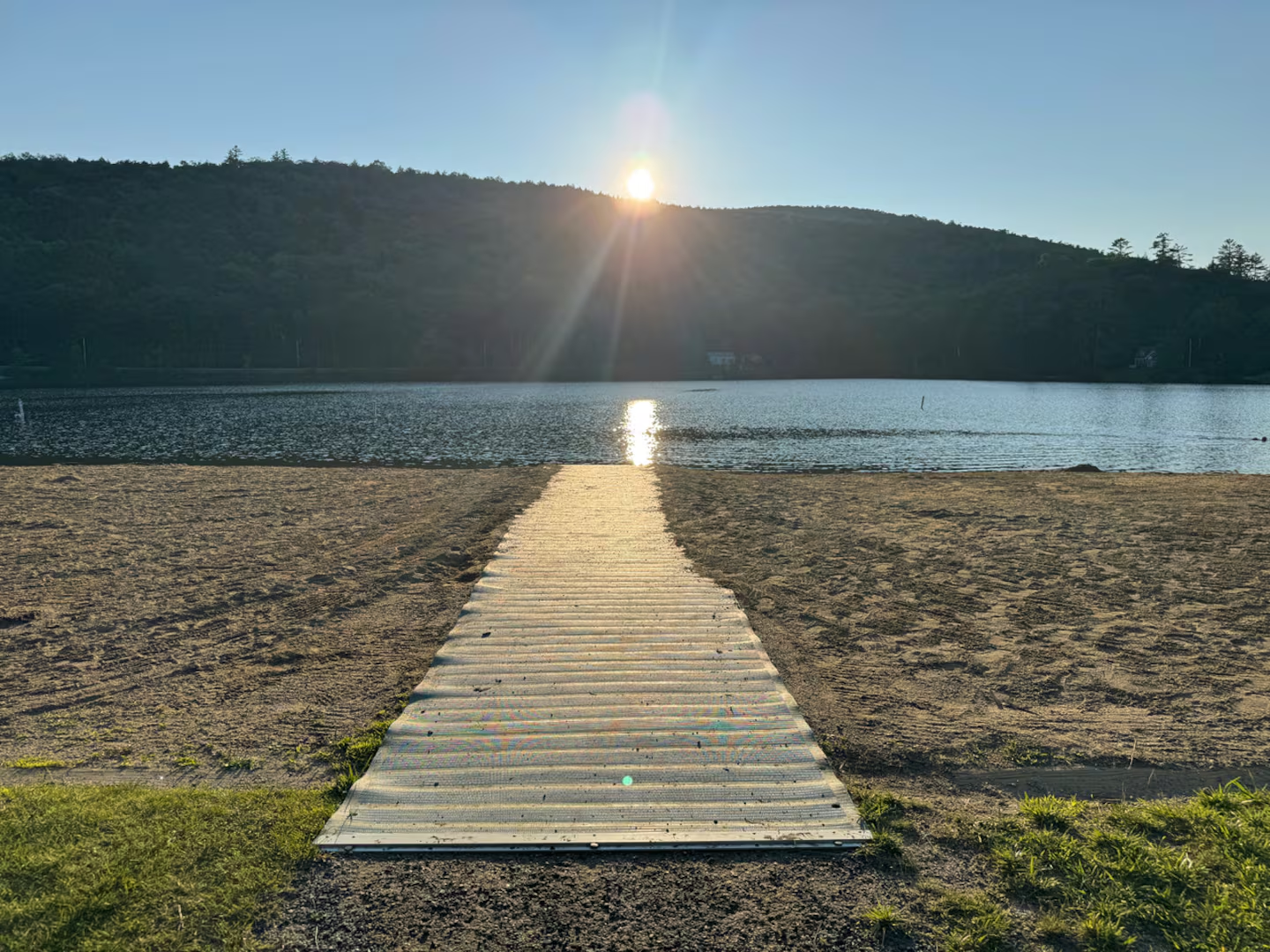
When your beach chair is a wheelchair: These are the best accessible New England beaches
Yay for beach days, those glorious, golden, sun-splashed hours we dream about during Wind Chill season. Here in New England, we’ve got some gorgeous sandy specimens.
Read more Boston loves to read: These are the 12 best bookstores to visit
But if you’re a wheelchair user, or accompany friends and family members with mobility issues, you’ve discovered this uncomfortable truth: Some beaches are off limits, unreachable if you’re traveling by chair. “Ultimately, I think the best accessible beaches are the ones that let wheelchair users enjoy the same experience as everyone else, with as few barriers as possible,” says Cory Lee, accessible travel blogger and content creator at curbfreewithcorylee.com. Seems like a reasonable request, no?
Finding one isn’t always — forgive us — a day at the beach. “Some beaches advertise accessibility but fall short in practice,” Lee says. Sometimes accessible parking is far from the entrance, the beach mat is too short or damaged, or the beach wheelchair isn’t available when you arrive, he notes. (Beach wheelchairs are typically a first-come, first-served situation.) “Those gaps quickly turn a relaxing day into a frustrating experience.” If you can’t get onto the sand, well, there goes your beach day.
With that in mind, we reached out to folks in the adaptive recreation and tourism realm to see which beaches are their top picks for wheelchair users, including ocean and lake beaches alike. Here’s a look, and a toast to sandy, sunny days ahead.
Sudbury-based SMILE Mass (smilemass.org) is dedicated to making every public beach and pond in New England accessible to individuals with disabilities. They’ve donated more than 200 floating beach wheelchairs to these beaches, and also operate an equipment loaner program for families. (With its floating armrests and oversize wheels, a floating wheelchair can be used on soft sand and transition to calm water.)
Among the Massachusetts beaches they recommend is Joseph Sylvia State Beach in Oak Bluffs on Martha’s Vineyard. Famous for its appearance in “Jaws” and the Jaws Bridge, this 2-mile-long beach offers a large wooden boardwalk that leads to an accessible deck overlooking the beach. “It’s an excellent example of how an accessible viewing area can help someone remain part of the family experience,” says SMILE Mass senior director of operations Todd Civin.
Other Massachusetts beaches that rank high with SMILE Mass include Carson Beach in Boston, thanks to its accessible facilities, including the restrooms and picnic areas, and proximity to the city. This 3-mile-long stretch of sand offers an accessible walkway and a beach mat (seasonal), not to mention a floating beach wheelchair, courtesy of SMILE Mass. Nantasket Beach in Hull offers a long, paved area along the beachfront, a beach mat (in season), and an accessible playground. This beach is also a recipient of a SMILE Mass floating beach wheelchair. The northern end of the beach is less stony and offers easier access, we’re told.
Crane Beach in Ipswich and Sandy Neck Beach Park in Barnstable are two other lovely beaches that offer accessible facilities and adaptive beach equipment, Civin notes. Crane Beach uses beach mats and offers beach wheelchairs; additionally, they provide transportation from the parking lot to the main beach and back for guests with mobility issues. For wheelchairs and beach transport at Crane Beach, inquire at the beach store during the summer and at the entry gate in other seasons. Beach wheelchairs at Sandy Neck Beach Park are reservable; call 508-362-8300.
Read more Ken Martin hunkers down at the Democratic National Committee as a storm gathers around party leader
For a list of Massachusetts beaches that offer beach wheelchairs and the floating version, visit www.mass.gov/info-details/beach-wheelchairs. There’s also advice on how to use them.
In Rhode Island, the SMILE Mass folks recommend Easton’s Beach in Newport, also known as First Beach. Its expansive boardwalk allows wheelchair users to enjoy the beach environment without having to travel over sand.
Lizz Peacock, co-executive director of Maine Adaptive Sports & Recreation (www.maineadaptive.org) recommends Range Pond State Park in Poland. Maine Adaptive runs a kayaking program there, and it’s a very accessible spot, she says, with a great beach, shaded picnic tables, and easy access to a covered pavilion. A beach wheelchair is available, and there’s a transition dock through the sand and down to the water. “There’s also a nice wide path along the pond, where we have pedaled using the adaptive cycles,” Peacock adds.
When it comes to Maine’s ocean beaches, SMILE Mass gives high marks to Ogunquit Beach in Ogunquit. “This beach provides an accessible viewing area with a canopy, built-in seating, and spaces where wheelchair users can enjoy the ocean while remaining protected from the sun,” Civin says.
New Hampshire may have a short coastline, but it has a couple of solid options for beach-loving wheelchair users. Lively Hampton Beach State Park, with its snack bars and bandshell concerts, is the state’s most popular family vacation destination. It’s a good choice for wheelchair users, says Kris Neilsen of the New Hampshire Division of Travel and Tourism Development (www.visitnh.gov), thanks to loaner beach wheelchairs and ramps that lead to the beach at four locations in the Seashell area. These are topped with seasonal beach mats. A concrete walkway reaches the beach at South Beach. Bathhouses and outdoor showers are accessible.
Weirs Beach, on the southern shore of Lake Winnipesaukee, is another contender. The 680-foot beach has calm, shallow water, making it a favorite for families. A ramp from the bathhouse leads to a beach that reaches all the way down to the water, Neilsen says. And here’s a tip: Seacoast Science Center (www.seacoastsciencecenter.org) in Rye has added an all-terrain wheelchair that allows visitors to explore the trails and shoreline at Odiorne State Park.
And don’t count out Vermont. Both Kim Jackson of Vermont Adaptive Ski & Sports (https://vermontadaptive.org) and Kaitlin Alford of the Vermont Department of Forests, Parks and Recreation (www.vtstateparks.com) sing the praises of Camp Plymouth in Plymouth. Located on the eastern shore of 96-acre Echo Lake, this area was the site of gold mining operations in the 1800s, and then a girls’ summer camp, followed by a Boy Scout camp. Camp Plymouth became a public state park in 1989, and is Vermont’s only park with matting that provides access to the water for wheelchair users, plus a beach wheelchair that may be reserved by calling 802-228-2025. If it’s not reserved, the chair is available on a first-come, first-served basis.
Read more Would Xavier Bautista be alive today if the Cambridge City Council didn’t cave to activists?




Post Comment