Would Xavier Bautista be alive today if the Cambridge City Council didn’t cave to activists?
If the Cambridge City Council hadn’t caved to pressure from activists and removed a gunshot detection system, would Xavier Bautista still be alive today?
Read more Trump wants to overhaul the Smithsonian. Volunteers are fighting to preserve it.
It’s a legitimate question, the answer to which we’ll never know for sure.
At the very least, had that technology not been deactivated, his family would have the peace of mind of knowing everything that could have been done to save his life was done.
Instead, they are left to wonder in their grief, while Cambridge councilors get a do-over Monday, when they will reconsider their 5-2 vote to strip ShotSpotter technology from the city’s public safety tool belt.
How did we get here?
Well, remember, we’re talking about Cambridge.
There are some places that, when it comes to public safety and cops, the conversations can get hijacked by ideology.
Cambridge is a fine city, with many good, decent people and a well-earned reputation for diversity and tolerance.
For some, however, that tolerance doesn’t extend to police officers and the job they have to do.
Every city has people who don’t like cops, but in Cambridge they sometimes tend to be given more attention than they deserve.
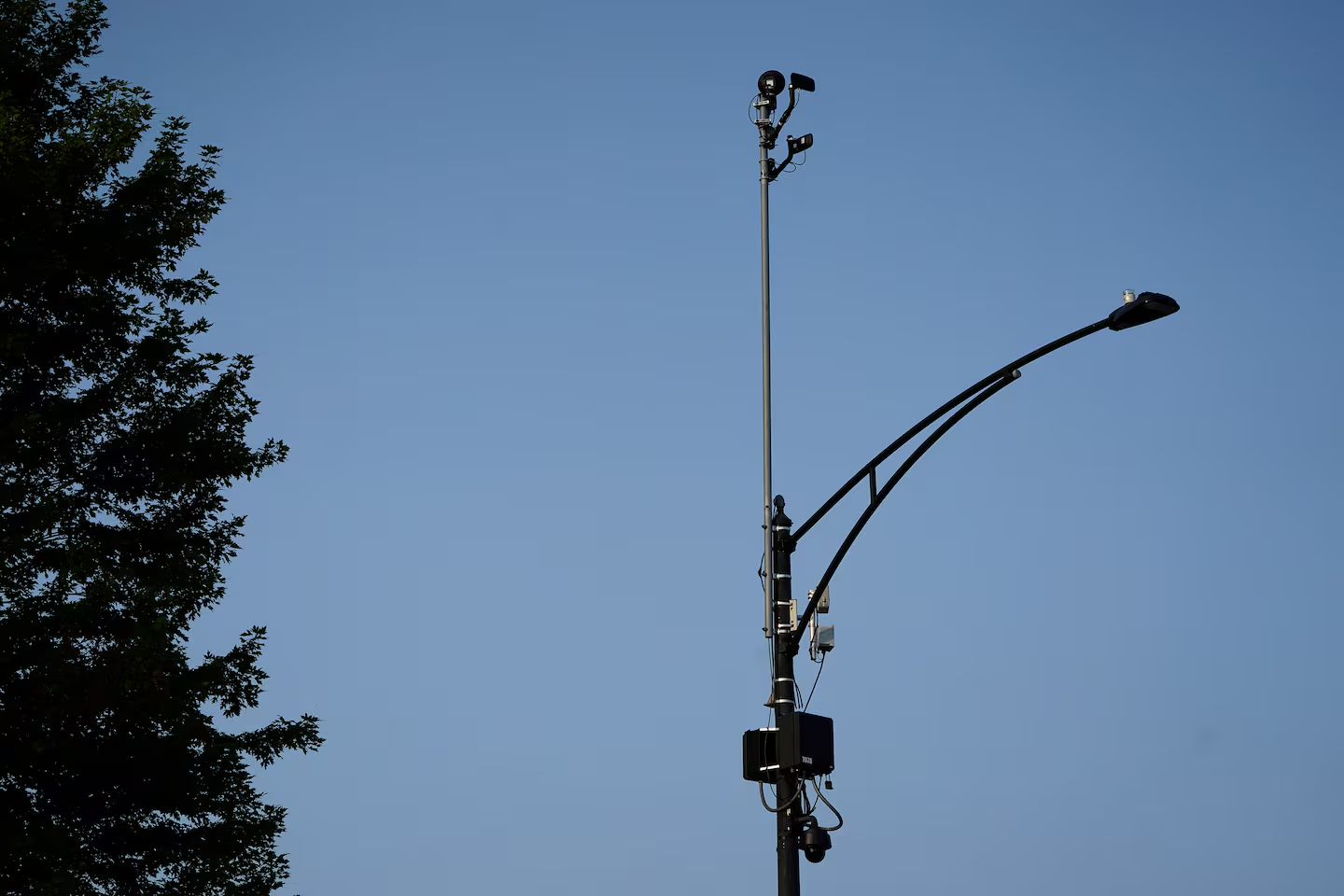
Take the vocal opposition to ShotSpotter, a technology system that detects the sound of gunshots, giving first responders such as police and, even more important, emergency medical response teams, real-time information about shots fired.
In the fevered minds of some who think the police are oppressors instead of public servants sworn to protect the public and uphold the Constitution, ShotSpotter has somehow been construed as a modern-day version of the fire hoses racist cops in the South turned on civil rights demonstrators in the 1960s.
According to its critics, ShotSpotter leads to over-policing in communities of color and criminalizes young men of color, while false detections needlessly send police racing to spots where there is an increased chance of violent confrontations.
As my colleague Spencer Buell reported last month, opponents of the technology believe the data shows the devices are much less reliable or useful than supporters say.
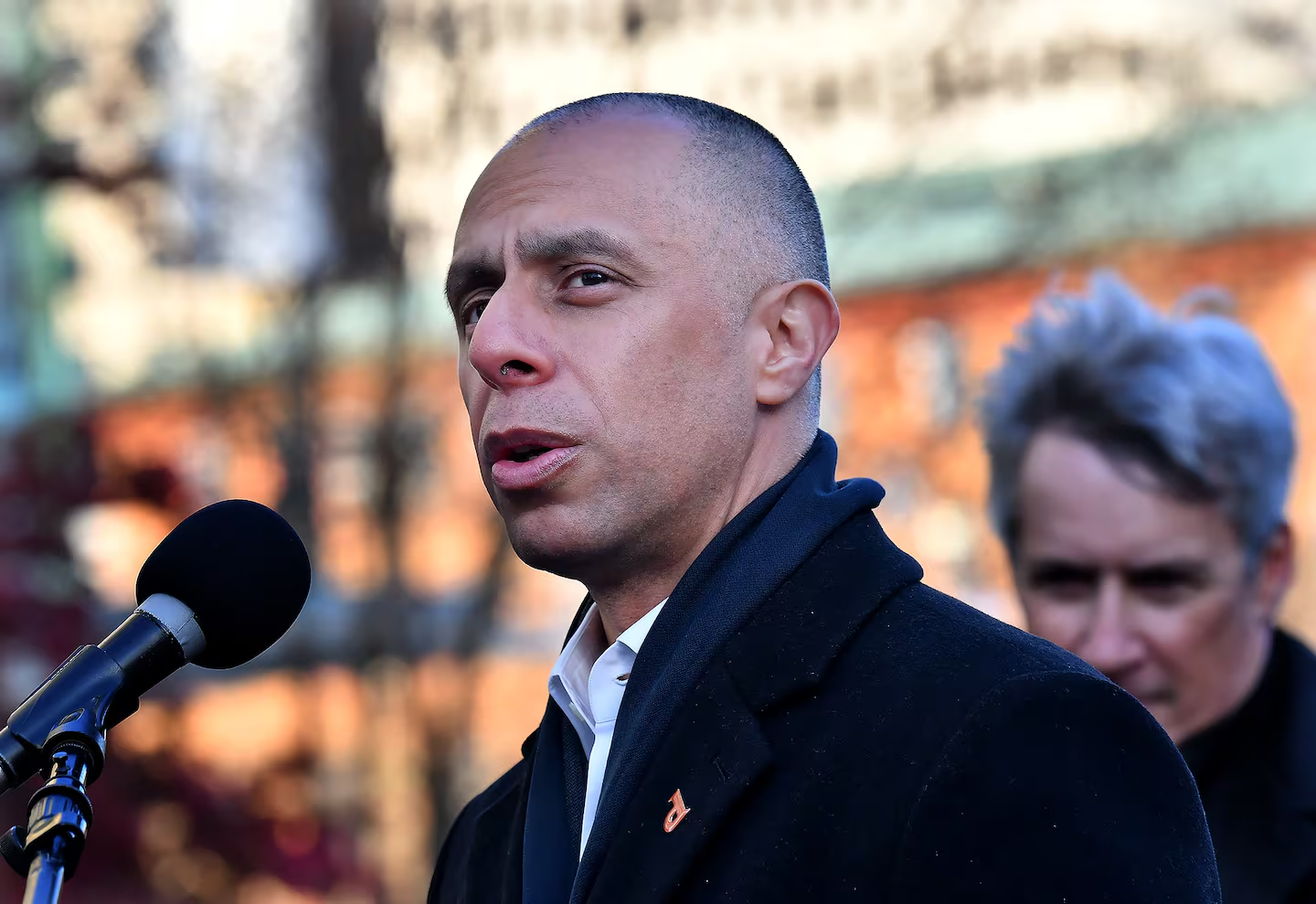
“We want to ground this in real evidence. We want to be doing things that actually work, not just to make a political point,” said City Councilor Jivan Sobrinho-Wheeler. “This to me is [about] how dangerously inaccurate this technology is.”
In the face of vehement opposition by activists who subscribe to that line of thinking, the council yanked ShotSpotter in May.
If so much of the debate over ShotStopper is academic, it took on some real-world relevance when Bautista, a 32-year-old father and Cambridge DPW worker, was shot and killed in the pre-dawn hours of July 4. A passerby found him about one hour after the shooting, police say.
The unions representing the city’s patrol officers and superiors officers issued a statement suggesting Bautista might be alive if ShotSpotter, which had been previously used in the area, had not been turned off.
“The tragic shooting death of Cambridge city employee Xavier Bautista is compounded by the fact that there was no opportunity for the victim to receive emergency aid for approximately 60 minutes,” said Cosmo Macero Jr., a spokesperson for the police unions.
It should be noted that another form of so-called intrusive technology, video surveillance, helped police zero in on and arrest one of the men charged with Bautista’s murder.
Four days after Bautista was murdered, some 200 people showed up for a meeting at the Cambridge Senior Center, many of them angry ShotSpotter had been jettisoned.
Among those demanding more help in neighborhoods like The Port, where Bautista was shot, were members of Bautista’s family. They complained that ordinary residents were not consulted before ShotSpotter was axed.
Read more Republicans want voters to elect Kansas Supreme Court justices and move court to the right
According to an account of the meeting in Cambridge Day, Richard Harding, a member of the School Committee and vice president of the Cambridge chapter of the NAACP, said the debate to remove ShotSpotter was “void of representation of Black and brown people.”
The activists and members of the ACLU who persuaded the City Council to get rid of ShotStopper insisted it was for those very same Black and brown people that they advocated to remove the technology.
The bottom line is a lot of folks who live in neighborhoods such as The Port, North Cambridge, and Riverside don’t feel safe, and would feel safer if ShotSpotter was reinstated.
What happened in Cambridge did not happen in a vacuum.
On his news site, Contrarian Boston, Scott Van Voorhis noted the campaign to ban ShotSpotter is a national effort led by activists who came to prominence during the Black Lives Matter movement. This includes those who pushed the Defund the Police movement and advocate eliminating prisons.
Ask people in Burlington, Vt., how defunding the police worked out for them. Last week, Vermont Governor Phil Scott dispatched state troopers to supplement a Burlington Police Department that has not been able to hire enough police officers since the budget cuts six years ago.
Van Voorhis found that a New York-based organization called Campaign Zero runs a campaign called #CancelShotSpotter and boasts it has spurred some 50 cities, including Cambridge, to ban ShotSpotter.
But as loud as the activists who have dominated Cambridge City Council hearings on the issue, there is a growing chorus of ordinary people who very much believe Black lives matter and support ShotSpotter. One leader of that nascent movement is Cambridge City Councilor E. Denise Simmons.
Simmons, who is Black, has spent her entire public career supporting and advocating for the very communities that opponents of ShotSpotter claim are victimized by ShotSpotter.
She is also a homicide survivor. Her son, Anthony, was shot and killed in Brockton in 1995.
In May, after the council voted to remove ShotSpotter from Cambridge streets, Simmons and Councilor Tim Flaherty, both of whom voted to keep it, wrote a searing op-ed in the Globe, arguing the debate over ShotSpotter has been superficially framed as an either-or-choice between public safety and civil liberties.
They argued its critics “elevated ideology over facts, amplified worst-case fears, and rejected a tool that could help save lives.”
During that public meeting at the senior center a few weeks ago, Simmons pushed back after some officials described Cambridge as a safe city.
“I respect what you said,” she said, “but when you say the city is safer, just say, maybe for you, but not for Black and brown people.”
David Solet, former chief of the Cold Case Homicide Unit in the Middlesex district attorney’s office, who is running against Middlesex DA Marian Ryan, told me he was able in 2024 to charge a man with the murder of 21-year-old Ashlee Berryman in 2015 outside an Everett nightclub because of ShotSpotter.
The detection of the gunshots allowed Everettpolice to arrive at the shooting scene almost immediately and interview witnesses they wouldn’t have otherwise found, Solet said.
“Those witness statements gave me the threads to pull on years later,” he said. “If I didn’t have those threads, we wouldn’t have been able to solve the murder.”
Solet hopes Cambridge councilors restore ShotSpotter.
Some city councilors seem like they want to do just that.
That’s all well and good, but, whatever they decide, Xavier Bautista’s 5-year-old son will grow up wondering whether his father should still be alive.
Read more Medical journals, law reviews, and literary magazines are grappling with AI-generated submissions


Post Comment