The DNC snubbed the New Hampshire primary. So what happens now?
The decision by the Democratic National Committee on Friday to downgrade New Hampshire’s traditional role as the first presidential primary in the nation to the third contest raised a lot of questions — especially considering there is a state law requiring the Granite State to hold the first primary.
Read more Red Sox newcomer Curtis Mead leaves first game after getting hit by pitch: ‘Dodged a bullet maybe’
Further complicating matters is the fact that Republicans in 2028 will continue to use the traditional schedule for their presidential primary season, with the Iowa caucuses first, followed by the New Hampshire primary, then South Carolina and Nevada.
Democrats, meanwhile, are poised to blow up that calendar entirely. They aim to have the South Carolina primary first, followed by Nevada, New Hampshire, Michigan, New Mexico, and Virginia. Super Tuesday would come afterward. (This order is not official until the full DNC membership votes on it in August.)
Some of the bigger questions about the DNC’s decision to blow up the calendar will only be answered as the situation plays out over the next year and a half. But a few things are becoming immediately clear.
Let’s go through them.
New Hampshire has a clever workaround, for now
Re-read this sentence: New Hampshire will always hold the nation’s first presidential primary. (If you didn’t read that sentence twice, you must return and do it.) The question is whether that first primary will matter. Will there be candidates who apply to be on the ballot? Will voters bother to show up? Will anyone actually care about the results?
On that, we just don’t know yet. For now, the modus operandi for New Hampshire Democrats is really clear: Don’t do a single thing to trigger the DNC into saying New Hampshire has gone rogue.
Buried within the DNC rules is a provision that if a candidate campaigns in a state that is not in compliance with the calendar the DNC approves, that candidate can be banned from participating in debates and from having access to the national Democratic voter file.
But as long as New Hampshire Democrats publicly maintain that they intend to go third and run their own primary, candidates can campaign in the state, hire staff, and air ads just as they have every four years.
All of that continues until New Hampshire’s secretary of state announces the date of the Republican and Democratic state primary. At that point, New Hampshire Democrats can say they have nothing to do with that and are staying within the rules.
That is what happened in 2024 when the DNC said New Hampshire should go second. But that change wasn’t announced this far out and New Hampshire Democrats had to pretend for just a few months they were going to remain in compliance. More importantly, the DNC didn’t force the state party to run it’s own primary like this time.
Under the 2028 scenario, New Hampshire might have two primaries: one that is first and run by the state, and a second a month later run by the state party that actually awards delegates.
Read more Bruins name Trent Whitfield coach of the franchise’s AHL affiliate in Providence
Confused? Blame the DNC.
The new calendar makes it less likely that a candidate can emerge out of nowhere
The old adage in presidential primary politics is that Democrats like to fall in love, and Republicans like to fall in line. It’s how, for example, Democrats got behind Barack Obama in 2008, while Republicans, once again, nominated the guy who came in second place during the last competitive GOP primary, John McCain.
The traditional calendar created a level playing field that valued message and campaigning over money. An upstart candidate could campaign for relatively little in quirky caucus state Iowa and win there, the thinking goes, proving viability and securing additional support for the remaining contests. Think of Obama or Jimmy Carter, or for a time, Pete Buttigieg.
This time, the barrier to entry just got a lot higher.
In 2028, an unknown and underfunded candidate would have to not just compete in South Carolina, a more expensive, consultant-driven contest with different media markets, but then create campaign organizations and advertise in six different states simultaneously, two of which — Michigan and Virginia — are very expensive.
In other words, the game just shifted to give a further advantage to well-known brands like Buttigieg, Kamala Harris, Gavin Newsom, Josh Shapiro, and others who may not have the right message at this moment, but have the right infrastructure.
AOC the bellwether?
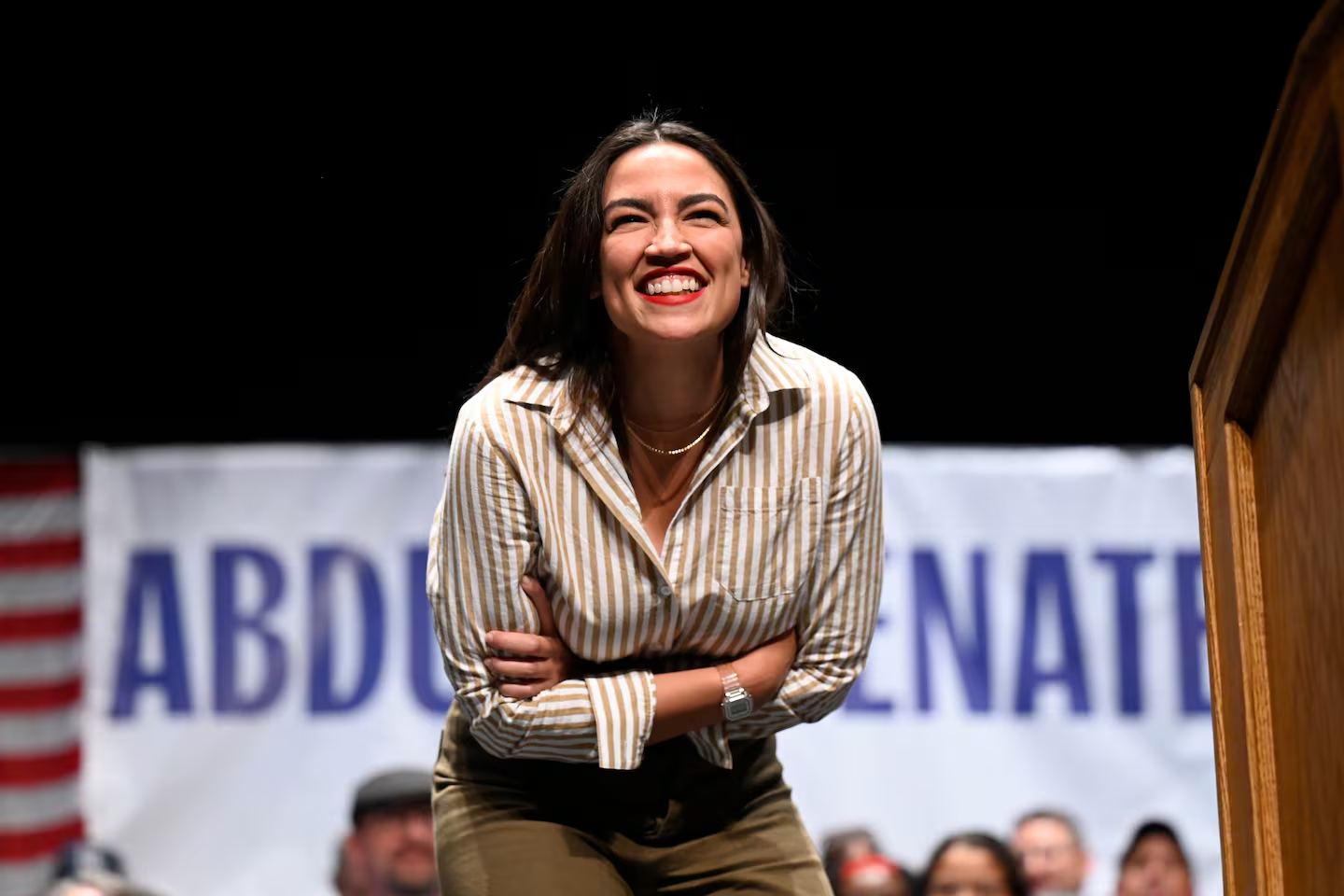
New York Representative Alexandria Ocasio-Cortez is among the biggest losers in this proposed reordering of the primary system and among the most prominent potential 2028 candidates. Her next move could reveal a lot.
How?
Lately, New Hampshire has been a place where progressive candidates, or at least Vermont Senator Bernie Sanders, have thrived. Sanders won the state twice, in 2016 and 2020. He has now subtly handed off his leadership in progressive politics to AOC traveling around the country with her as his heir apparent.
AOC’s coalition has many of the same characteristics. She would likely benefit from an early New Hampshire primary, where liberal activists and independent-minded voters have rewarded insurgent candidates. South Carolina, by contrast, has historically favored candidates with deeper ties to the Democratic establishment and stronger support among the party’s Black electorate.
In a University of New Hampshire survey last week, AOC narrowlyled Democrats in a hypothetical presidential primary matchup. Her identity as young, Hispanic, and progressive, combined with her willingness to challenge the Democratic establishment, means she is uniquely positioned to bring a fight over the DNC calendar — and may also be willing to do so.
So far, she has yet to publicly set foot in New Hampshire since the 2024 election, perhaps because it would signal she was seriously interested in running for president. But now she might see little choice but to involve herself.
If she does, her decision could become the first real test of whether the DNC can enforce its new calendar or whether ambitious presidential candidates will force a showdown over New Hampshire’s first-in-the-nation tradition.
Read more Zelensky will visit Trump at the White House before Senator Graham’s funeral


Post Comment