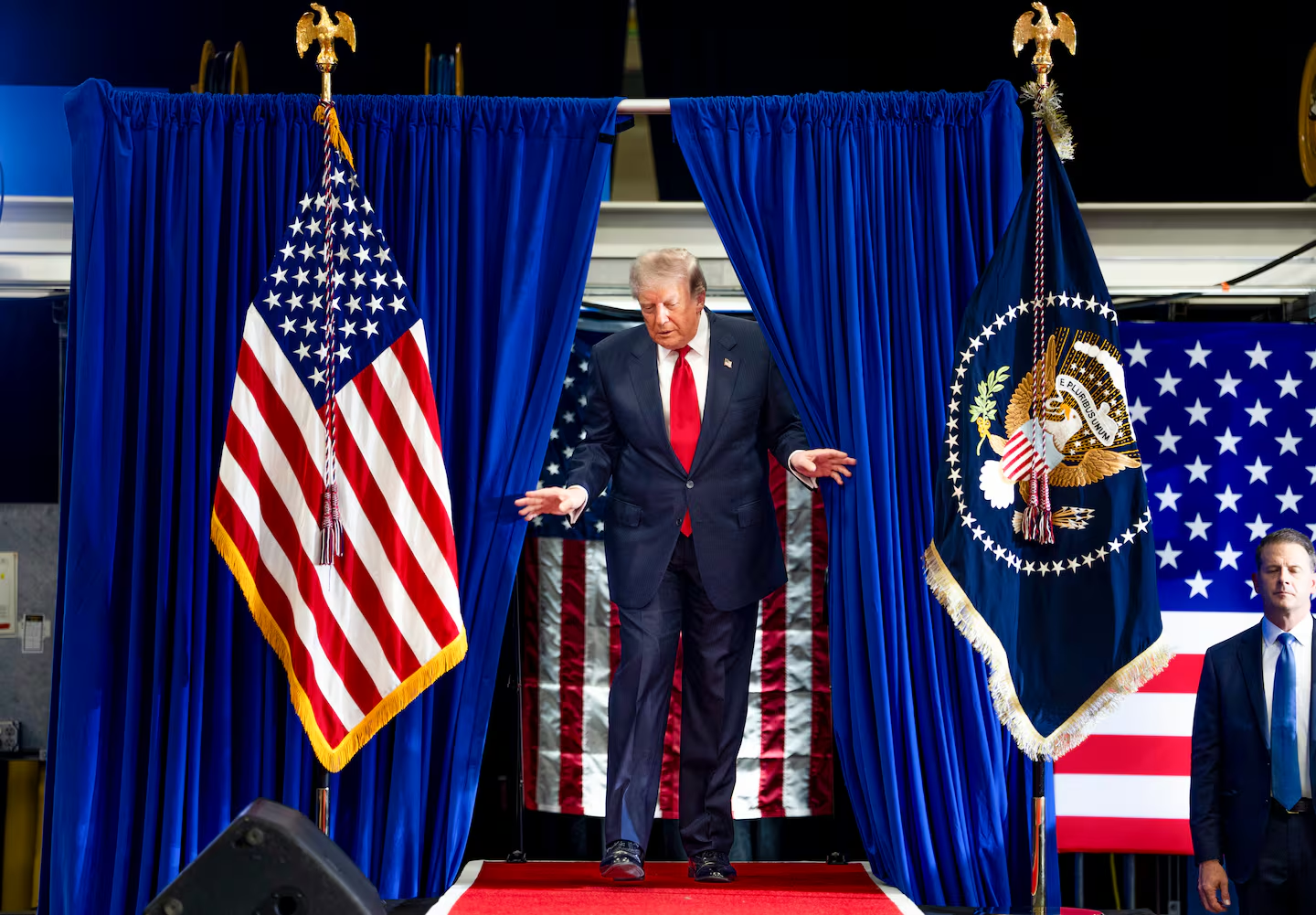
Sanctions bill would give Trump sweeping new tariff powers
WASHINGTON — The sanctions legislation that moved forward in the Senate this week goes beyond enacting new financial restrictions on Russia and Iran. It also gives President Trump broad new powers to impose tariffs on imports from some of the world’s largest economies.
Read more With Blanche nomination at stake, payouts to Trump allies continue
The bipartisan bill, which was designed by the late Sen. Lindsey Graham, R-S.C., was intended to demonstrate that Congress is unified in its desire to punish Russia for its invasion of Ukraine and to prevent Iran from obtaining a nuclear weapon. But tucked inside the legislation are tools that would give the Trump administration sweeping discretion to impose steep tariffs on major buyers of Russian energy products. The measure would restore some of the trade authorities that the Supreme Court stripped away when it ruled against Trump’s use of tariffs on national security grounds earlier this year.
It if becomes law, the bill would allow Trump to impose 500% tariffs on Russian imports, which include mostly fertilizers, and tariffs as high as 100% on the largest importers of Russian oil and gas. Countries that help Russia evade sanctions could also face tariffs as high as 100%.
The policy could lead to additional levies on billions of dollars’ worth of products imported from China, India and European Union countries.
The bill represents the latest move by Congress to cede more of its authority over trade policy to Trump. It also comes amid bipartisan anger over the president’s provocative use of tariffs, which has led to retaliation from other countries and uncertainty for businesses.
Scott Lincicome, a trade expert at the free-markets-oriented Cato Institute, said that some of the key language in the legislation is murky and that Trump has shown he will push the limits of his tariff powers.
“The president has demonstrated repeatedly that he is willing to exploit any ambiguity in a tariff statute that lets him impose additional import taxes,” Lincicome said. “When you’re dealing with Trump, you should be extremely reluctant to give him new tariff powers.”
Despite last-minute changes to reduce the potential impact of the tariffs on American companies, the bill leaves room for the White House to interpret who are the biggest buyers of Russian energy products, which could open the door to a more expansive use of tariffs.
The legislation also gives Trump, who has at times been reluctant to punish Russia with sanctions, the leeway not to impose them by issuing a waiver and providing Congress with an explanation of why he believes an exemption is in the national interest. The president has argued that he needs flexibility when it comes to tariffs and sanctions when negotiating with other countries.
The potential for Trump to gain more power to unilaterally impose tariffs has rattled industries that were already struggling to cope with the gyrations of his trade agenda. Over the last year, Trump has continuously added, adjusted and removed tariffs as he sought to gain negotiating leverage with American trading partners. That has left companies struggling to plan how to source the products they buy and how to set their prices.
As they rushed to finalize the bill ahead of Graham’s funeral Tuesday, lawmakers met resistance from lobbyists who are anxious about giving Trump more tariff authority.
“The potential of new, broad, 100 percent tariffs on imports from secondary countries risks raising costs for American businesses, workers and consumers,” a group of nearly two dozen trade associations wrote in a letter to Sen. John Thune of South Dakota, the Republican majority leader, and Sen. Chuck Schumer of New York, the Democratic minority leader.
“Tariffs of this scale would increase costs for everyday consumer goods, manufacturing inputs and other products while creating significant uncertainty for companies making sourcing, pricing and inventory decisions months in advance.”
The lobbying groups include the U.S. Chamber of Commerce, the Retail Industry Leaders Association and the National Foreign Trade Council. They asked lawmakers to remove the tariff authority in the bill and warned that tariffs were “a blunt tool that can penalize law-abiding U.S. companies.”
The fate of the bill in the House is unclear, as some top Democrats have already expressed opposition to giving Trump more tariff authority. However, the bipartisan support in the Senate suggests that it could pass. Still, some Senate Democrats have also expressed reservations.
“I do not think tariffs, which are paid for by American businesses and consumers, will help Ukraine win this war,” Sen. Maggie Hassan, D-N.H., wrote on social media following the vote. ” And over the last year, it’s become more clear that President Trump will use any legal — or illegal — mechanism to make families pay his reckless tariffs.”
A White House official said that the bill was the result of months of negotiations among federal agencies, the White House and lawmakers and that it reflected bipartisan national security and foreign policy objectives.
Late changes to the Senate version of the bill were intended to restrict some of the potential impact on America’s trading partners. Only the top five importers of Russian oil or gas are eligible to be hit with U.S. tariffs. Countries that take significant steps to reduce their purchases of Russian oil and gas could have their tariff rates reduced or eliminated.
Ben Harris, a former Treasury Department official in the Biden administration who helped design its policy to cap the price of Russian oil, said that he was encouraged to see bipartisan legislation that could compel the Trump administration to punish more Russian shadow fleet tankers and tighten enforcement of existing sanctions.
But with energy prices remaining volatile because of the conflict in Iran and Trump continuing to express mixed messages about Russia, it is not clear how the president would wield new sanctions and tariff powers if he gets them.
“The Trump administration has a terrible record with respect to sanctioning Russia’s oil industry to date,” Harris said. “It’s been unclear what their objective has been from the get-go.”
Read more House adds AI rules, longer runway to primary care bill
This article originally appeared in The New York Times.


Post Comment