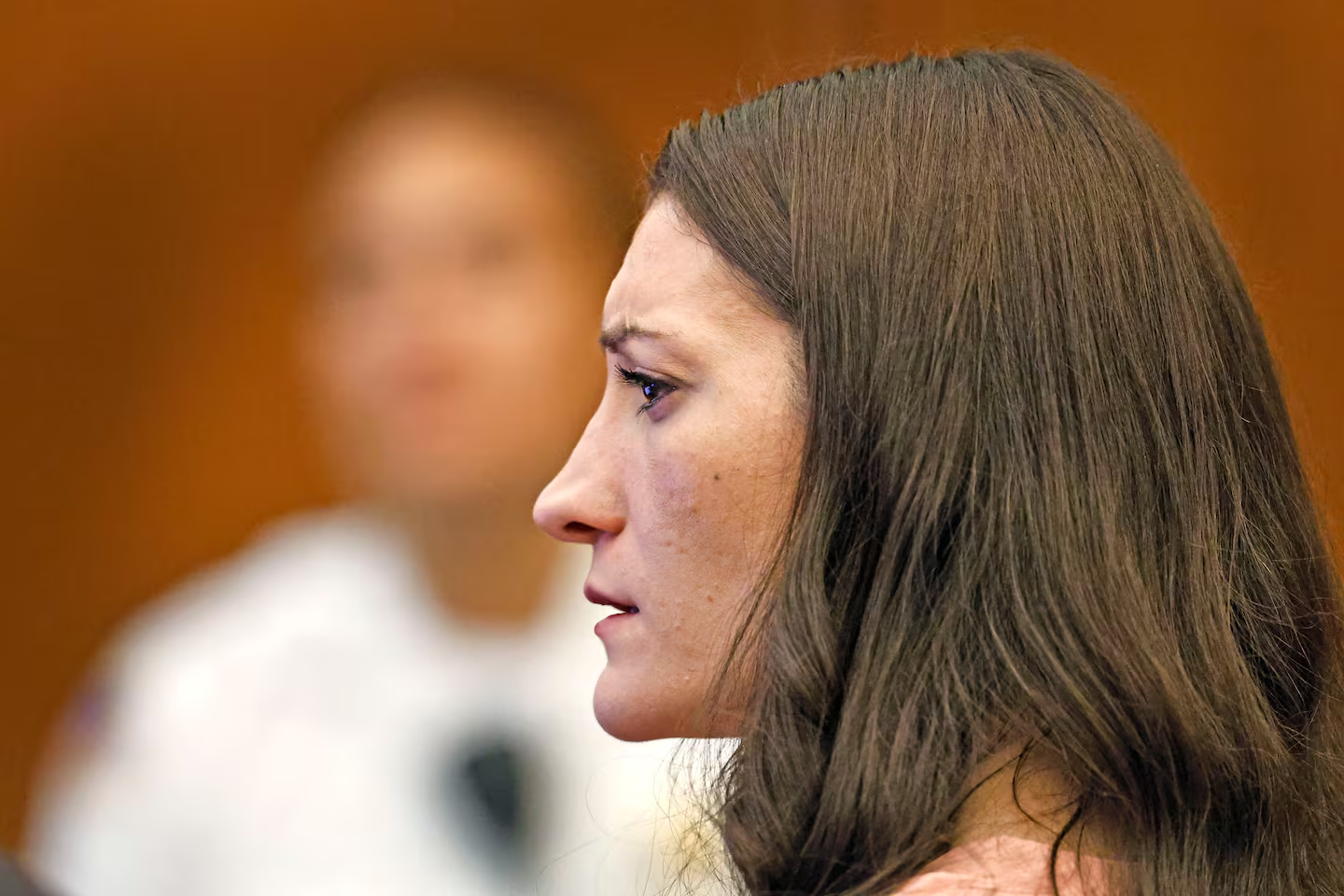
Prosecutors make monsters out of ill mothers. We’re already seeing it in the Clancy trial.
Same judge. Same district attorney. Same murder charges. Same insanity plea.
Same attempt to send a mother to prison for the rest of her life because she doesn’t conform to the prosecutor’s caricature of what mental illness is supposed to look like.
Read more Lindsey Graham’s funeral to draw Trump remarks and world leaders in Washington
It worked against Latarsha Sanders, the Brockton mother found guilty in 2022 of first-degree murder for killing her two youngest children. Hardly anybody was watching that trial closely at the time, save Sanders’ family, who were grieving the loss of Marlon, 8, and La’son, 5, and the mother who killed them in 2018. An expert testified Sanders was in the grips of psychosis at the time.
Will it work against Lindsay Clancy, the labor and delivery nurse who killed her three young children in January 2023, a month after Sanders was convicted? In stark contrast, legions are tuning in to this case. The courtroom was packed as testimony in Clancy’s trial began Monday, the proceedings carried live by numerous outlets, including the Globe.
Sanders was poor and Black. Her case didn’t attract even a fraction of the national attention and outpouring of sympathy for her family that Clancy’s has. Sanders’ family had no resources to correct the narrative in the wake of the killings, to explain how Sanders’ mental illness had been worsening over the years, how she resisted treatment.
And so, mostly unseen at the time, the prosecutor was able to turn Sanders into a monster in the courtroom. Prosecutor Amanda Fowle argued she killed her children because she was “evil,” that she wanted to get rich via a GoFundMe, and write a book that would make her famous. She was faking her mental illness to get away with it, the prosecutor argued. Fowle succeeded in getting the judge to exclude from evidence detailed prison medical records documenting Sanders’ psychosis. That exclusion is central to an appeal being decided by the state’s highest court.
Clancy is a middle-class white woman from Duxbury, with all the resources that implies. Following the killings, her loved ones and her attorneys made sure to tell the world she was a loving mother who would never have harmed her children if not for her profound postpartum mental illness. Unlike in Sanders’ case, there is extensive evidence of Clancy’s mental health struggles leading up to the killings, contained in her medical records, and in a pair of civil lawsuits against her health providers. They lay out the family’s repeated, fruitless attempts to get her postpartum mental illness under control: She was given more than 30 prescriptions in the months before the killings.
“I wasn’t married to a monster,” her former husband, Patrick Clancy, told The New Yorker in 2024. “I was married to someone who got sick.”
Far more eyes are on Plymouth District Attorney Timothy Cruz and his assistant prosecutors this time. Calling Clancy “evil” probably won’t fly. So they’re going with “selfish,” and “controlling,” arguing that the woman who killed her children was not the loving mother depicted in the photographs and videos presented to the jury so far.
“In contrast to pictures you’ll see of the doting mother, the dedicated nurse, you’ll also see a side of Lindsay Clancy that’s different,” prosecutor Shanan Buckingham said in her opening argument. “Somebody extremely controlling, meticulous, and manipulative.”
In court documents, prosecutors said Clancy “did not feel love or connection with some of her kids,” and in the courtroom Monday, the prosecutor said it was “hard for her to bond with her kids.”
“This was a woman who no longer liked the life she thought she wanted,” Buckingham told jurors. “And when she saw the opportunity to escape, she made the selfish choice to take it, and to take Cora, Dawson, and Callan first before attempting to take her own life.”
Even if that was true, wouldn’t that logic also be a sign of profound mental illness?
But the prosecutor’s own exhibits from the trial’s first day make that image of a selfish mother difficult to swallow. Clancy and her husband clearly both doted on the kids, constantly texting cute pictures of Cora, Dawson, and Callan back and forth. They took them on adventures, to a water park and to the Museum of Science.
On the day she killed the children, Clancy took Cora to the doctor in the morning, texting Patrick with relief: “OK her urine looked good so nothing going wrong with her kidneys. Phew.” Later, she built a snowman in the yard with Cora and Dawson, sending pictures to her mother and husband.
“You’re a good mama,” Patrick texted back from his office in the basement.
In the prosecutor’s telling, these daily activities “were inconsistent” with the serious symptoms she was reporting to her health providers – depression, anxiety, sleeplessness, thoughts of harming herself and the children. She cast doubt on Clancy’s claim that a voice in her head suddenly told her to kill the children and herself, because she had not reported hearing them before she killed the children, or since.
But mental illness, including psychosis, doesn’t always look like it does in old movies.
“Oftentimes, people have a caricature in mind of what someone is like who would commit a heinous crime, that they are howling at the moon or standing on their head,” forensic psychiatrist Dr. Mark Rudolph told me, when I reported on the Sanders case last year. “More often than not, however, that is not how someone presents who is psychotic.”
A person struggling with severe mental illness may appear calm and perform daily tasks as usual. They can love and care for their children without showing obvious signs of disintegration. The symptoms of psychosis can take time to manifest clearly. Its early signs include mood swings, confusion, irritability, anxiety, or feeling depressed, which can go on for months before more obvious symptoms – like auditory hallucinations – appear. Only in retrospect is the progression clear.
But it’s often hard for 12 ordinary people to grasp all of this – especially after, as in the Sanders case, they’ve been shown gruesome photographs of dead children, and heard testimony from multiple first responders describing the horrific scene they came upon after a 911 call. The jury in this case, too, will be bombarded with many awful photographs and gut-wrenching testimony from multiple police officers and EMTs.
The natural response to a tragedy like this is to want to hold somebody accountable, because how can a person who does such a thing go unpunished?
Clancy’s attorney Kevin Reddington tried to assure jurors on Monday that Clancy will be punished forever, even if they find her not guilty by reason of insanity (that would mean she’d be confined to a psychiatric facility until a judge decides it is safe to release her).
Clancy “will be paralyzed for the rest of her life,” he told them. “She’s living her own hell. She knows what happened with those kids, and she wanted to die when she was in the hospital. … To this day, [she] wants to die.”
Over the next few weeks, we will see more than Lindsay Clancy on trial in that courtroom. Among the other defendants will be a medical system that failed to effectively treat the mental illness of a woman who had the wherewithal to seek help, and was a health professional herself. And a justice system that, all too often, fails mentally ill defendants.
Read more The DNC snubbed the New Hampshire primary. So what happens now?
Perhaps Clancy will have a better chance than Sanders did.




Post Comment