Bills taking aim at Massachusetts ballot questions still on state lawmakers’ to-do list
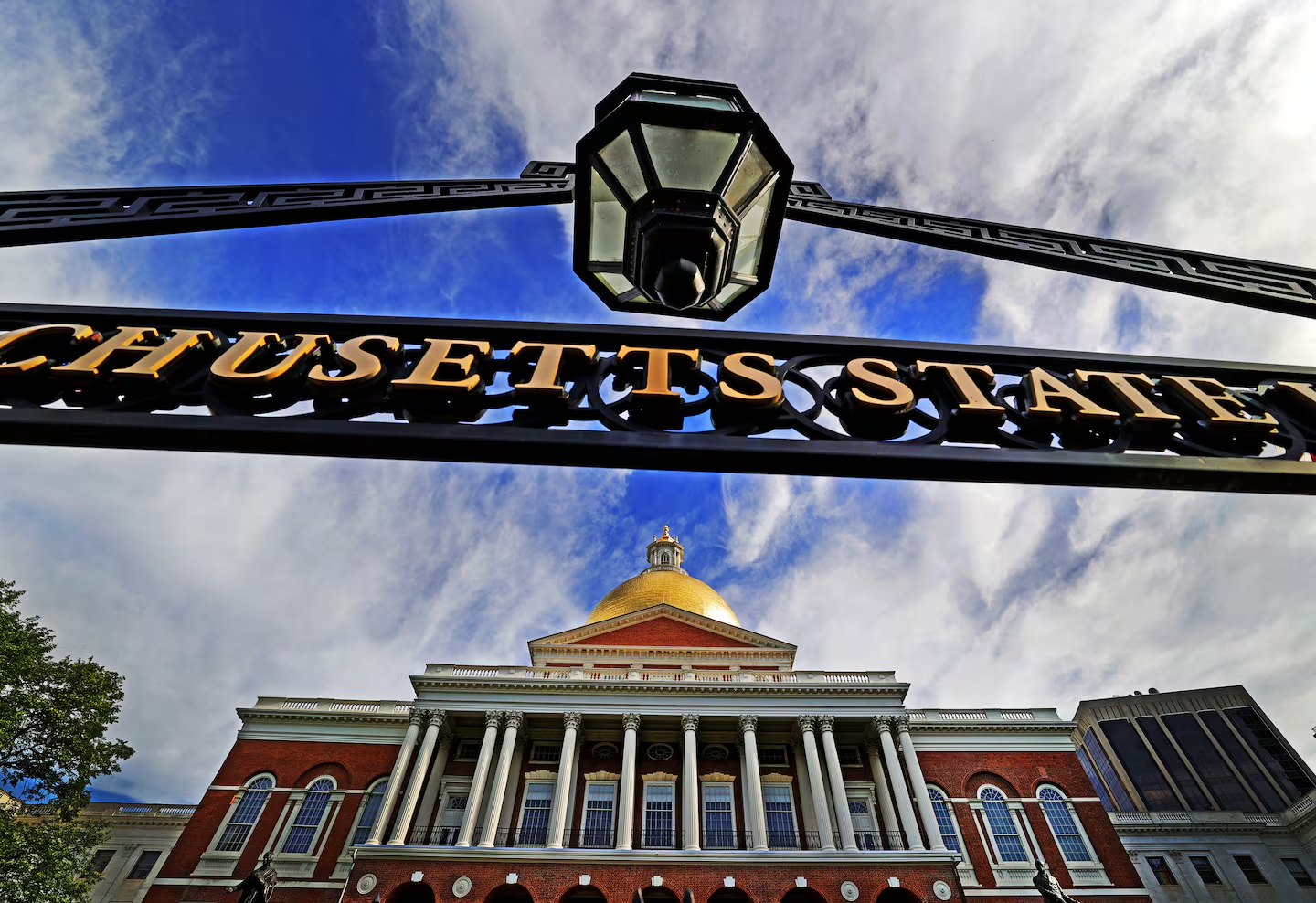
The halls of the State House might fall largely silent in the coming months, but private negotiations will continue to simmer over measures that could affect a variety of issues — including ones voters themselves will soon to decide.
Read more With no new contract, Buccaneers front office is giving Baker Mayfield all the motivation he needs
State lawmakers ended their traditional stretch of formal sessions Friday night, leaving a raft of work tied up in closed-door negotiations where legislative leaders will resolve differences between state House and Senate versions in the days, weeks, or even months ahead.
Two of those take direct aim at issues on the November ballot, where voters will decide whether to rework a state law to trigger more frequent automatic taxpayer refunds and another that would subject the governor’s office and Legislature to the state’s public records law.
It’s part of a pile of legislation bleeding from the final day of scheduled formal sessions, where lawmakers passed a handful of major bills, including one allowing abortions later in pregnancies, but left roughly a dozen proposals on the negotiating table.
Legislators can strike deals on those policies at any point through early January under an internal rules change they approved last year.
Evan Horowitz, executive director of the Tufts Center for State Policy Analysis, said lawmakers historically had two opportunities to address ballot questions in an election year — in the spring before the secretary of state cleared them for the ballot and, should they pass muster with voters, after Election Day.
“It’s really complicated for voters if you can’t even measure the potential impact of the ballot question … by reading the text of the ballot question because it’s going to interact differently with changing laws,” he said. “This is a very strange setup, and as complicated as ballot questions already are for voters, I think this adds to that.”
The push to preemptively change the public records and so-called tax cap law has stirred frustration on and around Beacon Hill.
Transparency advocates raised alarms after the House and Senate passed different versions of a bill that sets their own rules for access to legislative and gubernatorial records.
House lawmakers earlier this month approved legislation that exempts the Legislature from the state’s public records law, and instead creates a new statute that allows for access to specific types of legislative records, many of which are already public. The bill also would subject Governor Maura Healey’s office to the existing records law, from which she and her predecessors for decades have argued their exempt.
Senators also carved out a specific set of documents and information that they would allow access to, though those records, too, are already largely public.
During debate in the Senate on Thursday, state Senator Cindy Creem said the Senate’s bill strikes a “balance” between transparency and lawmakers’ concerns that subjecting themselves to the law as is could violate the constitutionally set separation of powers.
State Auditor Diana DiZoglio, who is helping lead the push behind the public records ballot question, questioned the language the Senate embraced, making its bill the “sole and exclusive remedy” for obtaining legislative records is itself unconstitutional.
“These types of games have no place in our state government,” said DiZoglio, a former senator herself. “What the Legislature is doing . . . is preemptively striking against their own constituents to block the results of the election.”
Read more Eversource reports another big financial hit from its foray into offshore wind
State Senator Bruce Tarr, the top Republican in the chamber, publicly questioned how the Senate’s bill would impact the ballot question. Creem did not have a direct answer for him during the debate.
“We don’t know how the voters will vote in November,” she said. “In addition, we don’t know how the courts will respond to the ballot question if the voters do pass it.”
State lawmakers are also considering reshaping the tax cap law ahead of a ballot question that would change the law’s formula.
Under current law, the state sets the maximum amount of tax revenue it can collect each year by taking the previous year’s cap and adjusting it for wage and salary growth in Massachusetts.
The ballot question would reshape the law by setting the cap each year based on the actual revenue collected — a tweak, according to an analysis from Tufts University’s Center for State Policy Analysis, that could trigger three to five times as many refunds and return as much as 15 times as much money to taxpayers.
But the state Senate tacked language from state Senator Jason Lewis to a wide-ranging economic development bill that would require state tax revenues to also be 7.5 percent or more than the total statewide personal income for the calendar year. That “additional test,” as Lewis put it, could make it more difficult for a refunds to be triggered.
Lewis said he does not view his proposal as an attempt to undermine the ballot question.
“This has no bearing on the ballot question that is going to move forward. They have the necessary signatures. Voters will have the opportunity to weigh in on the changes that are being proposed in the ballot question,” the Winchester Democrat said. “All of this language will work together.”
Chris Keohan, a spokesperson for the campaign behind the tax cap ballot question, disagreed, and described Lewis’ proposal as a “direct attempt to circumvent the will of the voters.”
“It’s becoming part of an alarming pattern,” Keohan said.
Keohan said supporters of the ballot question plan to lobby Healey to strike Lewis’ language from the economic development bill if it makes it to her desk.
Horowitz, of the Tufts Center for State Policy Analysis, said the tax cap ballot question is already “complicated,” and changing existing law before the election will add yet another layer for voters to figure out.
“It’s like you got dealt a hand of cards, and they’re playing with the deck in the back, and changing the odds, and you don’t know it,” he said.
Read more Most Americans loathe data centers. Construction workers love them.
Matt Stout of the Globe staff contributed to this report.


Post Comment