In Texas, Trump made one of the dumbest political decisions of his presidencies
Maybe it’s finally time for the White House to reconsider the whole “let Trump be Trump” thing.
Read more Five takeaways from Graham Platner’s New York Times interview
What was once the guiding principle of the 2016 Trump presidential campaign — running on vibes over tactics — has now emboldened the president to make what might be the single dumbest political move of either of his presidencies.
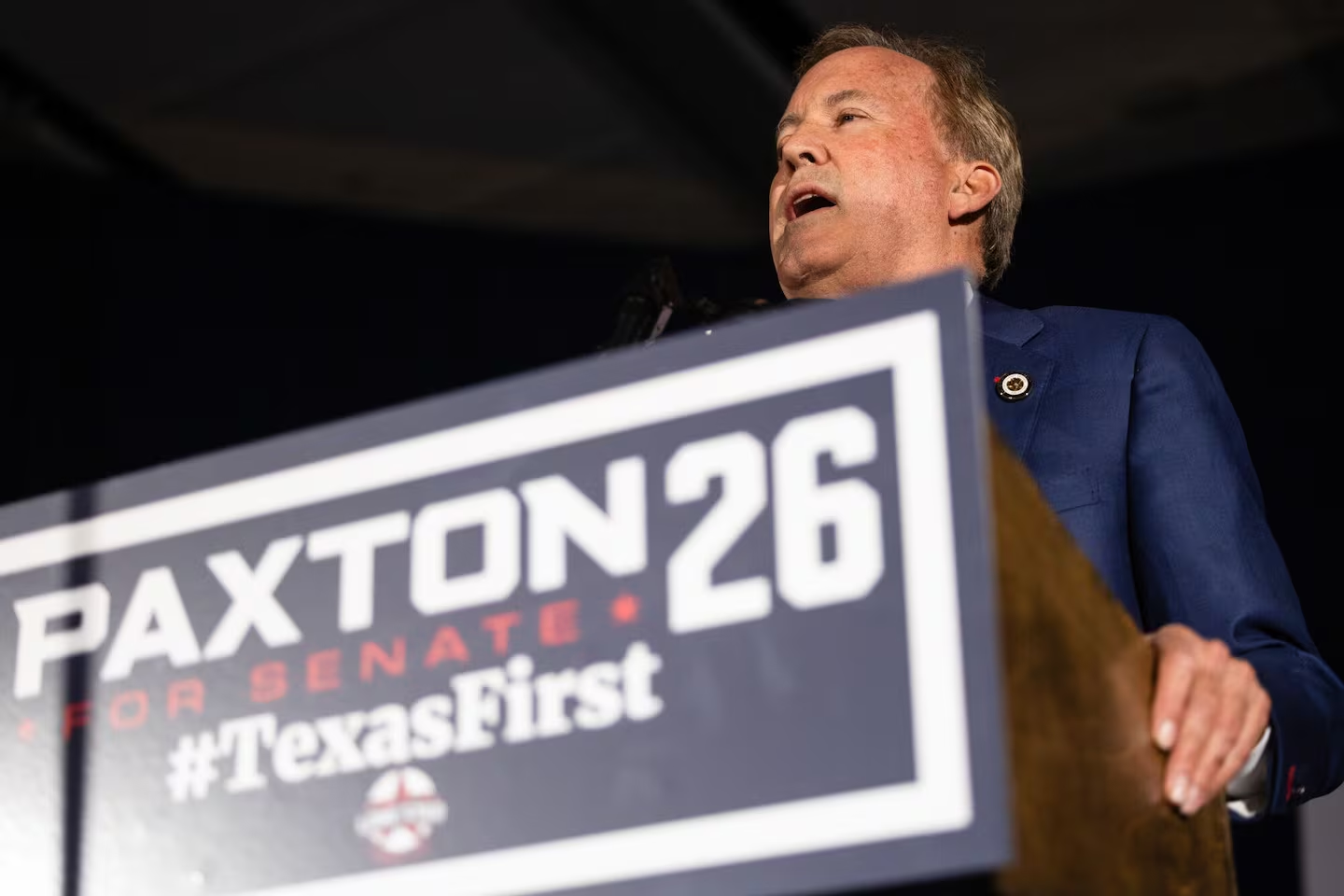
Trump’s decision on Tuesday to endorse Texas Attorney General Ken Paxton’s challenge against Republican Senator John Cornyn couldn’t have come at a worse time for the Republican Party, or possibly even for Trump himself.
In addition to backing a candidate like Paxton, who has aligned himself with the party’s extreme right and carries so much baggage that Texas suddenly looks like a Senate toss-up in the general election, the endorsement also came at the worst possible moment.
It came one day before early voting began in Texas, but long after the race had already earned the designation as the most expensive Republican Senate primary in American history. By the time the Republican primary occurred in early March, more than $110 million had been spent fighting Republican money with Republican money in the nation’s second-largest state. Neither candidate was able to secure the 50 percent necessary to avoid a runoff, so here we are more than two months later with tens of millions more being spent in a race that could over now that Trump has endorsed.
And, in the words of South Carolina Senator Lindsey Graham, it’s a contest that just got “three times more expensive” for Republicans to win in the general election.
Even strong backers of Cornyn, like Senate Majority Leader John Thune, insisted that if Trump was going to back Paxton, with whom he is more ideologically aligned, Trump should have made the endorsement last year or at least well before the March primary. That way the money spent trying to boost Cornyn could have been better spent either in other states or on the general election in Texas itself.
But no.
The timing is indeed interesting.
Even last week, Cornyn told reporters he wasn’t expecting Trump to weigh in. But over the weekend, the Senate parliamentarian stripped ballroom funding from a spending bill. Trump reportedly called Thune on Monday, demanding he fire the parliamentarian. Thune said no. Thune later criticized a slush fund Trump created to aid those prosecuted over their actions during the January 6 attack on the Capitol.
And less than a day after those comments, Trump endorsed against Thune’s preferred candidate in Texas.
Read more Abortion pill lawsuit leaves Trump silent, and in a political bind
Of course, Trump’s backing of Paxton also came after another Republican senator he opposed, Bill Cassidy, finished third in a largely three-way Republican primary in Louisiana on Saturday. Trump may have felt even more emboldened.
All of this presents a situation where Trump could win in the immediate short term, only for it to backfire in the medium and long term.
In the short term, yes, this makes Paxton the overwhelming favorite in the Texas Republican runoff. Trump can claim victory.
But then what? At that point, Cornyn becomes a lame duck serving out the rest of the year with little reason to do what Trump says. Cassidy, the newest lame duck senator, said on Tuesday that he was absolutely voting against Trump’s ballroom proposal in whatever form it comes before the Senate. Given that Trump can only lose three GOP votes, and there is already uneasiness within the conference, that likely means the proposal is never going to be Senate-funded.
Now add Cornyn to the list of the aggrieved for the next tough Senate vote.
One recurring difficult vote has been efforts to cut off funding for the war in Iran. Trump survived by a single vote last week. It is entirely possible that Cornyn and Cassidy could eventually provide the necessary votes to end what is already becoming an unpopular war.
Longer term is where this could really backfire on Trump. Every poll since the March primary has found Democratic nominee James Talarico leading outside the margin of error, and the pattern is clear that Talarico – who raised a staggering $40 million in one quarter – has a better chance of defeating Paxton.
Beyond the Republican money that will now have to be spent defending a Republican seat instead of trying to flip one in Michigan, New Hampshire, or Georgia, it is entirely possible Democrats could actually flip control of the Senate.
If that happens, all of Trump’s court picks could be stalled and his ability to shape events around the globe could suddenly come into serious question at the very moment he is entering legacy mode.


Post Comment