Upset over cuts, some Boston city councilors weigh rejecting Wu’s budget plan to push for higher spending
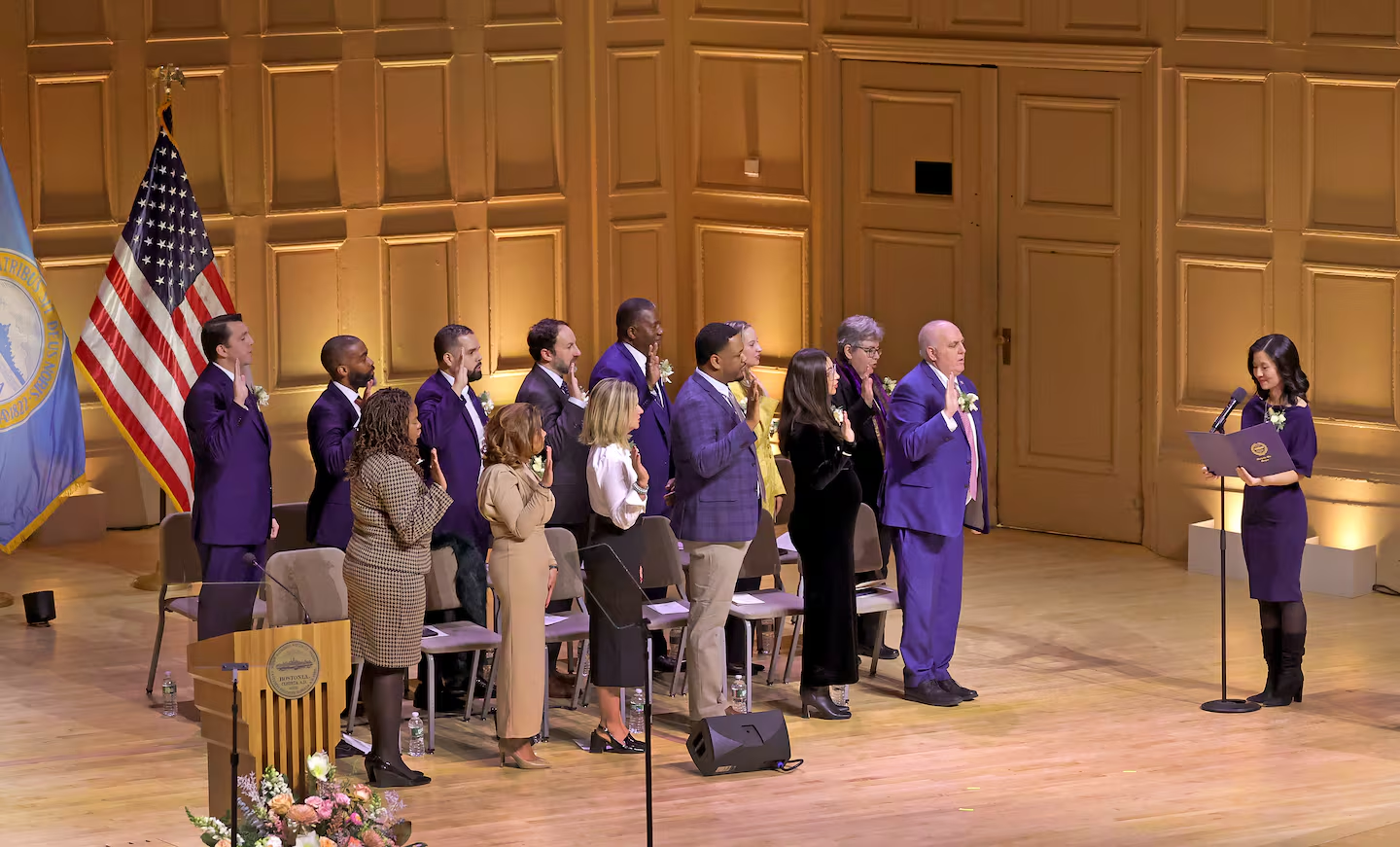
Some Boston city councilors are weighing rejecting Mayor Michelle Wu’s $4.9 billion budget plan in a bid to pressure her to increase spending and restore some proposed grant and department cuts, according to Wu and members of the council, adding political tension to an already taut budget cycle.
Read more Florida court to consider whether new US House map violates state ban on partisan gerrymandering
In a letter Thursday, Wu told councilors she will not increase the bottom line in her spending plan, even if a majority of the 13-member council votes to reject it next month.
Wu wrote that it would be “fiscally irresponsible” to inflate the city’s revenue projections or dip into its $1 billion emergency savings account, as some councilors have pushed for, to reverse some of her proposed budget cuts.
“Budget management is a shared responsibility of the Administration and the City Council, and it is critical that we tackle these challenges together to ensure the City remains on stable financial footing,” Wu wrote.
Since late last year, Wu has warned that the city is facing a challenging budget season because of stagnant tax revenues and steep cost increases around health insurance and snow removal.
The $4.9 billion spending plan she unveiled last month slashes many grant programs, cuts some department budgets, and, by hiking spending by 2 percent over the current fiscal year’s $4.8 billion budget, represents the smallest year-over-year spending increase since the Great Recession, Wu has said.
Councilor Erin Murphy told the Globe onThursday that there is “strong appetite” among at least six or seven councilors, including herself, to reject the mayor’s budget outright.
Murphy said she cannot support a budget proposal that includes slashing $700,000 from the veterans services department’s budget and eliminating funding for the city’s year-round jobs program for students.
“Our first responsibility is to get a budget that actually works for the city of Boston, and to me, the budget we have in front of us right now is too low,” Murphy said. “Rearranging cuts inside a budget that I think is inadequate to begin with is not going to help us.”
Instead, she argued that the city should use a small portion of its reserve funds to walk back some of the mayor’s suggested cuts.
Wu warned that increasing spending beyond what she has recommended could cause a midyear budget shortfall.
Read more Trump prepares to round out talks with Xi as China visit nears end. Follow live updates.
The council has the ability to adjust line items in the mayor’s budget, but it cannot increase the overall amount of money the mayor is proposing to spend.
Councilors must vote to accept, reject, or change the mayor’s budget before the second Wednesday in June. The mayor must then either veto or accept the council’s changes, and return the budget to the council for final passage. The council can override a mayoral veto with a two-thirds vote.
Councilor Sharon Durkan, a close Wu ally, echoed the mayor’s argument that increasing spending would be irresponsible in the current economic climate. The city is already facing a $50 million budget deficit this year, and may have to use reserve funds to fill that gap.
“We can’t pull money out of a hat,” Durkan said. “Every councilor who’s walked into the budget season knows that the budget cannot get bigger.”
She also argued that by rejecting the mayor’s budget, the council could effectively forfeit its power to make changes to the spending plan. If the council does not take action to either accept, amend, or reject the budget by the deadline in June, the mayor’s proposed budget goes into effect.
And even if the council rejects the proposal, the mayor is not obligated to send it back with changes, according to a memo from the city’s law department, Wu released on Thursday.
“We definitely need everyone to be on the same page,” Durkan said, adding that the City Council should use the budgetary powers it has to make changes.
“Any other conversation, I think, is a bit of a distraction from that,” she said. “We just need to get to work and roll up our sleeves and figure out what edits we want to make to the budget that’s been presented to us.”
Councilor Ben Weber, who chairs the council’s Ways and Means Committee and oversees the budget process, did not directly say whether he supports rejecting Wu’s budget but said the council willdeliver “the best budget we can for the people of Boston.”
“All options are on the table,” Weber said. “The budget reflects a lot of tough choices the mayor made. I think even if we exercise our amendment authority, there are still going to be tough choices to make.”
Read more Trump insists US-China relations are in a good place despite differences as he wraps up Beijing trip


Post Comment