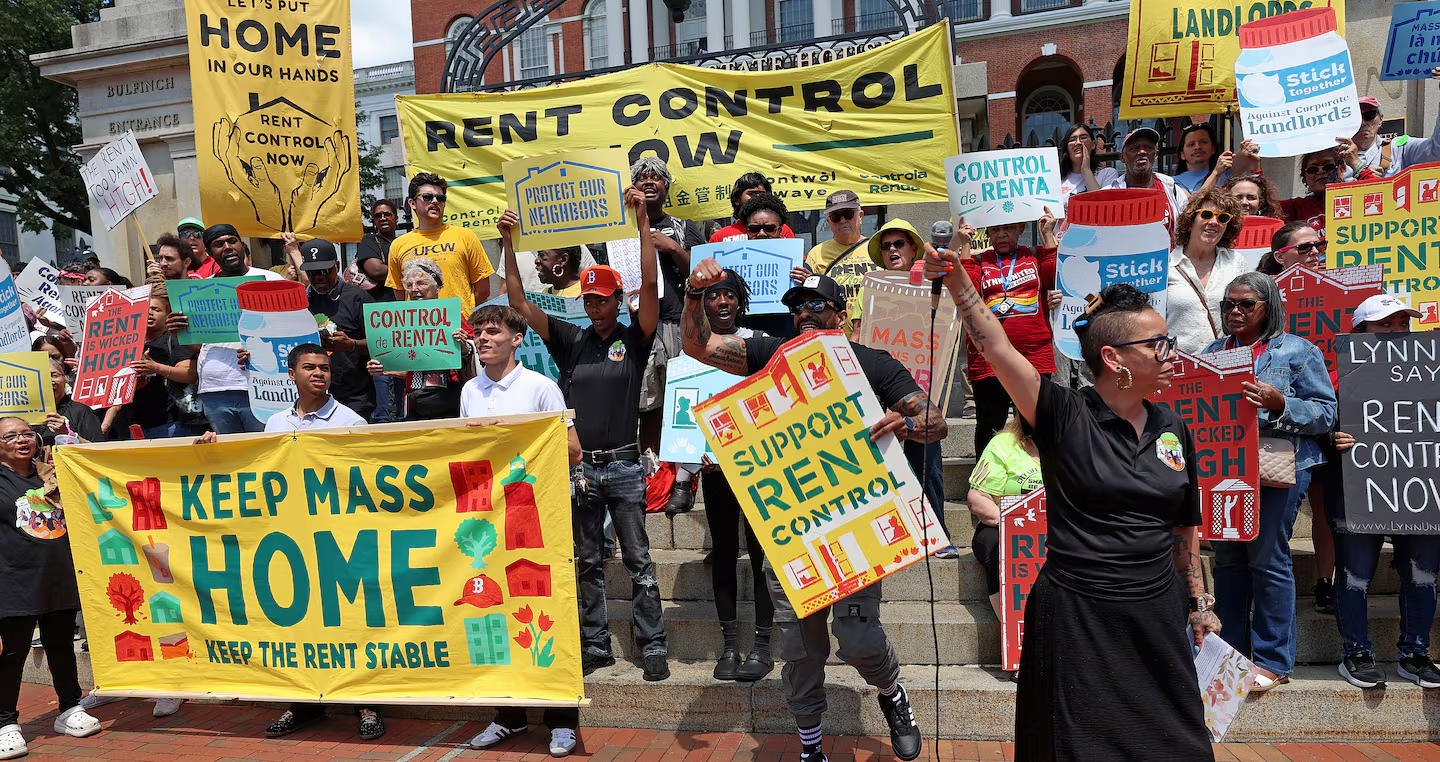
Rent control’s survival on Beacon Hill ‘diminished’ after high court tosses ballot question
A court ruling this week striking down a ballot question to establish rent control in Massachusetts has “diminished” the possibility of a deal emerging this year on Beacon Hill, lawmakers said Wednesday, and prompted real estate industry officials to declare any further talks unnecessary.
Read more Trump berates Senate Republicans over Iran war vote after calling off bill signing
The decision from the Supreme Judicial Court on Tuesday to block the ballot question scrambled advocates who had hoped to strike an agreement with major real estate groups — and avoid a costly campaign — to realize some form of rent control in the Legislature, where Democratic leaders have long been wary of its impact.
But in the wake of the ruling, many of those involved or close to the discussions acknowledged a deal is unlikely to advance without the pressure of a ballot question hanging over Beacon Hill.
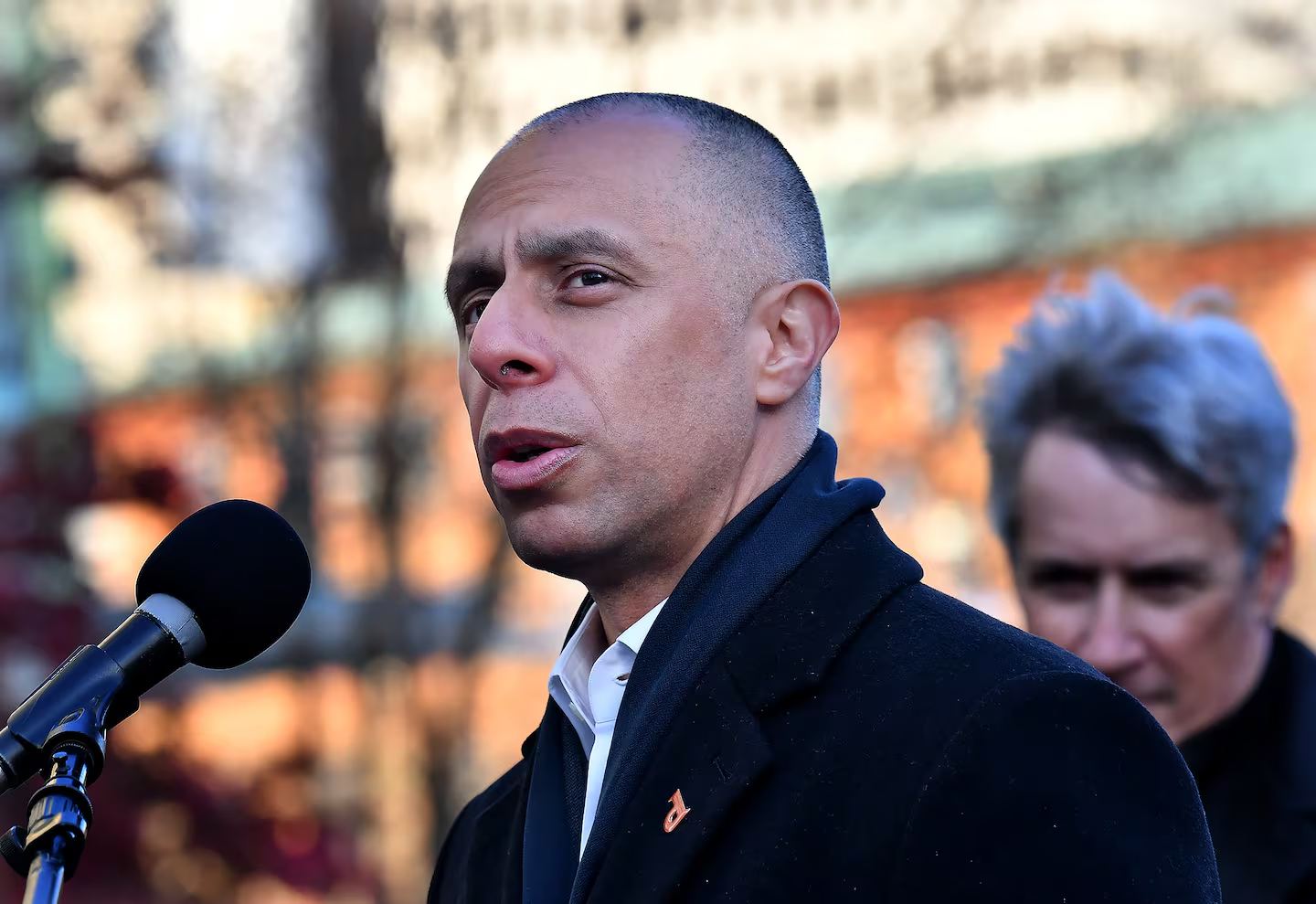
State Senator Julian Cyr, the Senate chair of the Legislature’s Housing Committee, said the members of the real estate industry who were haggling with the authors of the ballot initiative “are no longer going to negotiate now that it’s tossed off the ballot.”
“With rent control no longer on the ballot, the pressure for proponents and opponents to strike a deal is diminished,” said Cyr, a Provincetown Democrat. That said, “if the proponents and the opponents keep negotiating or come to us with a good idea, we’re all ears.”
The rent control ballot question would have barred most landlords from raising rents by more than the rate of inflation, or 5 percent per year, whichever was lower. And the measure would have applied statewide. It would have been the strictest statewide rent control program in the United States.
Opponents of the measure argued it would slow the construction of new housing, and some local mayors feared it would further stress already tight municipal budgets. But supporters argued the initiative would have given residents needed relief from the state’s suffocating housing costs.
The two sides appeared on track for a bruising campaign battle this summer. Instead, the Supreme Judicial Court ruled the proposal violated the state Constitution because it would have exempted units in religious facilities. Under the state Constitution, certain matters, including religion, cannot be subject to an initiative petition.
Justice Frank Gaziano’s 27-page decision squashed the momentum of a compromise.
“Since the ballot question has been tossed by the SJC, there is nothing on which we would be compromising,” said Tamara Small, chief executive of NAIOP Massachusetts, a powerful real estate lobby in the state.
The prospect of a deal alone was a major development in advocates’ years-long quest for rent control.
Read more Same-sex marriage is dividing Republicans again
The policy had faced repeated setbacks in the state Legislature, including staunch opposition from House Speaker Ron Mariano and other leaders in the Legislature. A rent control proposal two years ago fell apart after disagreements between advocates over the best strategy to move forward.
But organizers’ success in advancing a question this election cycle forced real estate groups to the table, including NAIOP, which signaled last week a willingness to negotiate “in good faith.”
And with public polling suggesting strong support, some lawmakers took the matter seriously. Still, others on Beacon Hill cast doubt Wednesday on whether the talks would ever have produced acceptable language.
“[The discussions] did not include all of those who opposed the question, and I think any sort of compromise that the Legislature would consider would have to be something that all of the parties participated in,” said state Representative Alice Peisch, a Wellesley Democrat who helped lead a legislative committee that reviewed ballot questions this election cycle.
State Senator Cindy Friedman, an Arlington Democrat and Peisch’s counterpart on the committee, said finding a solution to the state’s housing crunch — rent control or otherwise — is a difficult task.
“This is a real issue. It’s very complicated,” she said. “Getting to the right answer that would fix it, one size fits all, is really hard.”
Organizers behind the ballot question, however, held out hope Wednesday that negotiations will continue and are pledging to bring the measure back before voters in the next statewide election.
Carolyn Chou, the executive director of Homes for All Massachusetts, the group behind the proposal, said advocates have been working on rent control for years, and argued that the ballot question “showed the energy, the need, the popularity” around the idea.
Read more Trump turns America 250 kickoff into a campaign-style rally on the National Mall
Andrew Brinker of the Globe staff contributed to this report.


Post Comment