With new fiscal year looming, Boston City Council accepts Wu’s amended $4.9 billion budget plan
The Boston City Council on Wednesday accepted Mayor Michelle Wu’s $4.9 billion budget proposal for the fiscal year that begins next week, adopting a tweak Wu made to the plan to avoid what she called potential layoffs in the transportation department.
Read more Pentagon restores mandatory flu shots for all recruits as boot camp outbreak sickens nearly 300
The decision put a relatively quiet coda on a tense budget season as the city juggled increasing costs and fierce pushback from community groups over budget cuts Wu pushed. The mayor has said the plan marks the smallest year-over-year increase the city has proposed in spending since 2009.
Wu last week approved nearly all of the roughly $11.5 million worth of changes the council made to her spending plan, but effectively reversed a $1.4 million cut to the transportation department’s personnel budget, saying it would lead to layoffs that would hurt operations and city services.
Instead, Wu proposed to pull the $1.4 million from the transportation department’s budget for contracted services to replace the personnel funding. The move meant Wu preserved the council’s decision to redirect that money to various grant programs Wu had moved to cut.
Wu said the transportation department will absorb the alternative cutby changing payment schedules and adjusting “service levels.”
City Councilor John FitzGerald, who pushed the budget amendment with the original $1.4 million cut, on Wednesday said he supports the mayor’s change, but blamed Wu’s office for giving him conflicting information. FitzGerald claimed the administration told him the department’s staff budget could absorb the cut, but that they walked that back and said it would cause layoffs only after it passed, citing a “miscalculation.”
“Our intent was always in the way of keeping as many jobs as possible for our city workers,” FitzGerald said Wednesday.
A spokesperson for the mayor’s office did not directly respond to a request for comment on FitzGerald’s claim. But in a letter to the council earlier this month, Ashley Groffenberger, the city’s chief financial officer, warned that changes councilors had proposed could lead to layoffsin several departments, including transportation.
The council meeting Wednesday was the body’s last before the new fiscal year begins July 1. While the council did not take a formal vote on Wu’s returned proposal, the body effectively adopted the spending plan because no councilor moved to override her change.
In a statement Wednesday, Marcela Dwork, Wu’s press secretary, thanked the councilors for their “due diligence.”
Read more Former Cranston mayor Allan Fung is running for the state representative seat his wife once held
“In challenging economic times, we continue to prioritize city services for the highest quality of life in every neighborhood and protect the City’s financial health through sound fiscal management,” Dwork said.
Some city councilors on Wednesday expressed frustration that the council was not able to reverse all of the cuts Wu had included in her initial proposal.
“The programs and the grants that were placed on the chopping block were not luxuries or extras, they were investments serving some of Boston’s most vulnerable residents,” said Councilor Miniard Culpepper. “We made it clear that those cuts were unacceptable, and as a result, the budget is stronger today than the version that was first presented to us in April.”
The council already granted Wu’s request to pull nearly $70 million from the city’s emergency reserve fund to cover deficits in the city’s and Boston Public Schools’ budgets forthis fiscal year. It alsopassed a $1.73 billion budget for Boston Public Schools that would cut hundreds of staff jobs.
Since late last year, Wu has warned that the city would have to make tough budget choices as it grapples with inflation, higher-than-anticipated expenses related to health insurance and snow removal, and slower revenue growth.
In April, she unveiled her $4.9 billion budget proposal which made cuts to city departments and grant programs that range from support for immigrant residents to money for food access. Wu framed the cuts as painful but necessary to keep the city’s books balanced.
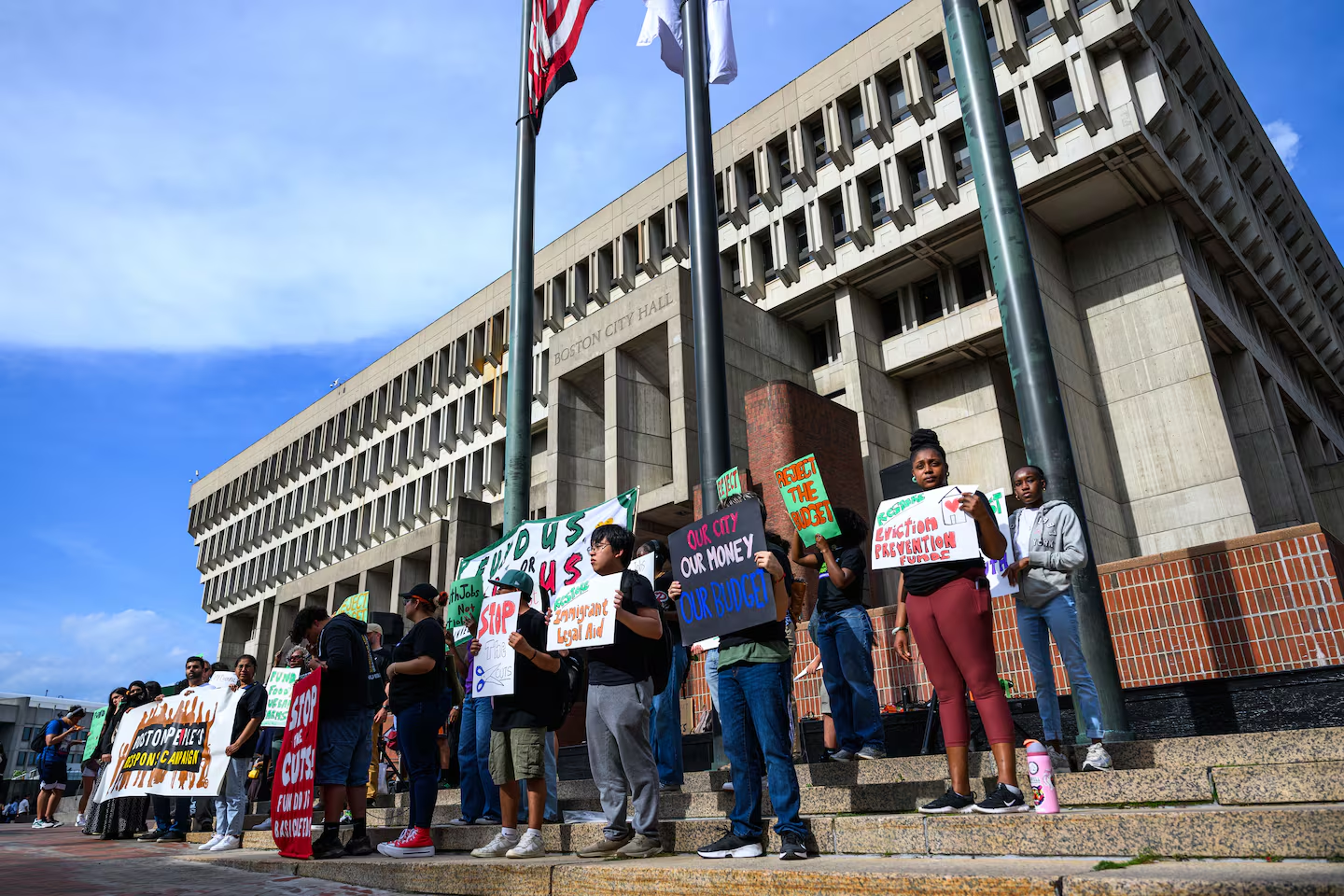
But youth activists and community groups fiercely protested Wu’s move to eliminate funding for a series of grants, particularly one that funds a school-year jobs program for Boston students and young adults.
The advocates also pressuredthe City Council to reject Wu’s budget proposal and push her to increase overall spending to restore the funding for the programs in jeopardy. The council ultimately deadlocked on a vote to reject the plan, and earlier this month voted, 12-1, to approve about $11.5 million in amendments to Wu’s budgetthat were largely aimed at redirecting money to the programs on the chopping block.
On Wednesday, the council also voted to opt in to a state law that allows municipalities to expand eligibility for the senior property tax exemption by annually increasing the income and asset limits based on inflation.
Read more Rent control’s survival on Beacon Hill ‘diminished’ after high court tosses ballot question


Post Comment