Virginia company plans to bring battery farms to six towns in Mass.
Six Massachusetts towns are plugging into battery power under a series of related deals announced on Monday by Lightshift Energy, a private-equity-owned developer based in Virginia.
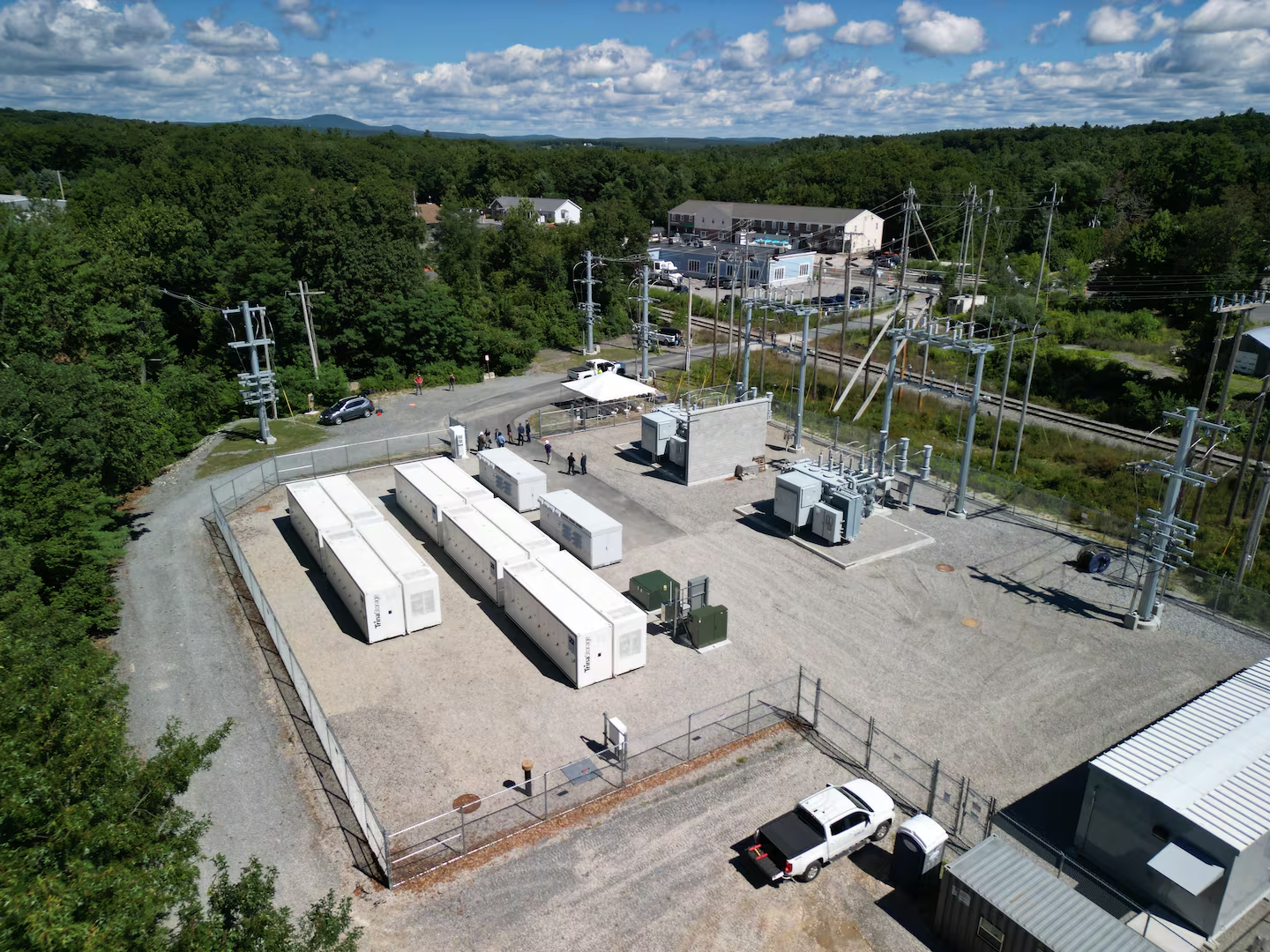
Lightshift plans to build and operate grid-scale battery storage projects ranging in capacity from 3 to 5 megawatts in the towns of Georgetown, Ipswich, Groton, Princeton, Ashburnham, and Marblehead. (Projects of this size can power hundreds, or sometimes thousands, of homes for up to four hours.) All six of these towns have something in common: They are served by municipal electric utilities, as opposed to investor-owned companies such as Eversource and National Grid.
Rates tend to be lower in “muni” towns, but Lightshift promises further savings by allowing these locally owned utilities to rely on battery storage during times of peak electric demand, when wholesale electric prices are often sky-high. Lightshift saysthese batteries will provide more than $90 million in savings to these towns over the span of its 20-year contracts. And by developing these as part of a broad statewide portfolio, with six previously announced and more on the way, Lightshift can save on project costs.
Of the six new projects, all except Ipswich, which is under construction, still needto line up major town permits before work can begin. They’re expected to go online over the next three years, all on municipally owned sites. Lightshift negotiated the contracts with individual towns as well as the Mass. Municipal Wholesale Electric Co. (aka MMWEC), an organization that buys power on behalf of muni systems. Lightshift declined to disclose the project costs.
These battery projects also provide support for New England’s broader electric grid, by making the region less reliant on expensive power plants and transmission projects during times of high demand. They arrive as Massachusetts officials have decided to orchestrate long-term contracts to build much larger battery farms, including a 700-megawatt project in Everett, to support the grid and reduce greenhouse gas emissions.
Rory Jones, Lightshift’s cofounder and managing director, singled out Paxton, one of the towns where Lightshift currently runs a battery farm, saying that these lithium-ion batteries could save residents there $100 a year.
“For a small town like Paxton, … that’s very meaningful for ratepayers,” Jones said. “Every dollar that we’re saving for the town of Paxton is almost entirely going back to a reduction in bills.”
Jason Viadero, MMWEC’s chief development officer, said the partnership with Lightshift resulted from an effort that his organization launched nearly four years ago. Lightshift can bring economies of scale by buying batteries for a dozen or so municipal utilities, instead of just one at a time, a benefit in particular for smaller towns.
“Repeatability helps in keeping costs down, and building trust from the public is important,” Viadero said. “When we have a repeatable process for developing projects, … it helps avoid many of the pitfalls others have seen in trying to install energy storage projects in Massachusetts.”
Read more Why luxury steakhouses are such big business in Boston





Post Comment