Fatal Missouri skydiving plane crash renews concerns about safety loophole
In April 2025, when a sightseeing helicopter plunged into New York City’s Hudson River, killing five Spanish tourists and a pilot, federal investigators immediately cited the need for tougher safety standards for commercial air tours.
Read more Small spaces, big dreams: How the World Cup is spawning ‘mini-pitches’ across New England
Most sightseeing airplanes and helicopters face less scrutiny from safety regulators than air taxis or charter flights do, National Transportation Safety Board chairwoman Jennifer Homendy said a day after that crash.
They undergo fewer safety inspections. They don’t need to carry black-box crash recorders. And they don’t need to maintain systems for spotting and fixing safety problems.
“This is a concern we’ve raised for a number of years,” Homendy said.
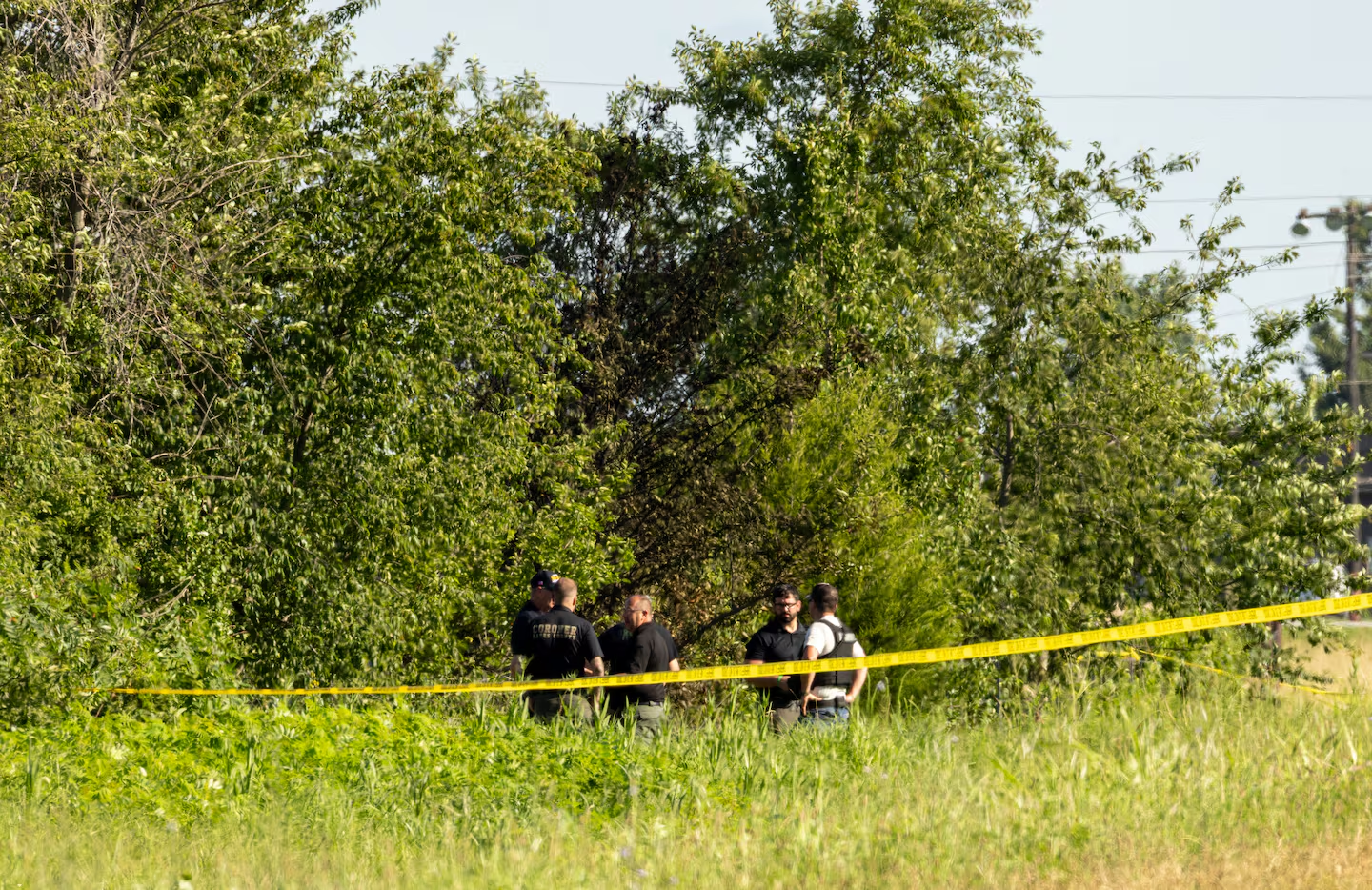
The NTSB raised it again this week – this time after 11 skydivers and a pilot were killed in a crash on Sunday in Butler, Missouri.
Investigators said it was too early to speculate on what caused the crash, which occurred shortly after takeoff, but they would be examining factors tied to federal oversight.
The tour operator, Skydive Kansas City, did not immediately respond for comment.
“It’s always frustrating when we see things that the FAA hasn’t acted on with our recommendations and then we continue to see accidents in that arena,” NTSB vice chairman Michael Graham said Monday, echoing his colleague’s message from a year ago.
The NTSB has complained for years that federal rules treat skydiving planes and many sightseeing aircraft more like private personal planes than commercial airliners, despite carrying paying customers. The same goes for “living history” flights involving historic aircraft.
“It’s a loophole,” said Jeff Guzzetti, a former FAA and NTSB accident investigator.
Most people don’t know about it, Guzzetti said. A NTSB report noted that the public is “likely unaware that these operations have less stringent requirements than other commercial aviation operations.”
The less-stringent safety rules have been blamed for playing a role in many fatal crashes, according to NTSB investigations.
In 2018, the NTSB called out the FAA’s “inadequate oversight” after five people were killed when a helicopter used for an aerial photography trip crashed in New York City’s East River.
After 11 people died in a skydiving plane crash in Hawaii in 2019, the NTSB cited “broader systemic safety issues” with these kinds of flights.
A 2021 NTSB report called for the FAA to reevaluate its treatment of air tours, noting there’s “a long history of concerns about the safety” of these flights because they “are not held to the same maintenance, airworthiness, and operational standards” as most other air carriers.
The report painted an alarming portrait of the safety standards for skydiving and sightseeing flights, saying its investigations of multiple accidents found “a lack of structured pilot training, deficiencies in pilot skills and decision-making, and inadequate aircraft maintenance were occurring.”
The rules are complicated, but most nonstop commercial air tours are covered by the less-stringent standards if they take off and land in the same location and don’t fly more than 25 miles.
The NTSB report suggested changing that rule to require the FAA treat all skydiving and sightseeing aircraft more like small commercial commuter flights. That would mean more frequent and formal oversight of things such as maintenance and training.
Read more Secret vetting and blocked promotions: Inside Hegseth’s war on diversity in US military
The FAA didn’t immediately address the NTSB’s recommendation.
But in 2024, the Senate version of an FAA reauthorization bill included a provision to force the FAA to adopt stricter standards – which would effectively close the loophole.
The aviation industry was alarmed.
Eight industry groups – including the Aircraft Owners and Pilot Association and United States Parachute Association – warned in a letter to Congress that the Senate provision “would be nearly impossible and financially unattainable for these small businesses.”
The proposed rules would “result in the closure of small aviation businesses without improving safety, and they will deprive the FAA of the resources and manpower needed to address priority issues,” the groups said.
They won the fight. The provision was stripped out of the final FAA reauthorization bill.
But a couple months later, the FAA passed a rule to require safety management systems for more commuter and commercial air tour operators.
And just last month, the FAA launched a rulemaking committee to look at strengthening the pilot-training and maintenance standards for commercial skydiving and sightseeing tours.
Parachute Industry Institute President Roberto Montanez, who sits on the rulemaking committee, said the problem is that for small skydiving companies, “you don’t get a huge safety benefit out of imposing all of the paperwork requirements on them.”
Montanez said small operators with one or two airplanes don’t present “the same level of risk” as a major airliner that flies hundreds of people at a time.
But some skydiving and sightseeing companies use the tougher FAA safety rules as a selling point, saying they go beyond what is currently required to what the NTSB has been wanting for years.
Island Helicopters, based in Hawaii, says on its website that its qualification for commuter plane certification “requires a higher standard of pilot qualifications and much more oversight for safety by the FAA.”
Five Star Helicopters, which offers tours of Las Vegas and the Grand Canyon, says its certification is “why we stand out” with stricter maintenance schedules and inspections than typical air tours.
Joan Camprubi, the brother of Merce Camprubi Montal, who was killed along with her husband and three children aboard that New York sightseeing helicopter, said he hoped the crash in Missouri would spur regulators to take action.
“The victims of this latest tragedy, like our own family members, deserve more than thoughts and prayers after the fact. They deserve action,” he said.
“No family should have to endure the grief and devastation that follows a preventable aviation accident,” he added.





Post Comment