R.I. lawmakers vote to block governor from opting into Trump school choice program
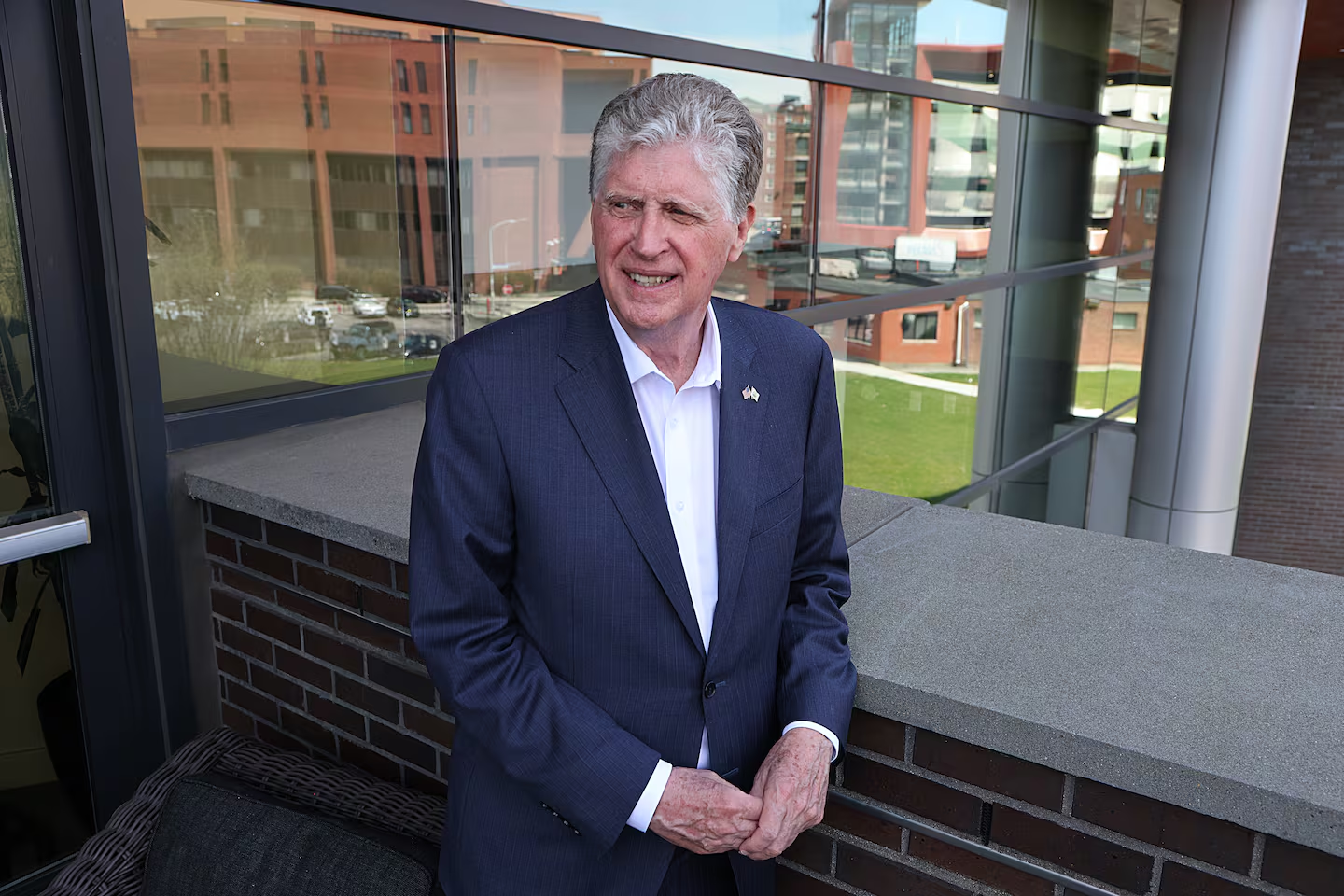
PROVIDENCE — Rhode Island lawmakers want to block Governor Dan McKee from opting into President Trump’s controversial school choice program, which is slated to allow public money to go toward private school tuition across the US next year.
The program essentially creates the first national school voucher system, typically a red line in the sand for Democrats. But while public money would go to private schools, it would also benefit public school students, causing somewhat of a conundrum for Democratic governors, who have to decide whether to opt in. The program starts Jan. 1.
The General Assembly sent a bill to McKee’s desk this week that would block him from deciding whether to opt Rhode Island into Trump’s program without their approval. McKee has until early next week to veto it, or it will go into effect.
His office said Wednesday he is reviewing the bill, and did not say where he stands on the program overall.
The massive school choice program was signed into law last year as part of the One Big Beautiful Bill Act. Set up as a tax credit program, it would allow private citizens to redirect up to $1,700 of their federal income taxes to a scholarship organization, which would then issue grants to students to pay for educational expenses including private school tuition, tutoring, after-school programs, and technology costs.
Every state has to decide whether to opt in. More than half of states have done so — mostly those with Republican governors — though two Democratic governors, in New York and Colorado, have said they plan to participate. Massachusetts Governor Maura Healey has not yet decided; her office said she is waiting for the federal rules to come out, which are expected this fall.
“Regardless of how the federal voucher program is written, the effect is the same,” argued state Representative Susan Donovan, the lead sponsor of the bill to prevent Rhode Island from opting in, on the House floor last week. “Public funds are redirected away from public schools and into private systems beyond public oversight.”
Since private and parochial schools are not overseen or regulated by the state, she said it could be “opening the door to massive fraud, waste and abuse.”
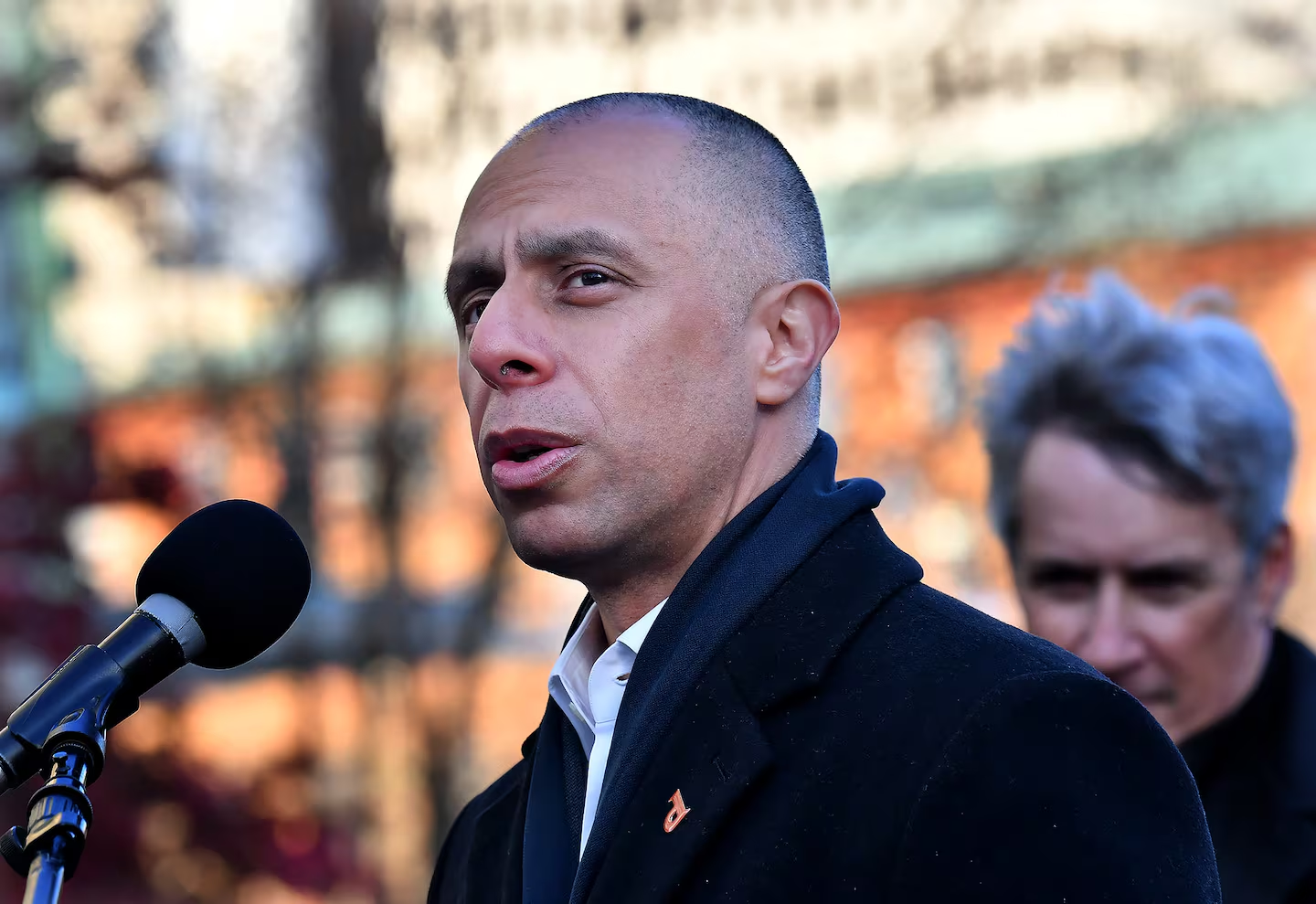
But Trump has some unlikely allies in pitching the program. Former Providence Mayor Jorge Elorza, who is now the CEO of Democrats for Education Reform, has been lobbying Democratic governors to opt in to the federal program. He wrote an op-ed in the Providence Journal this week urging McKee to veto the Rhode Island legislation.
“It’s such a no-brainer that every state should participate,” Elorza told the Globe in an interview. “The decision is: do we want our dollars to leave the state and go to the US Treasury where they will be spent on Donald Trump’s priorities, or do we want the money, potentially hundreds of millions of dollars, to stay here in the state?”
Elorza’s organization, which advocates for school choice, has calculated that if 168,000 Rhode Island taxpayers — 30 percent of those who owe more than $1,700 — choose to redirect their taxes to the scholarship organizations, it would result in more than $285 million going to schoolchildren in Rhode Island.
The federal tax credit reimburses the donation dollar-for-dollar up to the $1,700 maximum.
“The choice before us is participate and keep the dollars here, or not participate, and literally all of all of our money goes to Donald Trump,” Elorza said.
He argued the program is different from a typical voucher program.
“Not only do public school students stand to benefit, but I think they stand to be the biggest beneficiaries,” Elorza said.
He said he has not spoken directly to McKee, with whom he often clashed while in office. He has donated to Helena Foulkes, McKee’s primary challenger.
A spokesperson for Foulkes said if she becomes governor, she would opt out of the Trump program.
State Senator Sam Bell, a Providence Democrat and the lead sponsor on the Senate side, said it would be a “crazy thing to do” for Rhode Island to participate in it.
He said he is concerned that public school enrollment would drop if students had access to the funds for private school tuition. Since public school funding is determined by enrollment, the effect would be a funding cut.
“I don’t think Governor McKee would opt in,” Bell said, explaining why he introduced the bill. “However, I don’t know what future governors are going to do.”
He predicted that charter school families would be most likely to take advantage of a voucher for private school tuition, since they have already opted out of the traditional public school system.
“I think it’s unfortunate that Elorza has taken this approach because I don’t think it’s representative of the mainstream of the charter school movement,” Bell added.
The scholarships would be available to all but the wealthiest Rhode Islanders; the income limit is 300 percent of the median income in the area. In Providence, that would be $336,000 for a family of four.
“This is free federal money,” said Republican Minority Leader Michael Chippendale on the floor last week before voting against the Rhode Island legislation.
It passed easily, 57 to 13 in the House and 34 to 4 in the Senate. The majorities were high enough to override a veto from McKee, though it’s not clear if either chamber would actually return to do so. The legislative session ended last week, and most lawmakers are spending the summer campaigning for reelection.
The legislation is not the only big education decision McKee has to make over the next several days. He has also not decided whether to veto legislation to block new charter schools for the next three years, while also lowering the cap on how many charters Rhode Island can have in total.
He previously told the Globe he supports a moratorium, but didn’t want to lower the cap.
Read more Trying to get to the World Cup at the last minute? Here’s a trick: Don’t give up.


Post Comment