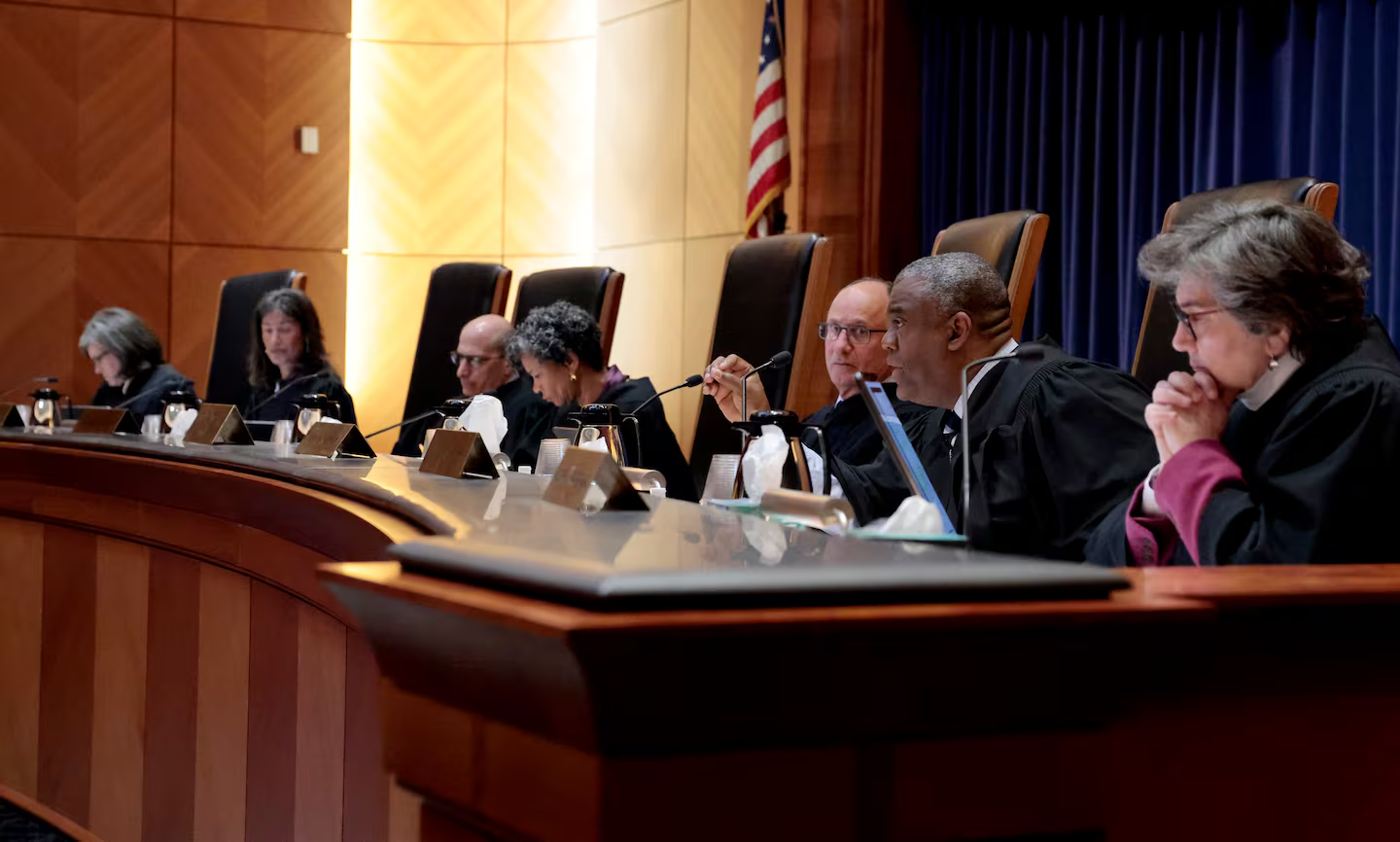
Amid a deluge of ballot questions, Massachusetts’ high court could dramatically shape the November ballot
Massachusetts voters could decide a record number of new laws this November. That is, if the state’s highest court lets them.
Read more Trump offers platitudes while Xi warns of coming confrontation during China summit
Long before voters will head to the polls, the Supreme Judicial Court is acting as a gatekeeper of sorts for what ends up on the ballot in November, having already played a key role in knocking one measure out of contention while deliberating the legal fates of at least four more.
There are a total of 11 initiatives wending their way through the political process. Of those, the court is weighing legal challenges to the one that would slash the state’s income tax, and others that would repeal a ban on rent control, roll back recreational cannabis legalization, and eliminate state party primaries as we know them.
That the SJC is in such a role is, in itself, not new. But the deluge of proposals means the seven high-court justices are playing an even more significant role than usual in what is otherwise a political process.
Their decisions “can certainly upend the entire election,” said Chris Keohan, a political consultant working on the campaign to reduce the state’s income tax.
“We’ve had so few ballot questions [before] comparably to this year,” said Conor Yunits, a political strategist who chairs the campaign opposing the rent control question. “But if they’re going to become more and more prevalent and we’re going to have 10 or 11 every year, then absolutely, they’re going to be playing a gatekeeper role.”
The 11 different ballot questions would be a record number of proposals for a single ballot; the current high-water mark is nine, last set in 1994. The flood of proposals comes as advocates across the state have expressed frustration with the pace of lawmaking on Beacon Hill.
Lawmakers had an opportunity to vote on various ballot questions barreling toward the November ballot, but a committee tasked with reviewing them recommended this month that the Legislature take no action on any of them.
That said, lawmakers have helped broker agreements in the past, notably in 2018 when they passed a so-called grand bargain that convinced various factions to drop ballot questions that, separately, would have lowered the sales tax to 5 percent, raised the minimum wage, and created a paid leave program for employees. In their place, the Legislature raised the state’s wage floor to $15 an hour, and ensured nearly all employees have up to 12 weeks of paid family leave.
Democratic leaders in the Senate this year also tried a different tactic, asking the SJC to issue a nonbinding advisory opinion on whether measures to reform legislative stipends and subject the Legislature and the governor’s office to the public records law pass constitutional muster. The court raised doubts about the former, enough that it killed the proposal, and resolved procedural questions about the public records proposal, allowing it to advance toward the election.
Senator Cindy Friedman, an Arlington Democrat who co-led the committee that reviewed this year’s proposals, said she “found myself agreeing with the principle of a number of” them but felt none had been vetted enough for the Legislature to vote on them.
“I don’t believe that the ballot initiative gives you good legislation,” she said.
David Sullivan, a longtime government lawyer who previously served as the top counsel in the Senate, said the high court is the “ultimate decider” of which questions qualify for the ballot. He pointed to a provision of the state Constitution, known as Article 48, that effectively makes the court “the referee” in debates over a ballot proposal’s constitutionality.
In one of the legal challenges before the court, members of the Democratic state committee say the ballot question to implement all-party primaries infringes on freedom of elections, a protected area under the state Constitution.
In another, landlords seeking to block the rent control question argue, in part, that it’s unconstitutional because it addresses too many subjects. Separately, a lawsuit brought by owners of cannabis businesses make a similar argument about the effort to repeal recreational marijuana.
The court has killed high-profile questions in past election cycles because they similarly overreached.
Read more Trump and DeSantis sued over donation of Miami land for extravagant presidential library
In 2022, justices rejected a controversial measure that would have allowed app-based companies to continue classifying drivers and deliverers as independent contractors rather than employees, handing unions a victory in their fight against the proposal. (Two years later, Attorney General Andrea Campbell reached a deal with Uber and Lyft that granted employment benefits and rights to gig drivers, heading off a similar ballot question during that election cycle.)
And in 2018, the court struck down the first iteration of the “millionaires tax,” ruling the question as written was unconstitutional because it combined multiple subjects. Supporters subsequently reworked the measure and got it back on the ballot, where it was approved by voters in 2022.
Andrew Farnitano, a political consultant who worked on the 2018 millionaires tax campaign, said he spent every morning for a month refreshing the SJC’s website, waiting for its decision.
And that decision comes with its own little buildup and drama: On the morning of its decisions, the SJC typically notifies the public at 8 a.m. about the cases for that day, but doesn’t release the actual ruling until 10.
“So you get about two hours’ warning before the decision is announced to the world, and in those two hours, the fate of the ballot question is decided,” Farnitano said.
All that said, the court’s role in deciding ballot question qualifications is technically narrow.
Lawrence Friedman, a constitutional law professor at New England Law, said the SJC only gets involved in the process if someone files a lawsuit challenging a question.
And those challenges, he said, typically focus on the measure’s adherence to the part of the state Constitution that lays out guidelines for initiative petitions, one of the few avenues residents have to propose laws or constitutional amendments.
“The SJC is not ruling on whether or not these are good or bad ideas. They’re just trying to decide whether or not the rules have been followed,” he said.
In past election cycles,stakeholders have also filed lawsuits with the SJC over the one-sentence summary that appears on the ballot voters receive.
This year, some opponents are so far taking a slightly different aim, targeting a longer summary prepared by Campbell’s office. Community organizers challenging the proposed income tax cut contend Campbell’s summary is unfair because it inaccurately states capital gains are excluded from the proposed tax rate reductions.
Andrea Park, a senior legal fellow at Homes for All Massachusetts, the group behind the rent control question, said the court is working on a “compressed timeline” to issue decisions because the secretary of state’s office must prepare information about ballot questions well in advance of printing them for the November ballot.
Secretary of State William Galvin said he hopes the court moves quickly on the lawsuits because his office is creating the lengthy voter information booklet.
“I’m literally ordering paper,” he said. “That’s what we have to do because we are going to be using a lot of paper.”
Read more Trump and Xi meet to discuss Iran, trade, and US arms sales to Taiwan. Follow live updates.


Post Comment