Owners’ salary cap proposal, rejected by the players, is the first salvo in MLB labor strife
NEW YORK — The cease-fire is over in the never-ending war between baseball owners and players.
And if you thought the 2020-21 lockout was rough, the 2026-27 version that is barely a week old already bears the hallmarks of turning into an uglier affair.
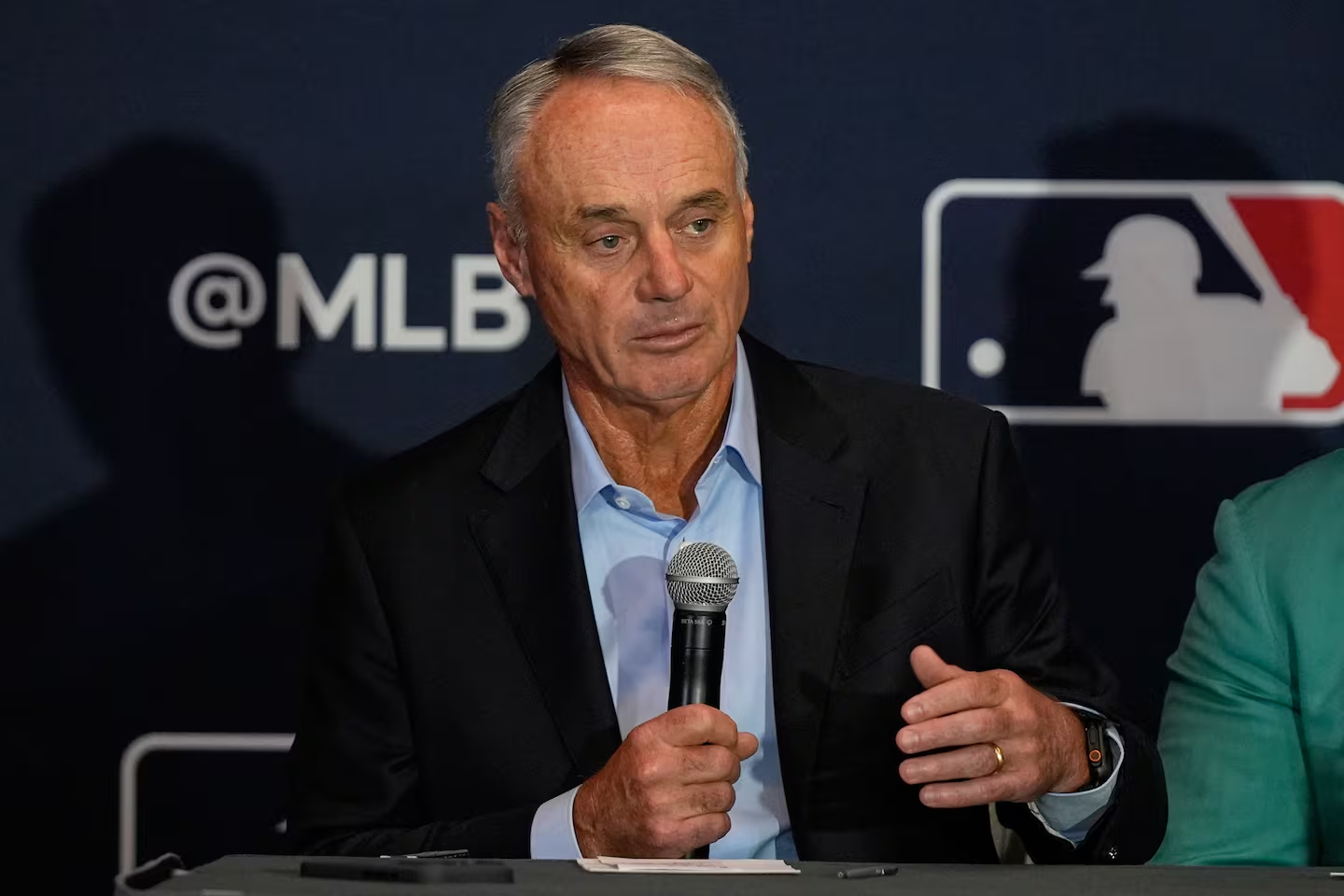
Commissioner Rob Manfred will take time out from the owners meetings at MLB’s midtown headquarters on Wednesday to address the media in a session that will no doubt be focused primarily on the owners’ first proposal of a salary cap since 1994.
Given how the players have already flatly rejected the salary cap proposal, there’s not much doubt that an acerbic remark, possibly a couple, will be made by the commissioner about the players’ stance on behalf of his bosses, the group of 30 small-, mid- and big-market club owners who have gone back to their 20th-century playbook.
That gambit led to the players’ strike in August of that season and lasted until the following April.
The walkout canceled the World Series and soured fans for years — some still to this day — over the inability of the millionaire players and billionaire owners to work out their differences.
And here we are again.
“We’re just getting started — last time we obviously didn’t have the 800-pound gorilla of the league proposing something that they know our players have fought against for generations,” said Major League Baseball Players Association interim executive director Bruce Meyer on Monday. “That obviously changes the dynamic.”
And to be clear, Meyer said he was “very surprised” at how unpalatable the owners’ proposal was.
“I mean, I thought they would try harder to make it look good, and they didn’t even do that.”
To be even clearer, Meyer said the owners’ salary cap proposal was “worse” than 1994’s and that in the end, “our union has never been broken and never will be.”
Meyer was the lead negotiator during the 99-day lockout that began Dec. 1, 2020, extended into March, curtailed spring training but did not shorten the regular season.
Tony Clark, the MLBPA executive director for that CBA and the prior one, is no longer with the union after resigning in February after an internal investigation revealed an inappropriate relationship with his sister-in-law.
Read more Connelly Early, Red Sox stumble in frustrating fashion vs. Orioles in 20th loss of season at Fenway
Each side claimed wins once the current CBA was hammered out, and baseball has been on an overall upswing the last couple of years with the institution of the pitch clock and automated ball-strike system leading to crowd-pleasing, attendance-boosting and time-of-game-shortening results.
That’s why the players’ proposal was, overall, a conservative document in that it stuck to salary-increasing measures that included increasing incentives for lower revenue clubs to spend on payrolls while working within the current economic system of luxury tax thresholds and revenue sharing.
The league, however, amplified the growing dismay among owners over the virtually unrestricted spending of other owners (think Mets and Dodgers) and carried through on its long-expected shift to a salary cap and floor system that it hopes will address the competitive imbalance it sees in the game.
The proposal for the 2027 floor is $171.2 million, with the cap set at $245.3 million.
Based on Opening Day payrolls this season, eight ballclubs, including the Red Sox, would cut their combined spending by $578 million to get under the cap, the league said, with 12 clubs having to increase their payrolls by a combined $617 million.
The league is seeking a 50-50 split of its revenues — the definition of which is, of course, a matter of disagreement with the union — in a system similar to that used in the NFL, NBA, and NHL.
Besides following the will of the owners, the league also said it was listening to fans, who MLB spokesperson Glen Caplin said in a statement “overwhelmingly support a salary cap and floor like in the other leagues because they don’t believe a $446 million spending gap from top to bottom is a fair fight.”
For every reason the union has to believe that the sport is not in an existential crisis, the league has a counter-argument.
And vice versa.
That’s the nature of any labor negotiation, at any stage, but in the very early days of these talks, the arguments sound as if they are being spoken in different tongues at different frequencies.
“I wouldn’t be optimistic expecting an early deal, but on the other hand, you never know, you never know,” said Meyer. “Hopefully we share an interest in growing the game, which you don’t need a cap for.”
The owners would more than beg to differ — they have proposed, dramatically, to differ.
Read more Follow live updates on the Trump administration
The result is a chasm that is only beginning to make its vastness apparent.
The lockout is set to begin as soon as the CBA expires on Dec. 1.
Here we are at the beginning of June, and the chill has already set in.



Post Comment