Blanche says Justice Dept. won’t proceed with Trump’s $1.8 billion fund
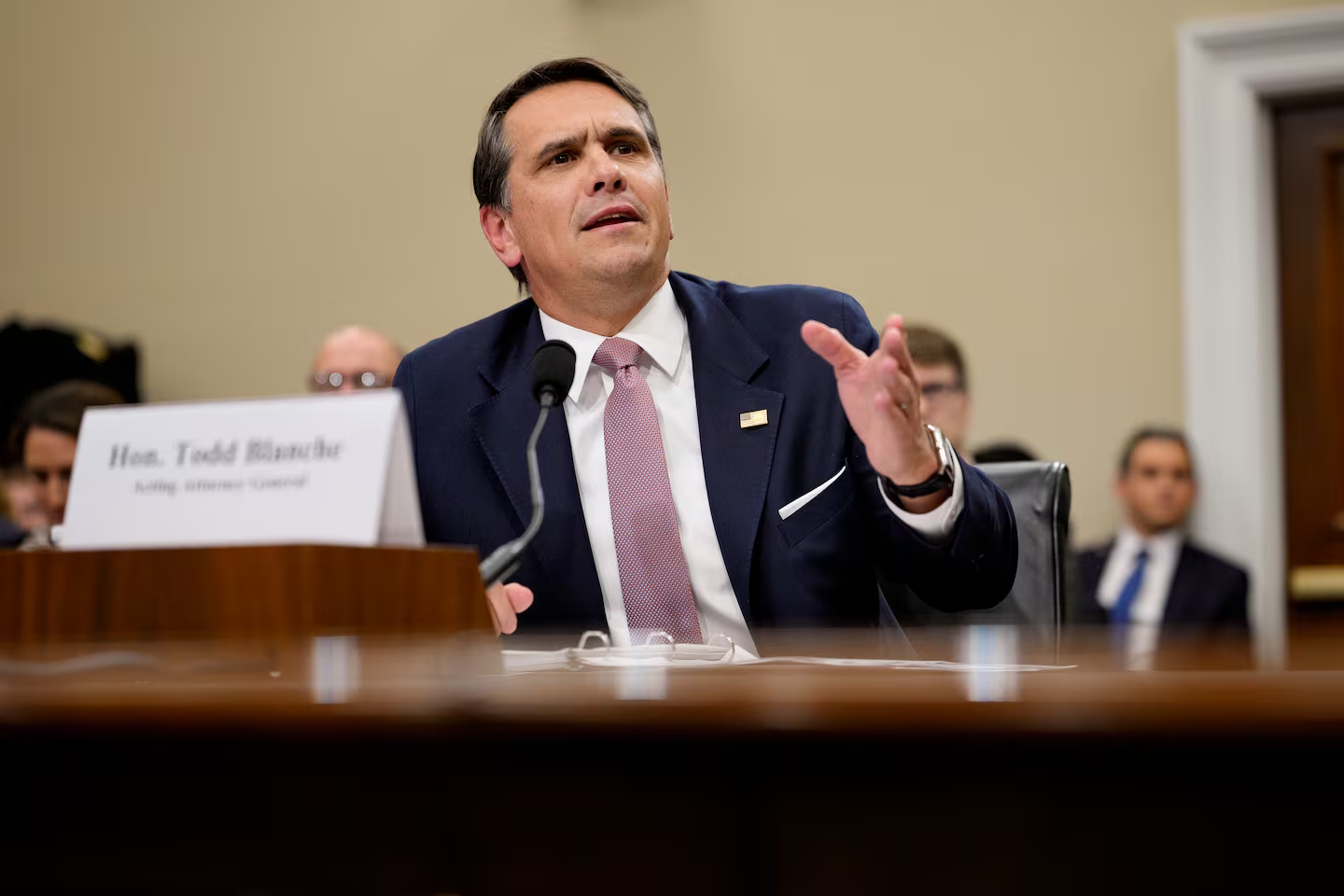
WASHINGTON — Todd Blanche, the acting attorney general, said Tuesday that he was withdrawing a proposal to create a $1.8 billion fund to compensate people claiming to be victims of unfair prosecution, amid a revolt among Republicans who saw it as an ethical and political disaster.
Read more Healey backs bill to keep bars open until 3 a.m. for World Cup
“We’re not moving forward with the fund, period,” Blanche told members of the House Appropriations Committee. He repeated himself to make clear that he meant the fund proposal would be permanently withdrawn.
His statement could break an impasse with Senate Republicans, who had demanded the fund be scrapped as a precondition for passing a major immigration enforcement bill. Opponents had described the proposal as a slush fund for allies of President Trump.
But Blanche said he would leave in place an order he signed last month that would, in effect, block the IRS from investigating Trump, his family, and his businesses for existing tax violations.
“Nothing has changed with that,” said Blanche, who added that the tax order would not shield Trump and his associates from future investigations.
Outraged Democrats accused Blanche, the president’s former defense lawyer, of cutting a sweetheart deal that would let the president and his family avoid a potential $100 million penalty.
“So the blanket immunity is, is not something that you’re going to move back on?” asked Representative Rosa DeLauro, a Connecticut Democrat, who accused Blanche of prioritizing the president’s financial interests over the public good.
While Blanche has now taken that plan off the table, much political damage had already been done. Along with the unusually favorable tax deal, it provides Democrats with a potentially potent line of attack in the midterm elections — that Republicans support a deal that could shield a billionaire from financial penalty.
The testimony came a day after the department committed to abiding by a federal judge’s order pausing the fund’s implementation until at least June 12, a decision some administration officials privately said could provide an off-ramp to unwind the plan.
Blanche, appearing last month before the Senate Appropriations Committee, had offered few details about how it would be implemented and declined to guarantee that the money would not be doled out to those who ransacked the Capitol on Jan. 6, 2021.
Trump had discussed backing off the plan to establish the fund, bankrolled by taxpayers, which was announced last month immediately after he agreed to settle a $10 billion lawsuit he had filed against the IRS over the leak of his tax returns.
Blanche has said he did not directly participate in the secretive negotiations that led to the settlement.
He had privately expressed concerns about a deal. But he determined that the plan, created by a subordinate and Trump’s private lawyers, including Boris Epshteyn, passed legal muster and assented, according to officials briefed on the talks.
Critics have accused the acting attorney general, Trump’s former lead defense lawyer, of sacrificing his department’s independence to serve a president he still views as a client.
In a wide-ranging podcast interview with Fox News host Sean Hannity released Tuesday, a relaxed Blanche systematically attacked all the prosecutors who had overseen cases against the president, offering an unapologetic defense of his pursuit of Trump’s campaign of retribution.
Blanche, ditching his standard suit for a polo shirt, assailed former special counsels Robert Mueller and Jack Smith, who had handled federal investigations into Trump. Blanche also attacked state and local prosecutors, including Alvin Bragg, the Manhattan district attorney, and Letitia James, the New York attorney general, who had pursued cases against Trump.
Blanche openly talked about the so-called grand conspiracy investigation that seeks to tie many of those inquiries together in a single purported plot to deprive Trump of his rights, breaking sharply with a Justice Department policy that bars the public discussion of ongoing inquiries, particularly those involving grand juries.
“There is a grand conspiracy investigation, correct?” Hannity asked, in an interview recorded over the Memorial Day weekend.
“Yes, absolutely,” Blanche responded. “One hundred percent.”
Blanche then revealed information about two grand juries, which typically sit in secret, hearing evidence in the case. He agreed with Hannity that one had been empaneled in Florida and the second in another state.
Blanche even disclosed some targets of the grand conspiracy case by name: James Comey, the former FBI director; John Brennan, the former CIA director; and James Clapper, the former director of national intelligence.
“Let’s talk about individuals,” Hannity said. “Comey? Brennan? Clapper?”
“Yeah,” Blanche said.
Nonetheless, Blanche and other senior officials have tried to blunt Trump’s attempt to monetize his grievances by obtaining government compensation for the leak of his tax returns.
The fund proposal allowed the president to drop his suit while creating a mechanism to provide payments to supporters who claimed they were also targeted unfairly.
“What we did was entirely legal and appropriate,” Blanche told Hannity. “And again, the Trump family gets nothing.”
But that proposal prompted a revolt among Senate Republicans, some of whom berated Blanche during a contentious meeting at the Capitol last month.
On Monday, the department had signaled that it was reevaluating the situation but stopped short of pulling the plug, saying in a statement that it would abide by the ruling in the US District Court for the Eastern District of Virginia temporarily suspending payouts.
But that initially did little to ease the concerns of Republican senators, who have reacted with revulsion to a plan they view as an ethical minefield and a potential political liability in midterm elections already made treacherous by Trump’s declining popularity.
Democrats pledged to attach amendments to legislation that would defund the effort, adding to demands by Republicans for the Trump administration to kill the plan outright.
Read more Iran stops talking to mediators, Iranian reports say, but Trump says talks continue
This article originally appeared in The New York Times.


Post Comment