Mass. lawmakers reach deal on $1.6 billion bill that ties business-friendly tax code changes to income tax ballot question
Democrats on Beacon Hill sent a clear message to the state’s business leaders Tuesday: Mess with the state’s income tax rate, and they’ll pause federal tax policy changes that could benefit local businesses.
Read more Trump taps housing finance director Pulte as acting director of national intelligence after Gabbard
State lawmakers sent the message in the form of an agreement on a $1.56 billion spending bill, which puts money toward everything from early literacy spending to World Cup costs.
Under the agreement, Massachusetts would phase in tax changes mirroring those made under the federal One Big Beautiful Bill signed into law last July. But they would stop them completely if a proposed ballot question to cut the income tax rate from 5 percent to 4 percent were to pass this November.
Lawmakers have cast the income tax proposal as catastrophic to the state’s budgeting because it could eventually trim up to $5 billion from annual tax collections.
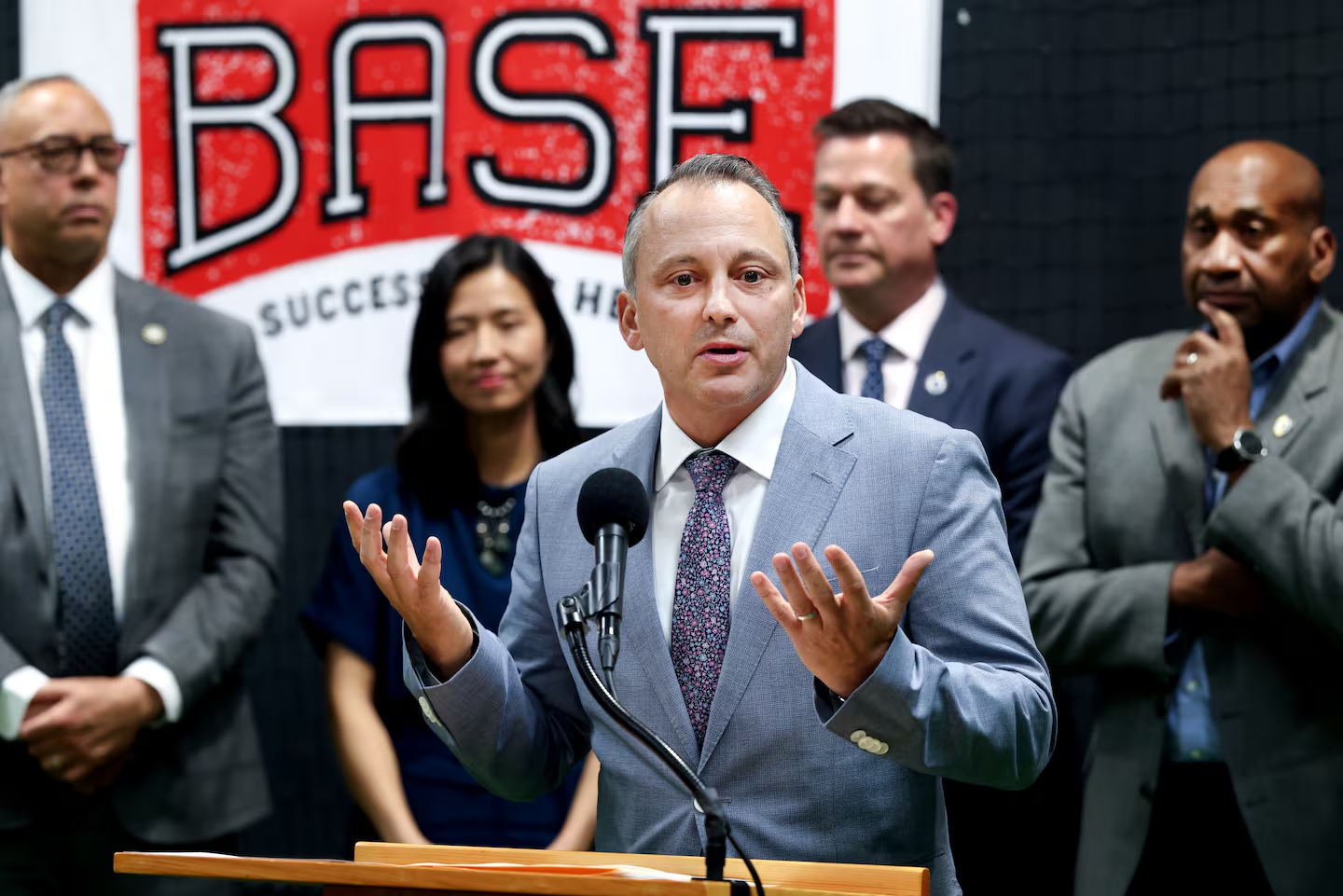
“We certainly know that it would have some potential major impacts on revenue over a period of time,” state Representative Aaron Michlewitz, the House’s budget chief, said Tuesday of the federal tax changes and the ballot question. “We felt we had to just make sure that we were protecting our revenue resources a little bit tighter. By doing this measure, I think we are doing that at least for the short term.”
Healey filed a bill in January that sought to delay state tax code changes that would parallel those included in the federal tax legislation, at least for one or two years. The change was intended to smooth the immediate impact on the state budget.
The proposal itself was controversial: Some business groups wanted to see the tax-cut benefits flow through immediately, while some progressive organizations would prefer to see these elements completely decoupled from the federal tax law, the Globe has reported.
Those changes include tax benefits for domestic research and experimental expenditures, depreciable business assets, and business interest.
But, should Healey sign the spending plan agreement, those changes “would pause” if the income tax cut is passed, according to a summary of the bill released by lawmakers.
Read more Mullin faces Senate grilling on DHS budget, immigration crackdown, and World Cup worries
The agreement comes after House Speaker Ron Mariano publicly spoke out against the income tax ballot question at a Greater Boston Chamber of Commerce event in April.
The initiative is being pushed by business groups, including the Mass. High Technology Council and the Massachusetts Competitive Partnership, who argue that the tax cut would improve the state’s competitiveness by reducing the cost of living and giving consumers more money in their pockets to spend.
Mariano said that House lawmakers are also concerned about affordability and competitiveness, “but the ballot question simply isn’t an answer to either of those challenges.”
“It’s my hope that the folks who are pushing this ballot question are willing to sit down with us and consider alternatives to their current approach,” he said at the time.
Michlewitz told reporters Tuesday that Mariano’s message “did resonate with some folks” but didn’t land with the coalition supporting the ballot initiative.
“Some of the responses I think were a little disappointing,” the North End Democrat said. “It doesn’t seem to be much of a discussion.”
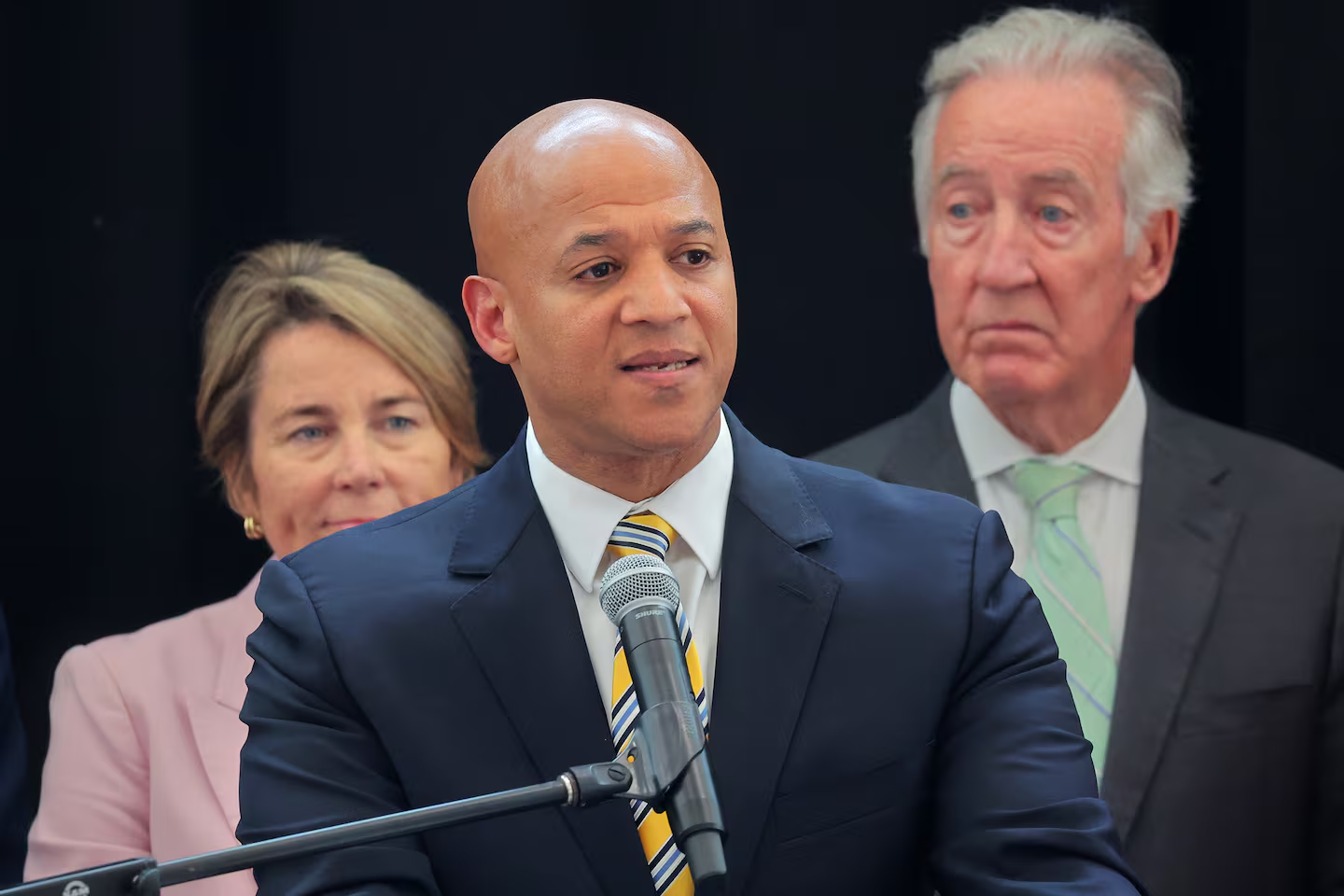
On Tuesday, Senate budget chief Michael Rodrigues said he sees “less of a momentum behind the initiative now” as voters discover ” a lot of unintended consequences with this ballot question.” He pointed to revelations that, should the proposal pass, it could also eliminate the state’s charitable tax deduction.
“It’s a prime example of why legislation by referendum, especially around very complicated issues like tax policy, just doesn’t make sense,” the Westport Democrat said.
Read more Scott Brown to formalize Senate candidacy on first day of N.H. filing period



Post Comment