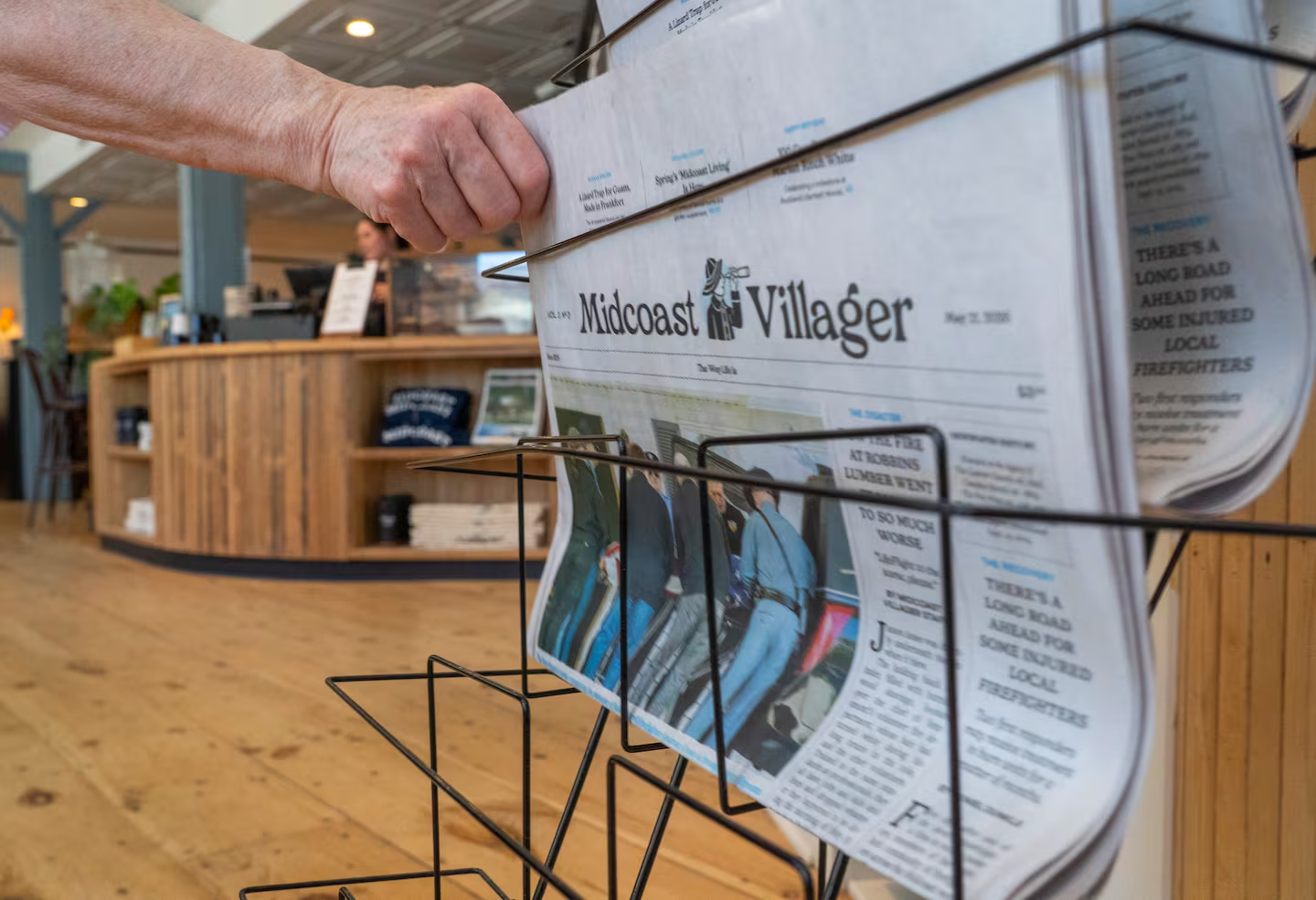
A Maine newspaper took a bold step in opening a cafe. Here’s how it’s faring a year after opening.
CAMDEN, MAINE — Between mugs of tea and coffee, salt and pepper shakers, and copies of the Midcoast Villager newspaper, residents are peppering an editor with questions about Camden’s town charter, parking ordinances, and a devastating fire at a nearby lumber mill.
Read more Diamond-wearing Aryna Sabalenka sparkles in first-round win at French Open
The Villager’s “Fresh Brewed News” event, held every Friday morning, is a chance for residents of small Midcoast Maine towns including Camden, Rockland, and Belfast to meet with Villager journalists to talk about the week’s headlines and pitch future stories. It’s just one of the ways that the paper uses its local coffee shop and restaurant — the Villager Cafe — to connect with readers and other local residents.
At a time when traditional local news outlets are struggling to survive in the digital age, the Villager opened the cafe to help support its news operation. The aim was to provide another revenue stream to support local coverage, while also creating a community hub to bring residents closer together for coffee, meals, and events. Those residents, the cafe and paper’s backers hoped, would also become regular readers.
“The cafe is great in part because of the paper, and the paper is great in part because of the cafe,” said Aaron Britt, the publisher of the Midcoast Villager. “We jokingly call it a third place on the fourth estate.”
The Villager has received national coverage for journalists at mainstream news outlets that have decamped to coastal Maine to run the paper and for its cafe, which owner Reade Brower and business partner Kathleen Fleury Capetta established when it rolled up four hyperlocal newspapers into the Villager in 2024. So far, the cafe is tracking to be a financial success — it’s expected to turn a profit in its first full year of operation — but recent cuts at the newspaper show the Villager is still fine-tuning its novel approach to local news for the long haul.
Brower — the eclectic Maine media mogul who sported a short-sleeve Big League Chew collared shirt — said in an interview that it’s going to be “the telling year” to see if the Villager “can create a sustainable business model in small community regional newspapers.” Brower, who sold the Portland Press Herald and 21 other Maine papers to the nonprofit Maine Trust for Local News in 2023, wasn’t shy about his hope to step away from media soon. But he wants to see the paper and cafe in a strong position first.
“I’ve approved the budget for this year,” Brower, 70, said. “But after this year, it’s up to them to figure it out. … I’m still not day-to-day, and I don’t want to be day-to-day. You can’t really move into a different structure ownership wise and be able to control your destiny unless you have a sustainable business.”
Situated in downtown Camden, the largest of the four Midcoast region towns the paper primarily serves, the Villager Cafe is bright and airy, with white walls and light wooden tables accented by dark teal beams and orange-glowed lamps. It serves breakfast and lunch, holds events throughout the week, and has launched a catering business. Top sellers on its seasonal menu include its breakfast sandwich, chicken Caesar wrap, and Maine blueberry pancakes, as well as coffee cake and smash burgers.
May is the beginning of the end of the region’s quiet season. Tourismtypically starts to pick up in June and early July, with Independence Day marking the unofficial kickoff for its peak season.
“We feel pretty lucky,” said Conor Rubin, Villager Cafe’s director of hospitality. “Our numbers are continuing to grow month after month, and I’m really intrigued to see what’s going to happen this season.”
Read more Novak Djokovic pushed in second-round win amid heat wave at French Open
But on the editorial side, the Villager recently had to make some cuts to balance its budget. Earlier this month, the Villager let go of six employees — including its managing editor — through a combination of buyouts and layoffs, which was first reported by the Bangor Daily News.
Britt said that the cuts were necessary to stay within budget. He said that the paper’s headcount of 29 employees is still above where it was before all four papers merged, even after the recent cuts, and that at least two of the departing employees have already found other local news jobs. And revenue across the paper — which includes advertisements, subscriptions, and legal notices — is generally up, Britt added.
“This was an unfortunate and bummer of a belt tightening, but these are the moves that put us on a path to break even by the end of the year,” he said.
While the cafe and paper are separate entities, they’re both owned by Brower through his and Capetta’s Islandport Media, and share resources such as marketing and branding. Customers can browse Villager-branded merchandise that includes T-shirts, baseball caps, and tote bags next to the cafe’s drink fridges, grab a copy of the most recent paper to buy with their coffee or lunch order, and even see the day’s big headline atop the specials list.
The cafe has even attracted tourists from across the country who are eager to see what a newspaper cafe looks like in-person.
Sally and John MacDonald, who are both former Seattle Times journalists, said that theyadded the Villager Cafe to their travel itinerary following a trip to New York for their granddaughter’s wedding. They first heard about the cafe when they saw the CBS News segment.
“Knowing how difficult that is for newspapers these days, we just wanted to make sure that this was real. And wow,” Sally McDonald said. “I wish that I had had this when I was a reporter.”
MacDonald then turned to local resident Kathy Baker, telling her that she and other local residents “are so lucky because you have this outlet.”
“Yes,” Baker replied. “I have always made sure to keep in touch with the newspaper.”
Read more Its popularity is at an all-time high, but the WNBA continues to get public relations all wrong



Post Comment