Its popularity is at an all-time high, but the WNBA continues to get public relations all wrong
In the landscape of sports media coverage, WNBA injury reports don’t often get the headlines.
Read more Boys don’t need looksmaxxers and alpha males. They need men who show up.
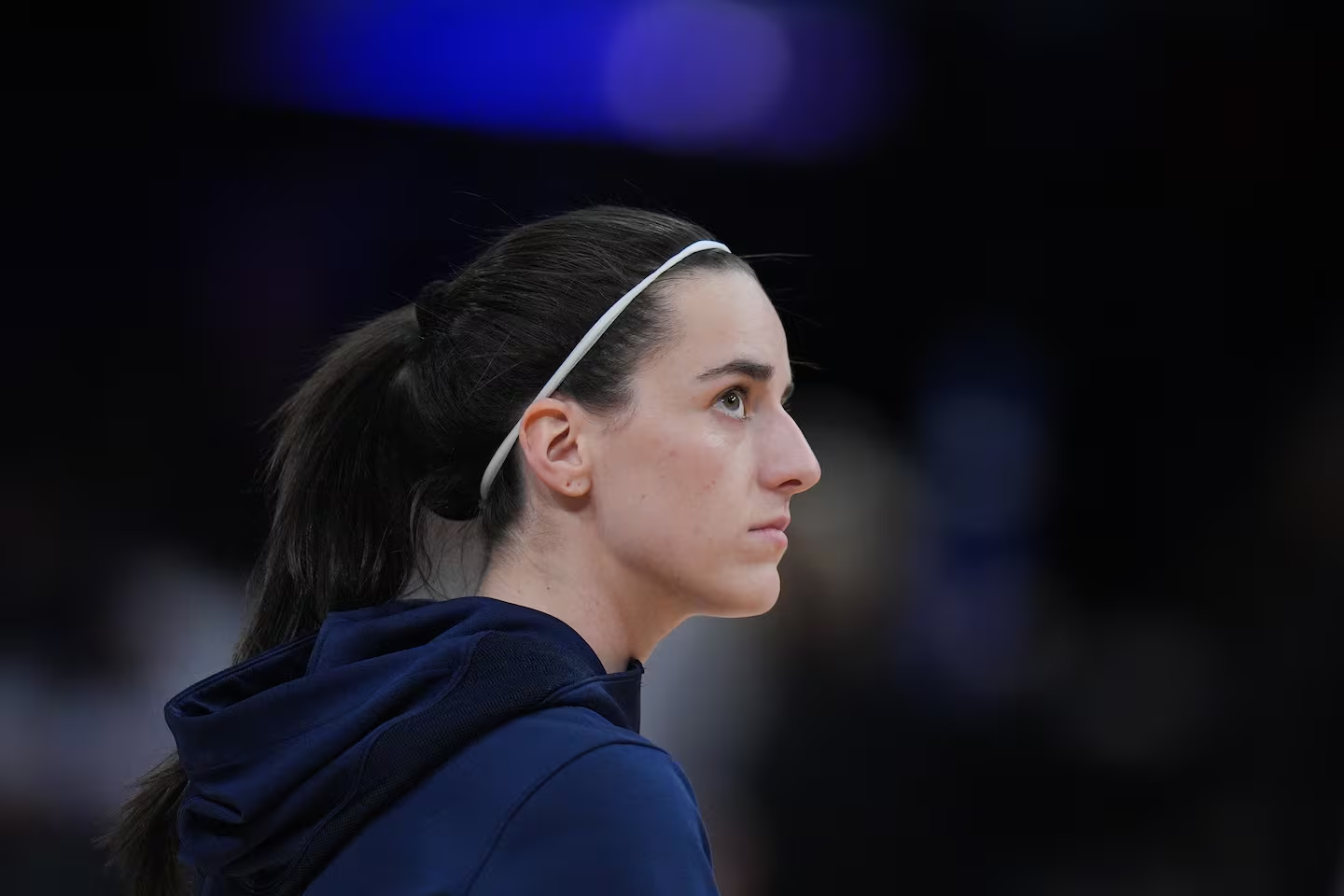
Unless they involve Caitlin Clark.
Take it back to a little more than a week ago, when Clark’s late scratch from the Fever’s May 20 game against the Fire earned Indiana a warning from league officials, because the team revealed her status less than two hours prior to tipoff. Though Clark hadn’t practiced that Tuesday and then felt back soreness Wednesday, she was not listed on any pregame injury reports, contrary to league rules that actually update game-day player status via its website every 15 minutes.
The overheated response was not surprising given Clark’s outsized popularity. The onetime NCAA breakout star and first overall pick of the WNBA Draft two seasons ago, Clark continues to be, for many fans, the one reason they tune in. For that, not to mention betting interests, updating injury status is an important and integral element of league communications.
But there was the usual online absurdity, too, with rumors that Clark was quietly being suspended by her team or that the Fever deliberately hid her condition. For that, blame the Fever, for giving us yet one more example of the WNBA shooting itself in the public relations foot. They bungled something that should have been so avoidable. There’s a reason LeBron James appears on every injury report, just to cover all contingencies. How could the Fever not know they would create a firestorm by not announcing she’d missed a practice?
I find myself still pondering how it all went down, not specifically because it was about Clark, but for what it says about the larger conversation around the coverage of a league celebrating its 30th season. From injury reports to roster cuts to personal player relationships to locker-room access, the evolution of media coverage of the WNBA has become quite a talking point, reflective of both the benefit of booming popularity and the cost of increased scrutiny. Too many times, the league proves unfit for the task.
This WNBA season was ushered in amid heady satisfaction and optimism over a new collective bargaining agreement that staved off a potential work stoppage. The seven-year agreement was celebrated by the players’ union for the substantial gains made in player compensation, revenue sharing, and other off-the-court benefits. The hard-earned gains speak to the continued value of WNBA investment, not to mention the arrival of stars such as Clark, Angel Reese, Paige Bueckers, and Azzi Fudd.
Years of increased revenue and burgeoning ratings have paid off in a big way, a reality that hit with particular poignance for those who were around when the league debuted in 1997. Those players carried an inordinately heavy burden to succeed, not just for their own sakes but for the larger cause of women’s sports equality. With the NBA’s financial backing, they knew they had a better chance than their then-rival ABL or previous upstarts such as the WBL, LPBA, or NWBA, but they also knew they had very little room to fail.
Read more Kyle Busch had pneumonia for ‘days to weeks,’ according to his death certificate
That sense of purpose bled directly into coverage of the league, which included a level of advocacy along with the usual reporting on facts, figures, and scores. The result was a closed-circle media loop. It was somewhat necessary at the time to help protect growth, but the long-run diminishing returns paint the league as overly sensitive and unprepared for criticism, even for the expected areas such as injuries, poor play, or poor officiating. As we stand, three decades later, the countless early critics who predicted nothing but imminent failure have been proven wrong. The WNBA is the longest-standing women’s professional league in the country, and with the more recent success of the NWSL and PWHL, is the standard bearer.
It’s long past time for the league to adjust its expectations of the way it is covered. The circle needs to open. Questions to Bueckers and Fudd, Dallas teammates who are also in a personal relationship, about navigating that as professionals? Completely appropriate. Also completely appropriate? Either declining on her own to answer such questions. Instead, the Wings’ PR machine stepped in to cut off any conversation at all, which served only to Streisand-effect the conversation. There’s no reason those players should have been unprepared to face those questions. Just ask Mike Vrabel.
Even the great Dawn Staley doesn’t seem to get it, recently criticizing a reporter who dared call out by name the players retained by the Valkyries when the popular Kate Martin was cut. One of them, Laeticia Amihere, had played for Staley at South Carolina. Staley accused the reporter of being biased when all he did was report the moves. Imagine an NFL coach objecting to a similar situation (hint: they don’t). It was just last season that the WNBA wasted time battling best-selling author and journalist Christine Brennan for asking tough questions of DiJonai Carrington and her play against Clark.
Overall, Clark deserves credit for handling her spotlight with grace, for accepting the face-of-the-league role that has come with it with gratitude. But she does get testy. While facing questions about missing that Fire game, she snarkily asked if the reporter wanted to know what she had for breakfast, too. I couldn’t help but think, “Sure, why not?” There are no doubt countless young fans out there who would love to emulate her meal — filet, two eggs over medium, potatoes, and two blueberry waffles with butter and syrup.
I understand Clark’s frustration and I understand the media’s role in it, too. When we try simply to apply old methods of covering men’s sports to a league that is different, populated by women of color and members of the LGBTQ population, we make mistakes. But that doesn’t change our purpose. The media should not be seen by players as extensions of their own PR teams, expected to back off when things get hard.



Post Comment