Boston community groups protest Mayor Wu’s $4.9 billion budget proposal over cut grants
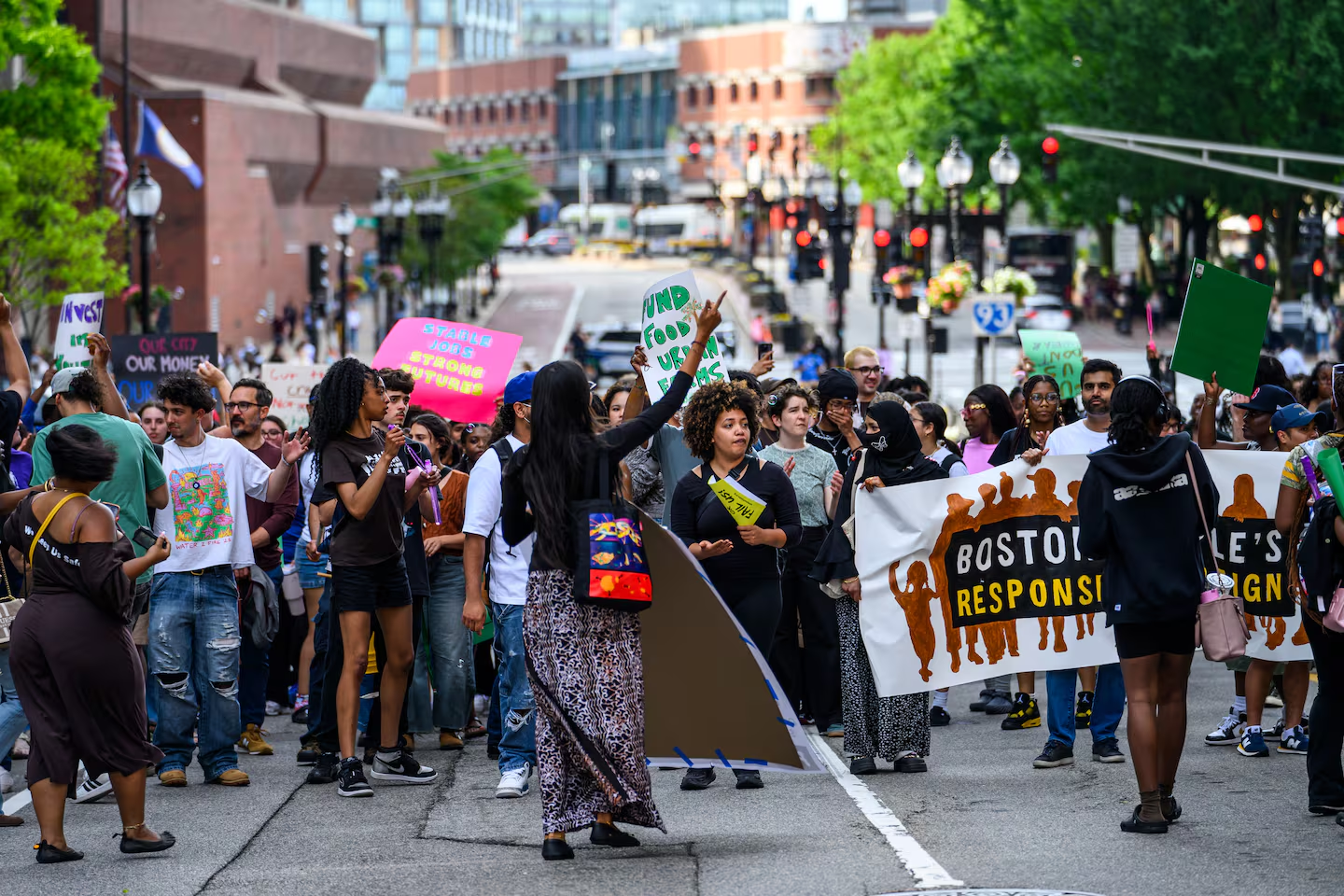
At least 200 people, representing around 30 community groups, marched around Boston City Hall Tuesday afternoonto protest Mayor Michelle Wu’s proposal to cut certain city departments’ budgets and eliminate funding for a number of grant programs.
Read more US has deported thousands of Cubans and Venezuelans to danger in Mexico, Human Rights Watch says
Wu has proposed the cuts in her $4.9 billion spending plan for the next fiscal year, as the city grapples with stagnant tax revenue growth and steep cost increases.
Chanting “Fund us or fail us,” and “Shame on you, Mayor Wu,” the protesters called on Wu to restore funding for the grants, which range from programs that support food pantries and immigrant communities, to a year-round job program for high schoolstudentsand young adults.
They also demanded that the Boston City Council reject the mayor’s budget proposal to pressure her to increase spending to continue the programs. An effort by some councilors to do so failed after the the body deadlocked on a vote last week, with the councilors split on how to push back on Wu’s plannedcuts. The council has the power to reject, reduce, or change certain line items in the mayor’s budget proposal, as long as the amendments do not increase the total amount the mayor is proposing to spend.
Following the rally Tuesday, around 100 protesters signed up to testify and speak out against Wu’s spending plan at a council budget hearing that stretched into the late hours of the evening.
Carliz Mañana, 18, a high school senior from Dorchester,said she got a job at the nonprofit Youth Justice and Power Union through the city’s year-round youth jobs program, which now is at risk of ending next school year.
“It’s honestly meant so much to me. . . . [Without it]I would be in a different crowd, I would be doing different things, I wouldn’t know anything about what’s going on in my community,” Mañana said in an interview.
“I want the mayor and all of the city councilors to know that if you don’t fund the community (programs). . . you’re disappointing all of us and we’re not going to back off,” she continued.
Wu’s office did not provide a statement in response to the Globe’srequest for comment Tuesday.
Wu and other city officials have warned for months that Boston, like many cities across the state, is facing a challenging and tight budget season, as it grapples with skyrocketing costs related to health insurance and snow removal, along with extensive state tax-caprestrictions on how municipalities can raise revenue.
Wu is already seeking the council’s approval to use $70 million from the city’s emergency reserves to cover deficits in the city’s and Boston Public Schools’ current budgets.
Some councilors have suggested that Wu’s administration either use less conservative revenue projections, or dip into the city’s so-called “rainy day” reserves, to fund the programsin jeopardy. Wu has said she does not plan to do either, calling the alternatives “fiscally irresponsible,” to the outrage of some protesters.
“What is it still sitting there for? These are rainy days, these are storming days, that’s what it’s for,” Teri Trotman, a 62-year-old Dorchester resident, told The Boston Globe. “People need to be able to live, and if you’re cutting all their programs, that means you don’t care, you don’t care about the city that you’re the mayor of.”
Protesters argued that many of the grant programs direct resources to marginalized communities — such as low-income residents, seniors, Black and brown students, and immigrants — who are already struggling to make ends meet, or facing attacks by the Trump administration.
They also emphasized that Wu’s move to end the year-round youth jobs program comes after the School Committee approved a plan to cut 300 to 400 staff jobs, citing significant cost increases and financial challenges due to declining enrollment.
“Our students only have one life. . . . They can’t redo these vital years, and if we take [resources] away from them, we’re going to see the impact later,” said Lea Serena, vice president of the Boston Teachers Union. “Find more money and put it where it belongs.”
Wu has previously described her budget proposal as “tough” but necessary belt-tightening to protect essential city services amid surging costs.
Wu’s administration has also noted that her plan maintains funding for a number of initiatives — including a program that guarantees summer jobs for BPS students; new recruit classes for police, fire, and EMS; weekend and evening hours at libraries and youth and family centers; and free English language classes for adults through the Boston Public Library.
Jaya Savita,29, executive director of the Asian Pacific Islanders Civic Action Network, said she understands the city is facing financial challenges, but she can’t support a budget that increases the Police Department budget, but cuts funding for senior programming, youth jobs, housing support, food access, and immigrant communities.
“I understand that [Wu is], in theory, between a rock and a hard place, but I’m disappointed,” Savita said. “This isn’t the mayor I voted for.”
Read more Cornyn went to great lengths to avoid Trump’s wrath. The Texas senator lost his seat anyway.


Post Comment