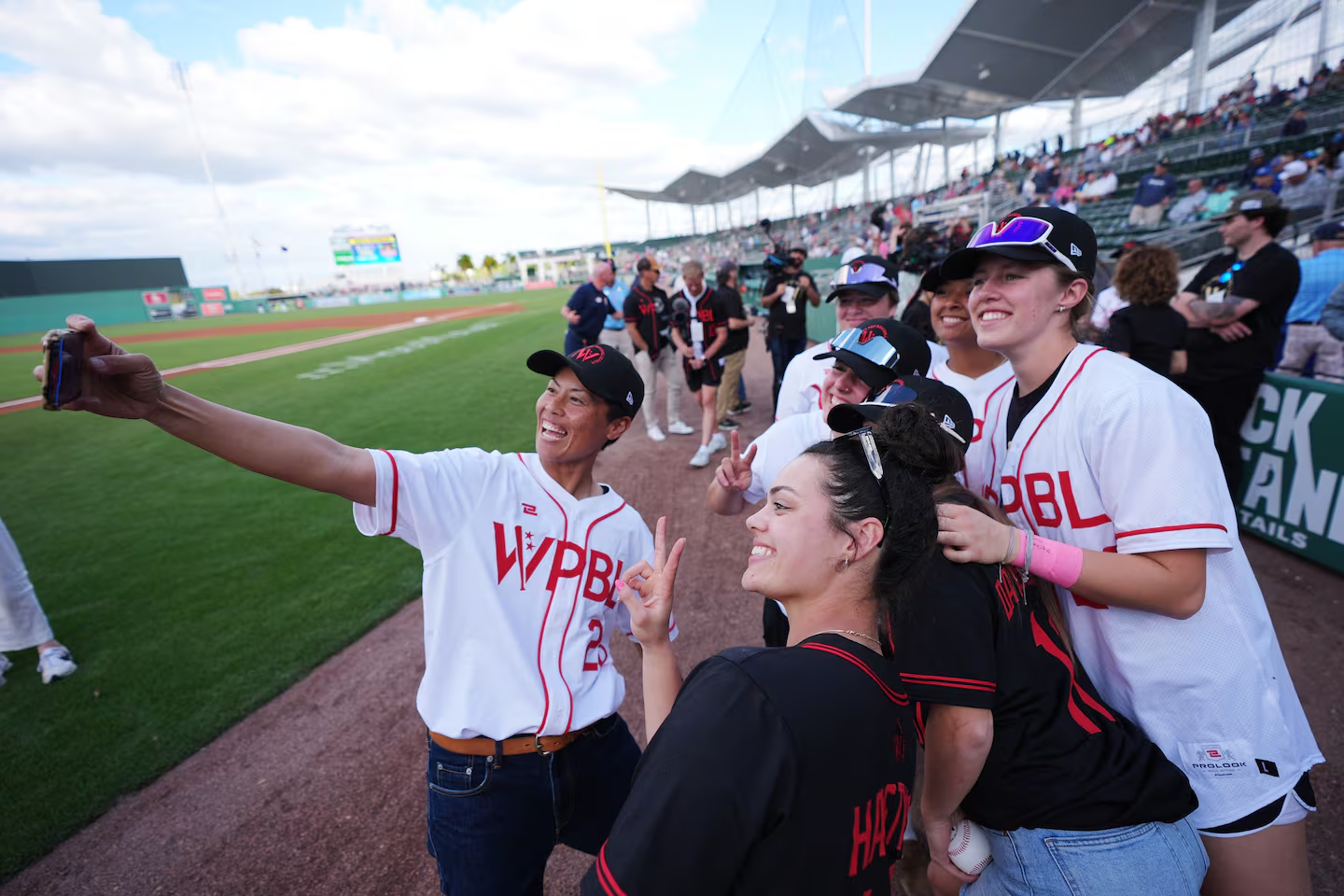
The Women’s Pro Baseball League is breathing new life into an old pastime
Between tickets, parking, and concessions, attending a Major League Baseball game is more expensive than it’s ever been, costing families hundreds of dollars on average to attend.
The Women’s Pro Baseball League is doing things differently. The league wants fans to know elite baseball doesn’t have to cost a fortune, and the sport long beloved as America’s pastime isn’t just for men.
“We all have big expectations for the league,” said Alli Schroder, a righthander for the Boston Hunters and the fifth pick in the inaugural WPBL Draft. “But more than anything, it’s really exciting that we finally have a platform where we can showcase our talent all together.”
The WPBL begins its inaugural season Saturday, with 30 games scheduled between the league’s founding teams: Boston, New York, San Francisco, and Los Angeles.
For the first go-around, the league will play all 30 games at Robin Roberts Stadium in Springfield, Ill., in hopes of building a robust fan base that will grow along with the league, while keeping costs low.
The WPBL plans to move to a traditional traveling model, perhaps as soon as next season, but for now the single-venue setup streamlines things. Overhead is minimal, and fans can take in the full scope of the league in a single weekend.
“Our goal here is to showcase that women play baseball at an elite level, and you’re going to have a lot of fun if you come to our games,” said league founder and commissioner Justine Siegal.
The early returns are promising.
When the league launched branding for its four teams in early July, the merchandise sold out in one day: 4,000 orders totaling $300,000. Opening Day in Springfield — the Los Angeles Queens vs. New York Heights on Saturday — is sold out, and Sunday’s game between the Boston Hunters and San Francisco Firebells is trending in that direction, as well.
Front-row tickets are just $52, the most expensive seats in the 5,200-seat venue. Reserved seats are between $33 and $37, and general admission bleacher seats will run you $22, tops.
The league expects some fans to travel in for the games, including from outside the United States, though a large portion of the fan base for the inaugural season will likely come from Illinois and the Midwest.
With an eye on growth, Siegal is spending a lot of time and effort on the league’s social media channels to expand the WPBL’s reach beyond the Midwest. The league’s official Instagram account has 176,000 followers at the time of writing, and each of the four team accounts has between 27,000 and 32,000 followers.
The benefit of a social-first marketing strategy for the WPBL is twofold: The league can meet fans where they are, even without having to travel across the country, and Instagram’s baked-in metrics offer a tangible measure of engagement that Siegal can show to potential sponsors and broadcast partners.
“There’s a global desire to see women playing pro baseball,” Siegal said. “So those metrics are important, and it’s a really easy way for fans to show their support.”
Based on preliminary data, the league has attracted a diverse group of fans of all genders, invested in the league for a variety of reasons.
“It’s baseball fans,” Siegal said. “It’s families looking for affordable entertainment who want to go watch a baseball game. We have baseball fans who want to watch baseball, and then we have those who want to support women in sports, and those who just want to come out for some entertainment and to have a good time.”
Much of what Siegal does, including founding the WPBL, is driven by the misguided idea that baseball is only for boys — something a coach told her when she was just 13 years old.
Many of the WPBL players recount similar stories of being told baseball isn’t for them.
Opportunities for girls to play baseball, while growing, are slim. Until this year, there hadn’t been a women’s professional league in North America since the All-American Girls Professional Baseball League (of “A League of Their Own” fame) folded in 1954.
Two years ago, Schroder had what she called an “identity crisis” when she realized that without a professional league, her two-decade-long baseball career would meet an early demise despite her being in top physical condition.
Lucky for her, the WPBL cropped up at the right time.
“I’ve heard from a lot of women that grew up playing ball, whether that was baseball or softball, that didn’t get the opportunity to play professionally and are excited to see it,” Schroder said. “To some degree, they’ll be living vicariously through us.”


Post Comment