Mass. Senate proposal would make records in governor’s office and Legislature public, with limits
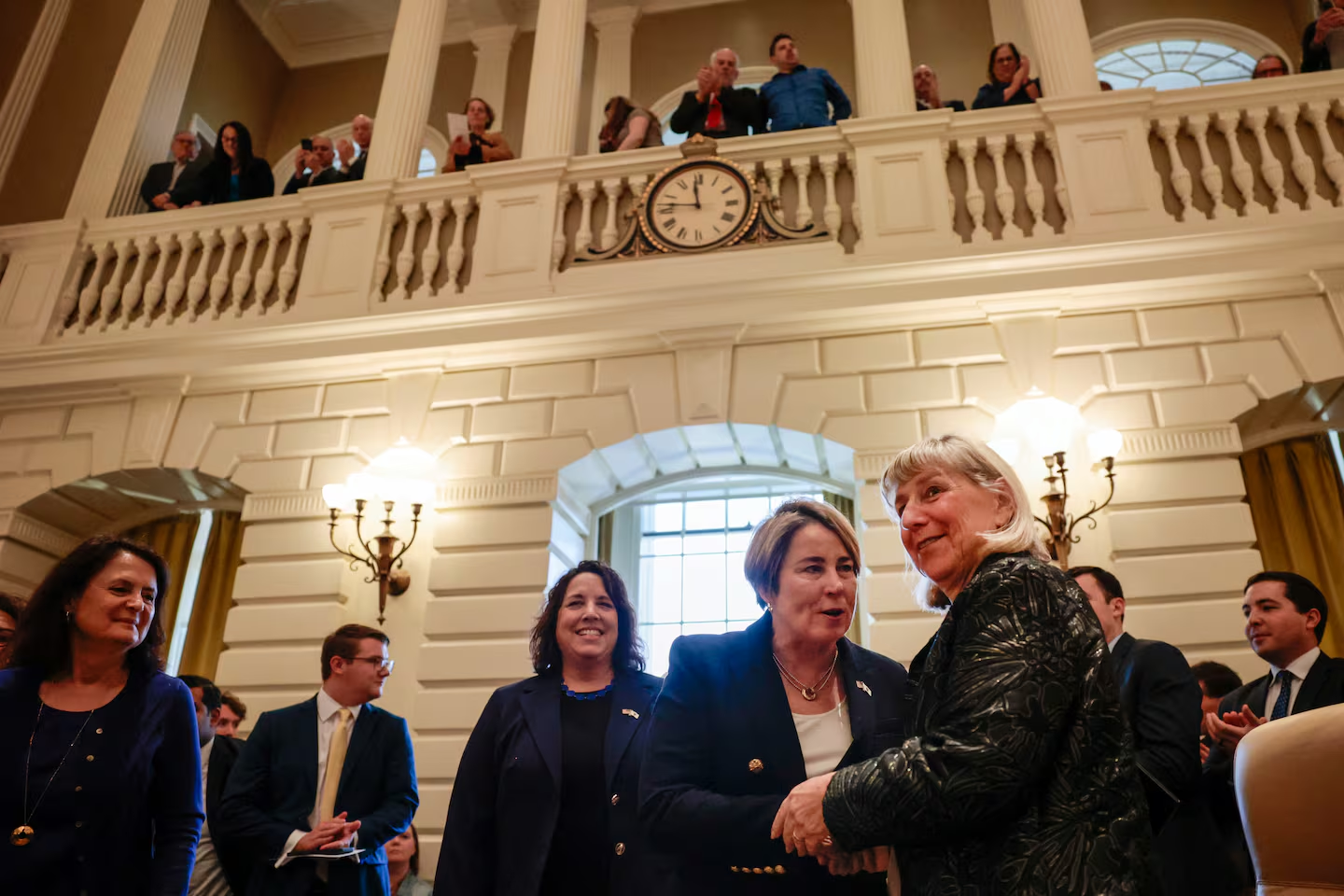
The Massachusetts Senate is readying a vote on legislation that would expand the state’s public records law to cover the governor’s office and require a select list of legislative records to be accessible to the public, following years of public scrutiny of transparency on Beacon Hill.
Read more Trump will welcome the World Series champion Dodgers to the White House
The Senate’s proposal, released by Democratic leaders on Thursday, is similar to a version passed by the House last month, and comes months before voters will weigh a ballot question that would go further in opening the Legislature’s records to the public.
The Senate’s bill would not specifically exempt the Legislature from the existing public records law, as the House did. But similarly, it would allow the public access to a specific type of“legislative record,” which would include 19 categories of documents and information ranging from legislator salaries to ethics disclosures to third-party audit reports.
“A public record that is not also a legislative record shall not be provided by a legislative records access officer,” according to the bill.
The Senate’s plan notably also omitted a controversial House proposal to narrow what state Auditor Diana DiZoglio is allowed to probe in the Legislature.
“By writing the Legislature and the Governor into the public records law, we are affirming that the people of Massachusetts have a right to clearly see our work and how their tax dollars are spent,” Senate President Karen Spilka said in a statement.
Massachusetts is the only state in the country where the governor, Legislature, and judiciary all claim to be completely exempt from the state’s public records law requirements.
The dual proposals from the Legislature come as advocates have puta question on the ballot this fall that would apply the state’s public records law to the Legislature and Governor Maura Healey’s office. Healey previously said she would be open to subjecting her office to the law with the “right exceptions.”
The chambers approached the bills differently.The House, in an effort to head off the ballotproposal, voted to create an entirely new statute that would give the public access to legislativerecords, including votes, calendars, and fiscal reports.
The Legislature has already made much of that information public, in part through changes to its internal rules earlier this session.
The Senate’s billwould require the House, Senate, and governor’s office to appoint records access officers, who would then have to address recordsrequests within 10 business days.
Those guidelines would include the “identification and processing of requests that are frivolous, designed to harass or seek records that may contain confidential information not suitable for dissemination,” accordingto the legislation.
Read more Mass. Senate moves to ban crypto ATMs after years of inaction
Individuals whose requests are denied would be allowed to appeal that decision to the Superior Court.
While the House also included language dictating what information DiZoglio is permitted to examine in the Legislature, the Senate opted not to address the auditor’s efforts at all.
DiZoglio has fought to force lawmakers to comply with her demands to audit the Legislature since the passage of a ballot question in 2024.
Under the House rules, she would be required to put audit requests in writing and limit the information she seeks to parameters suggested earlier this year by the Supreme Judicial Court.
House leaders said they formed their bill with the support of the ACLU of Massachusetts, the Massachusetts Newspaper Publishers Association, and Common Cause Massachusetts, a good government group, all of which also backed the Senate version.
Carol Rose, executive director of the ACLU of Massachusetts, said Thursday that the Senate bill would “expand the public’s direct access to government records, strengthen transparency, and improve our ability to hold our government accountable.”
“We strongly support the Senate’s thoughtful bill and appreciate the Legislature taking necessary steps to improve transparency within a framework that is legally defensible,” Rose said in a statement.
Senate leaderssaid the bill, which they plan to vote on next Thursday, was modeled after similar legislation in Pennsylvania.
Lawmakers are rushing to finish legislation from their respective chambers by a self-imposed July 31 deadline, by which bills need to pass and enter negotiations in what’s known as a conference committee to have a chance to pass after formal sessions end this month. The current fulltwo-year legislative session ends Jan. 5.
If passed, the records law changes would take effect at the start of the next session in January 2027.
The bill would put $1 million toward covering the costs to maintain and respond to requests, which includes $250,000 goingto each chamber, the governor’s office, and joint legislative operations.
Read more Nun who was detained by ICE while walking to Mass in Texas says many are in her situation



Post Comment