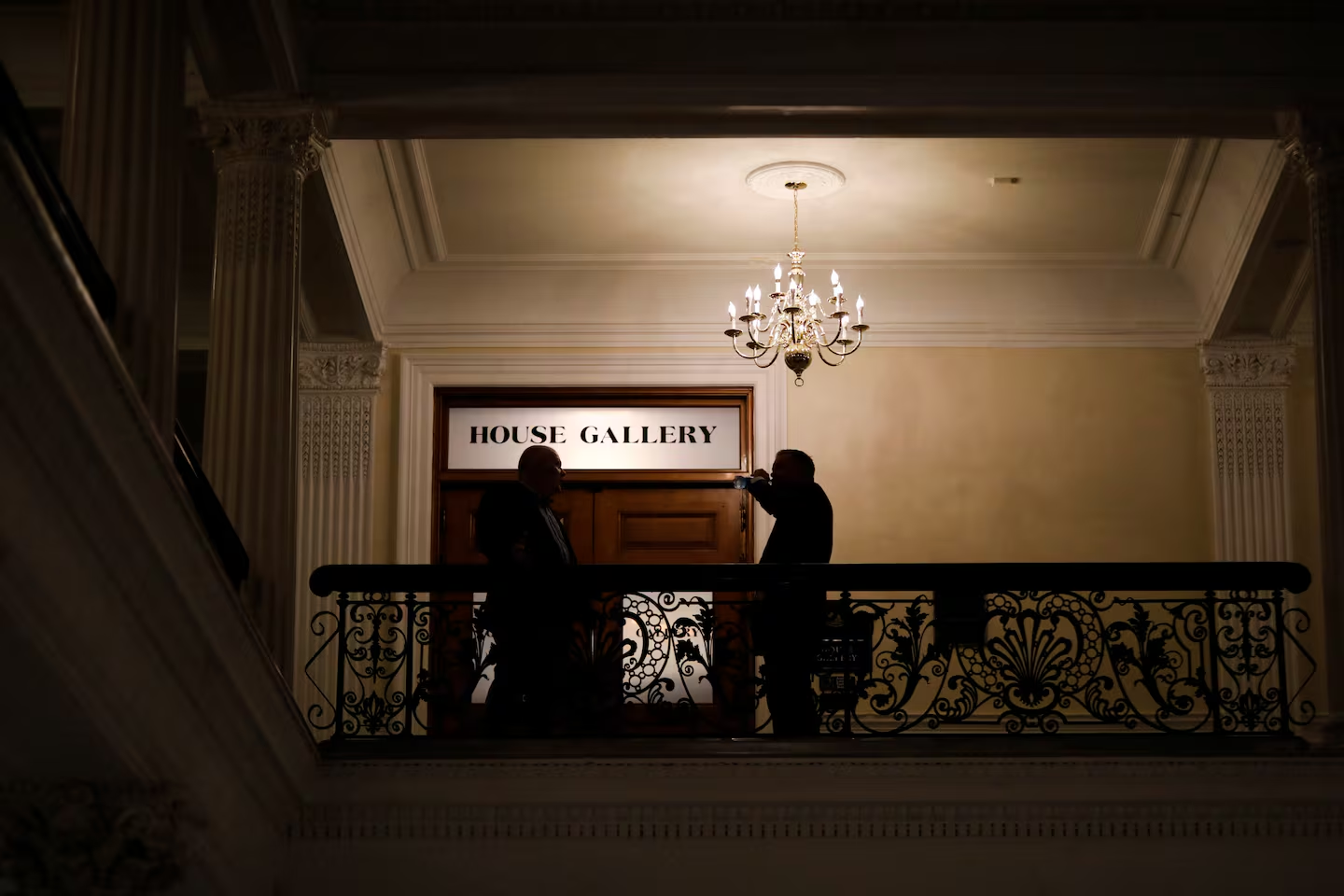
Mass. lawmakers are wrapping up formal sessions Friday. But they see less ‘pressure’ to actually get major bills done.
Two years ago, Massachusetts legislators wrapped their final day of scheduled formal sessions with a 23-hour marathon of lawmaking and a pile of unfinished work on the doorstep of the governor’s desk.
That will likely happen again — though this time, it’s largely by design.
Massachusetts lawmakers are expected to put a host of major legislation on ice Friday as the formal lawmaking period for the Legislature’s two-year session comes to a close.
Come Saturday morning,the Legislature enters asummer recess and many of those bills — be it a sweeping energy policy package or bills revamping the state’s public records law — will likely be left up in the air for weeks or even months.
Lawmakers last year remixed their internal rules to grant themselves a runway past their typical July 31 deadline to finalize legislation, both big and small, that has already cleared both the House and Senate but a final version of which has yet to be negotiated.
The new rules have created a decidedly different energy in the State House halls, as advocates, lobbyists, and other interested parties with business before the Legislature are still putting pressure on their lawmakers to hurry up … but only for them to knowingly have towait.
“There’s less of a potential for us to be here at 3:30 in the morning like we were last [session],” House Speaker Ron Mariano told reporters Thursday. “We have some conference committees that are starting to complete their work, and the rest are still working. We know that the pressure will not be the same as it was last [session].”
Some, however, aren’t satisfied. A coalition of more than a dozen progressive groups advocating on issues from climate policy to housing gathered in front of the State House onThursday to give the Legislature an “incomplete” report card on issues, including criminal justice, energy policy,and democratic reforms.
“They decided to let themselves procrastinate indefinitely on all our priorities,” said Scotia Hille, the executive director of the advocacy group Act on Mass.
Two years ago, lawmakers ultimately pushed a host of major legislation through, albeit months after formal sessions ended, and with admissions that they needed to “reevaluate” their decades-old legislative calendar, which had been designed to dispel major lawmaking during election season.
Their new rules now allow for lame-duck legislating, as lawmakers onlyneed to pass bills in each chamber and enter into six-person negotiations, known as conference committees, for them to stay alive ahead of the end of their full two-year term in early January. That means legislators can pick the conversation back up and work out the differences as they please through the summer, fall, and into the winter.
That said, there’s still been a flurry of activity on Beacon Hill this week, and will likely be more Friday, as each chamber scrambles to finish what the other started, move legislation forward to Governor Maura Healey’s desk, or introduce new bills altogether.
The Legislature finalized negotiations on at least three bills in recent days, including one that would set new standards and protections for home care workers, those who support people with disabilities and older adults. The bill wouldcreate a new licensure process for those workers, including training and competency requirements as well as procedures to make sure they, in turn, have safe working conditions.
Late Thursday, lawmakers said they also reached an agreement on a child welfare bill that could change the responsibilities of the state’s Office of the Child Advocate.
And after months of negotiations, lawmakers on Thursday sent to Healey the so-called PROTECT Act, which Democrats have touted as the Legislature’s chief response to the Trump administration’s aggressive campaign to detain and deport immigrants.
The legislation would restrict where federal immigration officers can make civil arrests in Massachusetts, and allow people to sue immigration agents in state court if their constitutional rights are violated.
“It’s definitely a good step in the right direction because we will have more control over what the general public is feeling — this can help our families have more security,” said Yuri Sanchez-Rijo, the Lynn chapter organizer for Neighbor to Neighbor Massachusetts, an advocacy group.
But she criticized the Legislature for waiting until the last minute of scheduled formal sessions to pass the bill. Healey had introduced her version of immigration-related legislation in January, and the Senate and House passed their own versions during the spring.
Read more Red Sox downplay Jarren Duran’s emotional outburst on field and in dugout during Thursday’s win
“Everything takes too much time,” Sanchez-Rijo said. “We’re seeing it move, but at the same time, we cannot wait for something else to happen to have emergency action.”
Lawmakers this session have worked under added pressure from the Trump administration, prompting advocates to push the Legislature to do more to counter federal funding cuts and attacks on immigrant and LGBTQ rights. Some have lamented that hundreds of bills in each chamber have yet to advance from the House and Senate’s powerful budget committees for a possible vote on the chambers’ floors.
“Everything is stuck, and we can’t afford to be stuck. The time is now to get these bills passed,” said Finn Gardiner with the Massachusetts Transgender Political Coalition.
The House and Senate, however, are moving forward several pieces of legislation their counterparts had already acted on.
House leaders late Thursday passed a bill to make “critical investments” in primary care after the Senate passed similar legislation last month. The potentialchangeswould include setting a target for how much hospitals, clinicians, and insurers would need to spend on primary care, as well as implementing guardrails on artificial intelligence use among providers.
The Senate’s Rules Committee on Thursday moved forward a bill to expand abortion access, daysafter the House passedan 11th-hour abortion bill that would leave the decision on whether to end a pregnancy at 24 weeks or later on “the professional judgement of a physician” alone.
Claire Teylouni, the interim executive director for Reproductive Equity Now, said the group was “thrilled” to see this legislation making progress in the Senate in the final days of scheduled formal sessions.
“This bill has always been about trusting women and patients and ensuring our laws reflect that trust,” Teylouni said.
The Senate on Thursday also passed legislation to change the state’s public records law to apply to the governor’s office and make a certain set of legislative documents and information part of a publicly available “legislative record.” The legislation will now enter a conference committee with the House, whose version, though similar, also included parameters around how the state auditor can scrutinize the Legislature.
And there’s a lengthy list of legislation that has already entered negotiations but remains incomplete as lawmakers head into a campaign season ahead of the state’s Sept. 1 primary.
Sweeping, but differing, versions of an economic development bill both chambers passed this summer remain unfinished. The Senate’s version alone involves $575 million in capital investments and 365 policy sections — and 105 more than the House — including bids to regulate e-bikes and change the rules around duplex development.
A data privacy bill which would, among other things, ban the sale of geolocation data collected by smartphones and other devices, also is still sitting in conference committee.
So, too, does a bill that would implement a bell-to-bell ban on cellphones in public K-12 schools statewide. The House and Senate differ on the extent to which the bill should also restrict social media for minors, which the Senate proposed in its own separate bill. The governor, for her part, supports restrictions on social media for teens.
An environmental bond bill that would allow the state to borrow billions for infrastructure projects — and includes in the Senate version a plastic bag ban — is in limbo. An energy bill that, under the House’s version, would slash some $1 billion from the state’s Mass Save program, the state’s primary tool for moving residents off of fossil fuels, is as well.
Lawmakers have alsoyet to finalize a bill to update the state’s aging infrastructure at public colleges and universities.
And still another bill that would implement campaign finance changesto the state’s ballot question system has yet to be worked out.
Read more Wu names longtime City Hall veteran Chris Osgood as new interim chief of streets


Post Comment