Federal judge dismisses a lawsuit over makeup of Trump’s Religious Liberty Commission
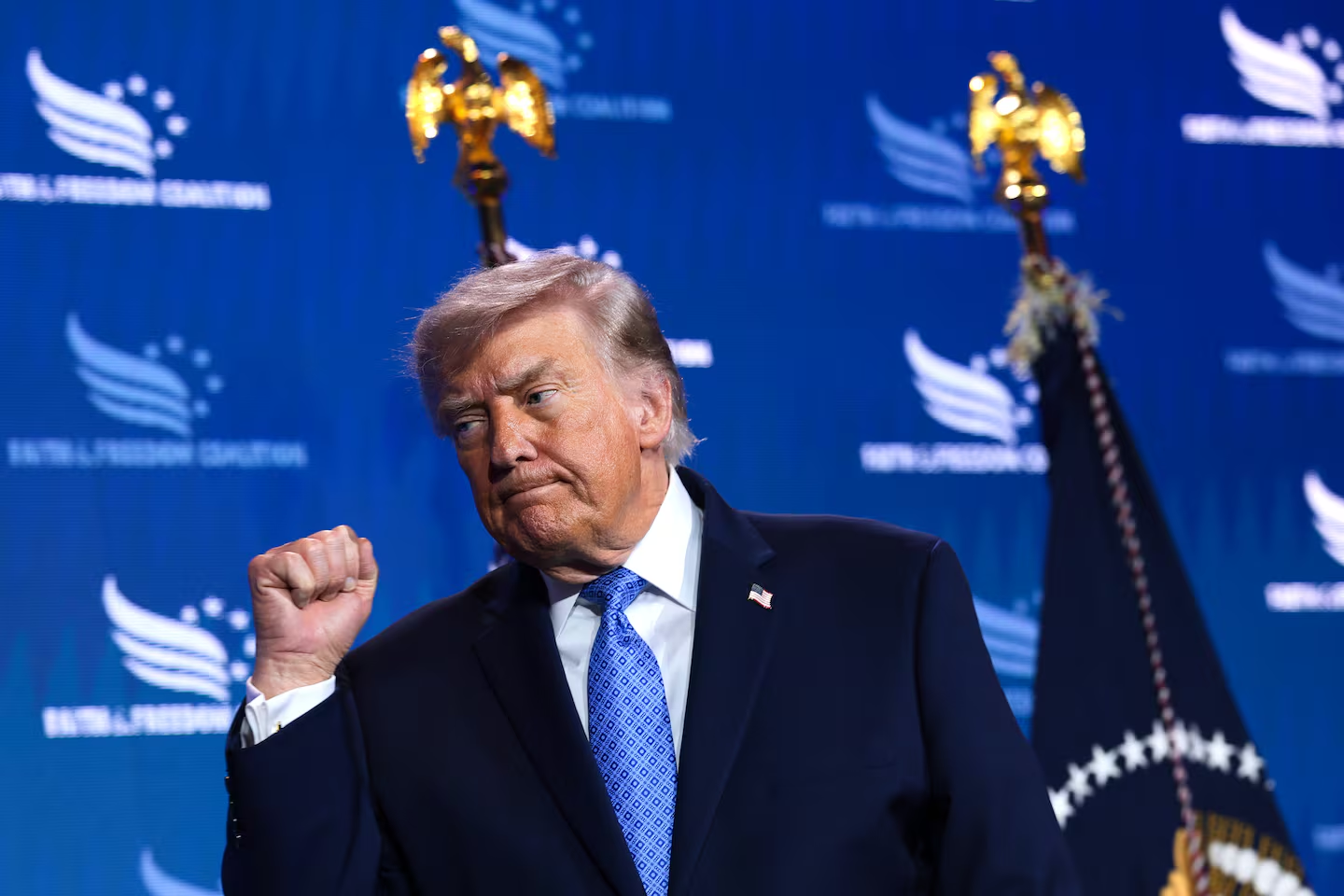
A federal judge tossed out a lawsuit Monday from an interfaith group that challenged the legitimacy of President Trump’s Religious Liberty Commission, dismissing claims that its overwhelmingly conservative Christian makeup lacked a legally required balance of viewpoints.
Read more Former tech-group leader Tom Hopcroft drops state Senate bid
Judge John P. Cronan said that although a federal law requires that advisory commissions have a balance of viewpoints, it didn’t specify how this should be done. The New York judge said Trump has wide discretion in picking members.
The lawsuit was filed by several plaintiffs, including the progressive Interfaith Alliance as well as Hindu, Muslim and Sikh groups. They argued that the commission was imbalanced because it consisted almost entirely of conservative Christians, along with one Orthodox Jewish rabbi, and that several commissioners were on record questioning church-state separation and supporting the idea of America as a Judeo-Christian country.
Critics of the the commission said such fears were borne out when it issued a draft report in June that challenged the understanding of a separation of church and state in recent generations, calling instead for “bridges” between the two.
But Cronan said the lawsuit, which sought a more ideologically and religious diverse commission, failed to meet legal criteria to proceed.
Read more Boston Legacy FC scores with trip to the State House
He also wrote that the commission is diverse in other ways, such as including both clergy and lay people. And he said the commission has “adherents of at least five different religions” — by citing the one Jewish member and then members of various Christian denominations and identities.
The Interfaith Alliance argued that the commission lacked balance because members believed “the law should protect the exercise of religious beliefs over the civil rights of minority groups.” But Cronan wrote that because Trump’s executive order creating the commission rejected the idea of “religious liberty as inconsistent with civil rights,” he wasn’t obligated to appoint someone who disagreed with that founding premise.
The Interfaith Alliance has been vocal in criticizing the commission, saying its recent draft report failed to address crucial issues such as anti-Muslim attacks and saying it supports policies privileging some religious groups over others.
Read more Trump administration urges Supreme Court to allow order targeting mail-in voting before midterms


Post Comment