After crash that killed state trooper, Mass. Senate votes to expand wrong-way driving detection
Weeks after a wrong-way driver caused a head-on collision that killed a state trooper, the Massachusetts Senate on Thursday unanimously passed a measure that would expand the state’s wrong-way detection technology and create a protocol to prevent future incidents.
Read more Boston paid $11 million settlement to man freed after nearly 40 years in prison
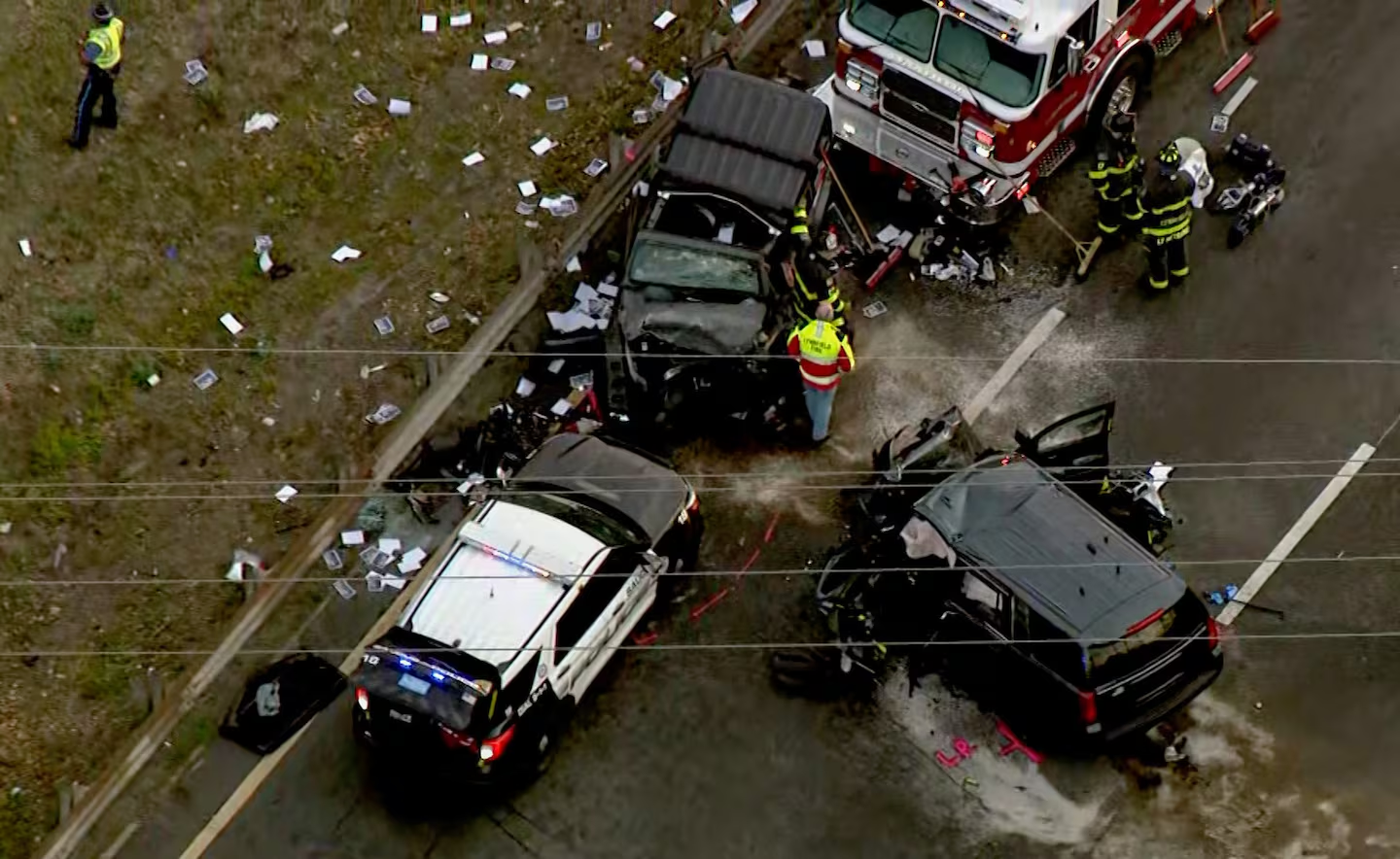
The collision killed the Roslindale driver and State Police Trooper Kevin Trainor, a 30-year-old who spent three years in the department. Trainor was on his way home after completing a shift on May 6 when he responded to a call about a Jeep traveling south in the northbound lanes of Route 1 near the Lynnfield overpass.
Trainor and other troopers rushed to the scene, where they spotted the vehicle around 2 a.m. The two collided about 17 seconds later, police said.
“Wrong-way driving is a scourge on our highways,” state Senator Bruce Tarr, a Gloucester Republican and the chamber’s minority leader who sponsored the measure, said on the Senate floor Thursday. “We cannot turn away. We must act.”
The Massachusetts Department of Transportation has had a wrong-way detection pilot program in place since 2022.
The legislation, which the Senate adopted as an amendment to its $63 billion state budget plan, would expand the program to include directional striping on access ramps and detection systems with warning devices and alert police when wrong-way driving incidents happen in real time, according to the measure.
Tarr said the proposal was informed by a trip with other legislators to Connecticut, where officials have moved to expand a wrong-way driver detection system.
Tarr said he and other legislators began drafting the legislation when Christopher Dailey, an 18‑year‑old Gloucester High School graduate and hockey team captain, died in a wrong-way crash on Route 128 last summer. He called the death an “unthinkable loss.”
Nicole Dailey, Dailey’s mother, appeared alongside Tarr on Thursday, saying she was grateful for the effort to “make sure nobody else has to go through [wrong-way driving deaths].”
“It didn’t need to happen,” she said through tears.
The recent wrong-way crash involving Trainor coincided with the Legislature’s budget debate, Tarr said, which he believed would help shepherd the bill to passage.
Read more Trump says he’s postponing signing an executive order on AI out of concern it would hurt AI industry
“The tragic loss of Trooper Trainor gave us another compelling reason to move as quickly as possible, because it reminded us that every day we’re at risk,” Tarr said. “I’m not sure that we’ll ever be able to prevent it, but in good conscience, we have to do everything possible to minimize the chances that any of us or any of our loved ones will be affected.”
The MassDOT pilot program involved a $2.6 million detection system, installed across 16 points on exits and on-ramps across the state.
The legislation passed by the Senate proposed that MassDOT create a plan for public service announcements, a study on improving roadway safety for drivers over 70, special law enforcement training about wrong-way driving, and an analysis of documented incidents of wrong-way driving.
MassDOT currently tracks wrong-way violations issued on the Massachusetts Turnpike and Boston’s Callahan and Sumner Tunnels, but does not include wrong‑way incidents on local roads, cases where drivers corrected course before being cited by law enforcement, or crashes charged under broader offenses.
There’s no price tag on his amendment, Tarr said, but the legislation would ask the transportation secretary to prepare a budget and issue reports with the costs associated each year.
He said the first series of installations would encompass approximately 600 different locations across state highways, which he said is “only a fraction” of how many will be needed in the future.
“This is very much an evolutionary kind of thing,” Tarr said. “The main thing about today was putting down the marker, saying, ‘We will have a plan, and that plan will evolve.’”
Tarr said the legislation is backed by Governor Maura Healey, who has directed MassDOT to work with senators on the legislation.
The proposal was not included in the House’s version of the budget it passed in April, adding to the list of differences that legislative leaders will have to hash out before sending a final version of the budget to Healey for her signature.
Read more Woman at center of sprawling Minnesota fraud case gets nearly 42-year prison sentence


Post Comment