Busted: Ex-Goodwin Procter lawyer allegedly ran a decadelong insider-trading scheme
This column is from Trendlines, my business newsletter that covers the forces shaping the economy in Boston and beyond. If you’d like to receive it via email on Mondays and Thursdays, sign up here.
Read more Report: Pelicans hire Jamahl Mosley as coach
It’s an international true-crime tale of a sprawling insider-trading ring with a sexy Boston connection.
The perpetrators allegedly made tens of millions of dollars in illicit profits using purloined inside information to trade on merger-and-acquisition deals before they were announced, including several featuring well-known local companies.
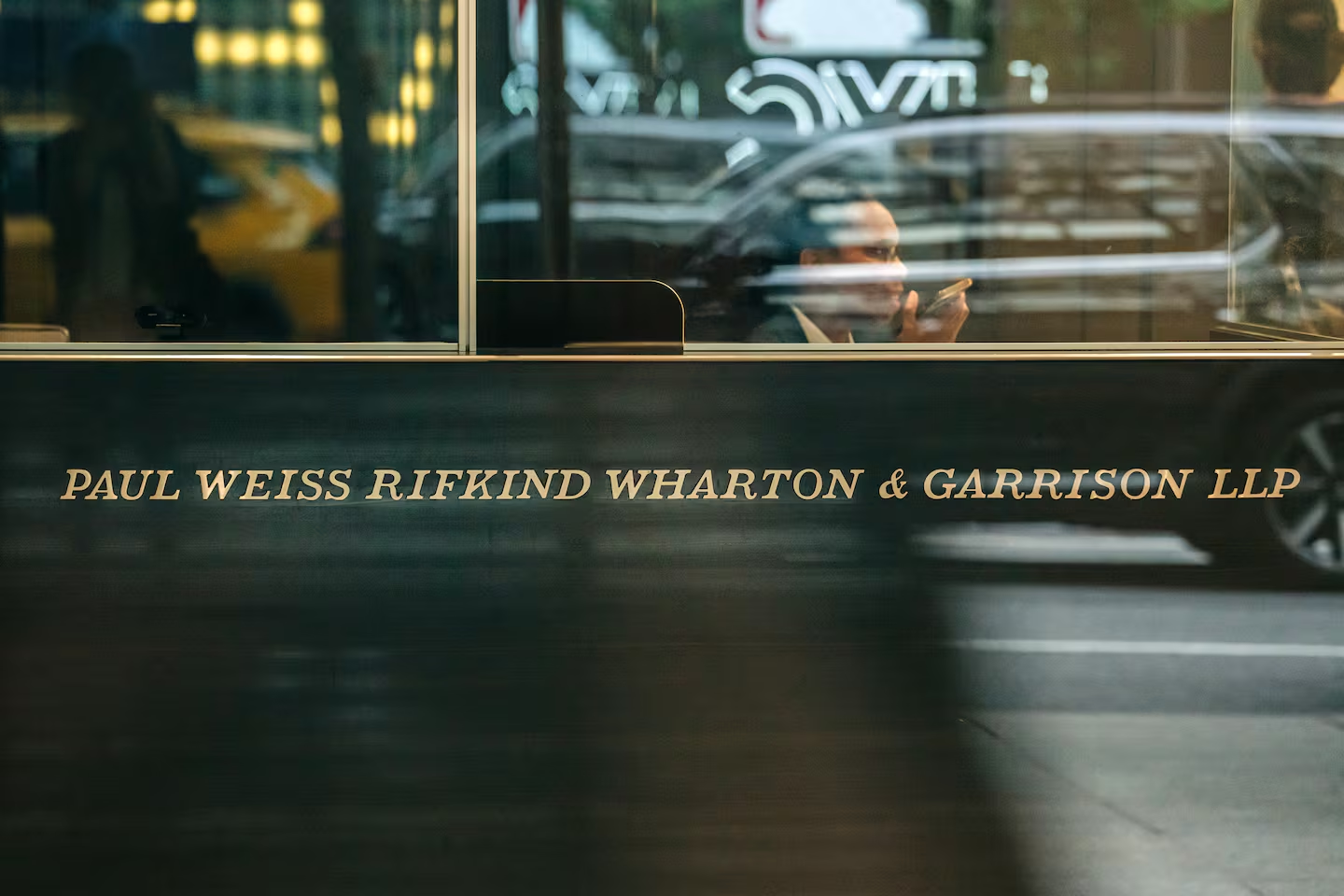
Their mastermind last worked at Goodwin Procter, the elite Boston law firm.
Prosecutors say the so-called tipping chain forged its first links in 2014, operated for a decade, and bet on nearly 30 deals.
Federal investigators got wind of the scheme in early 2024, and at the end of last month, two federal were handed up in Boston, 19 of 30 defendants were arrested, and nine cooperating co-conspirators have pleaded guilty and are cooperating.
Why it matters: There have been a number of high-profile insider-trading cases involving M&A lawyers, but this one is the largest in recent memory based on the number of alleged participants.
“The trading on unannounced financial news alleged here not only violated the securities laws, but it also took advantage of the special access and ethical duties that come with a law license,” Massachusetts US Attorney Leah B. Foley said in a May 6 statement after the indictents were unsealed.
Prosecutors said the law firms involved were victims, but it’s a bad look nonetheless.
At the center of the ring: Nicolo Nourafchan, who was three years out of Yale Law School and working at Sidley Austin in California when he and Robert Yadgarov, a New York ambulance chaser and college friend, hatched the scheme, according to prosecutors.
Nourafchan allegedly pilfered insider info from client files at Sidley, where he was employed from about 2013 to 2017, then Latham & Watkins (2019-2021), and Goodwin (2021-2023). The indictments don’t name the firms, but their identities can be triangulated from details about the deals named in the indictments and by the Securities and Exchange Commission.
How it worked: Nourafchan, 43, and Yadgarov, 45, also recruited other attorneys and financial insiders to feed them tips, and lined up friends and relatives across the country — and as far away as Russia and Israel — who traded on the information and kicked back some of their profits to them, . In turn, those middlemen passed tips to a widening circle of traders.
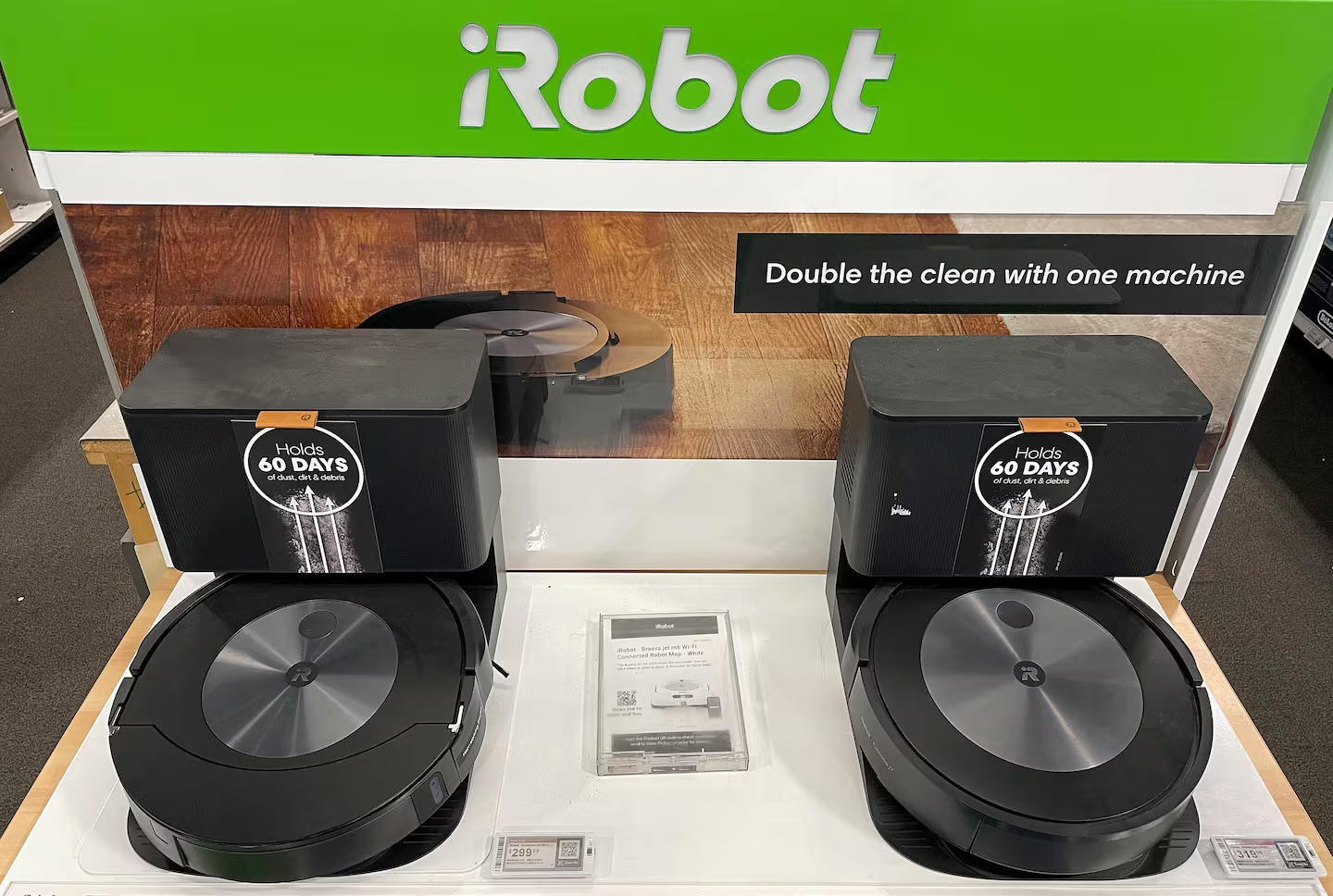
Local deals cited in the indictments include Amazon’s $1.7 billion bid in 2022 for iRobot, the Bedford maker of Roomba vacuums, which it later called off; Johnson & Johnson’s buyout of Cambridge-based Momenta Pharmaceuticals for $6.5 billion in 2020; and IAC’s purchase of Waltham’s Care.com, the online platform for babysitters and other caregivers, for $500 million in 2019.
Read more Boston wants to use nearly $70 million in reserve funds to plug city, BPS budget deficits
Neither Nourafchan nor Yadgarov have entered pleas, according to court records.
“The indictment is only a set of allegations. It constitutes neither evidence of guilt nor the basis for judgment. There will be a future trial where we will raise a vigorous and detailed defense to the current charges,” Martin G. Weinberg, a lawyer representing Nourafchan said.
Yadgarov didn’t immediately return a message left on his office voicemail on Monday morning.
Goodwin responds: The firm gave me the following statement: “We are deeply disappointed that a former employee is alleged to have violated the trust placed in him and misused confidential information as part of a broader criminal scheme affecting multiple law firms and their clients. We have been cooperating and continue to cooperate fully with law enforcement.”
It declined to answer a list of questions I sent over, including about how Nourafchan was vetted; why he was allowed to take leave of absence (during which time he accessed confidential material on at least three deals); and why, in 2023, the firm permitted him to remain for three months after notifying him that he would be terminated.
Goodwin also wouldn’t say whether it tightened up access to client files once it became aware of Nourafchan’s scheme.
Final thought: Insider-trading charges can be hard to make stick, according to attorneys at the Boston firm Mintz, Levin, Cohn, Ferris, Glovsky and Popeo.
“Even in cases that look overwhelming on paper, insider trading prosecutions can and often do come apart at the edges,” Eoin P. Beirne, Edmund P. Daley, Cory S. Flashner, and Natashia Tidwell wrote in a blog post. “The government must prove not just trading, but knowing misuse of material nonpublic information and, in tippee cases, awareness of the tipper’s breach and personal benefit.”
The ring tried to cover its tracks in several ways. Participants communicated via burner phones with encrypted apps, used elaborate codes — inside tips were called “flights” and religious “learning” meant passing information — and traded through shell companies and offshore accounts.
They tried to disguise kickbacks as loans and created false explanations and sham research to substantiate their trading decisions.
The indictment against Nourafchan and Yadgarov doesn’t explain how investigators got onto the attorneys, but it hints that cooperating witnesses, trading records, and intercepted communications ultimately unraveled the operation.
Read more Tom Brady to Georgetown grads: Be prepared to face ‘your own 28 to 3 moment’
With so many people in on the scheme, someone was bound to flip.



Post Comment