Eversource reports another big financial hit from its foray into offshore wind
The Trump administration’s battle against offshore wind is costing Eversource shareholders millions again: This time, the price tag totals $164 million.
Read more Most Americans loathe data centers. Construction workers love them.
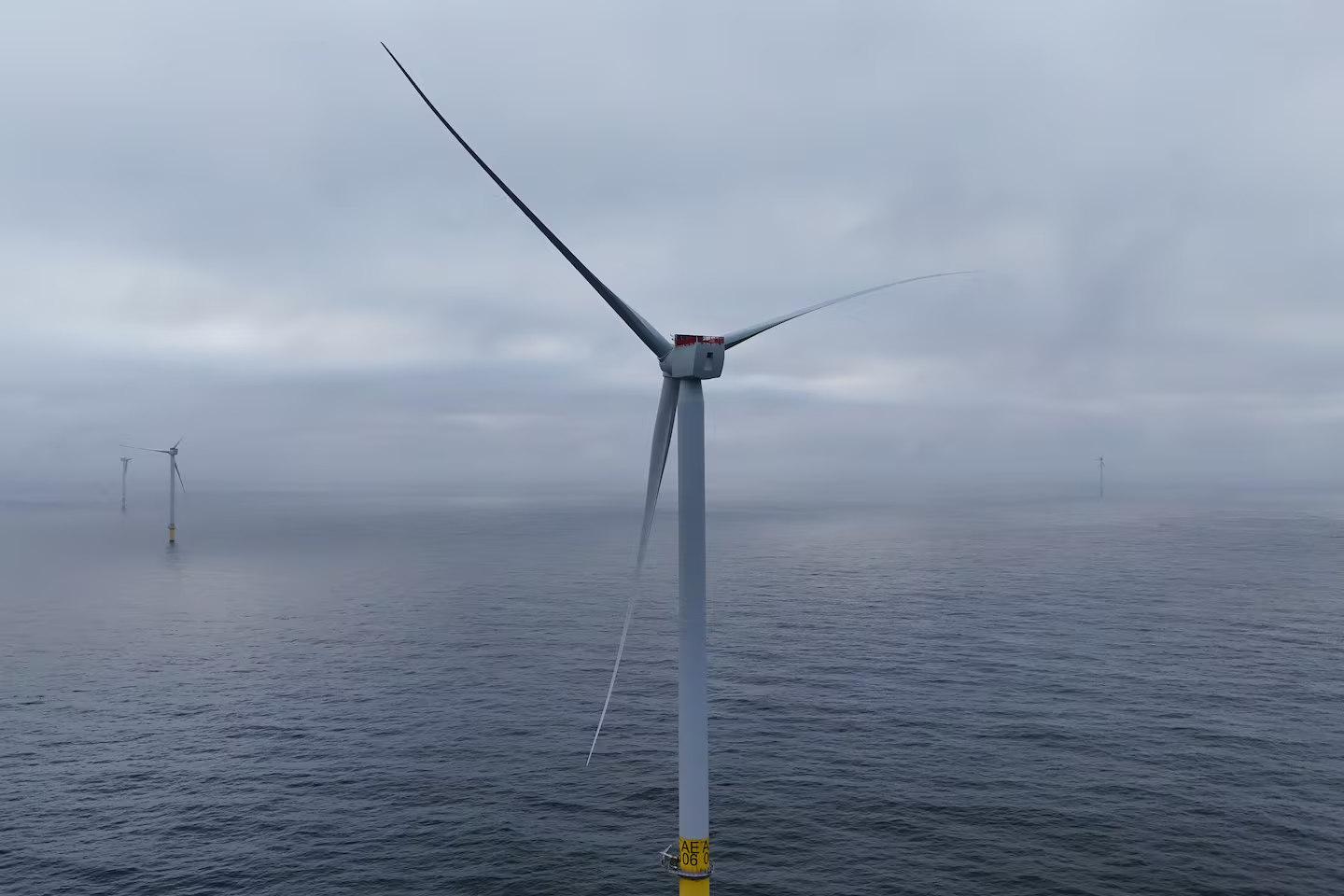
The Boston-based utility company reported that figure on Thursday as a one-time charge against its latest earnings, a charge forced by delays in construction for the Revolution Wind energy project going up in federal waters southwest of Martha’s Vineyard.
In particular, Eversource points to two stop-work orders that the Trump administration imposed as part of its effort to curtail offshore wind energy development, one in August of last year and another in December.
Eversource sold its 50 percent stake in Revolution Wind nearly two years ago to an affiliate of private equity firm Global Infrastructure Partners, as part of its effort to completely exit the troubled offshore wind sector. However, the terms of the sale required Eversource and its former partner in Revolution Wind, Danish developer Ørsted, to share in any construction cost overruns.
The first post-sale bill became clear to Eversource shareholders last October, when the company recorded a $75 million charge against earnings, primarily because of the extra costs incurred with Revolution Wind. The August stop-work order was one of the factors. The actual overrun was much higher, but a tax benefit related to the sale of Eversource’s wind investments greatly mitigated it.
This time, the tax-related mitigation is much smaller. Eversource estimates its liability to GIP will go up by another $194 million over time, or $164 million after taxes.
In a conference call with analysts on Friday, Eversource chief executive Joe Nolan offered encouraging words about Revolution Wind’s progress. The end, he said, is in sight.
Read more ‘Great people make a great city.’ Finding a measure of hope in a Boston neighborhood
“We’re going to bring this in and I’m very, very proud of the work that was done,” Nolan said. “And obviously, we couldn’t control the shutdowns, but we just wanted to capture that and make sure that we are upfront about charges.”
The multibillion-dollar project should be done by the end of the year. Nolan said it’s 97 percent complete. “We’re on the 5-yard line to get over the goal,” he added.
A spokeswoman for Ørsted said Revolution started delivering energy to the New England grid in March, and has regularly ramped up its capacity since that date. The 704-megawatt project is expected to generate enough power with its 65 giant wind turbines for 350,000 homes when complete, with contracts to deliver power to Connecticut and Rhode Island. A similarly sized wind farm in the waters south of the Vineyard, the Vineyard Wind 1 project owned by CIP and Iberdrola, is essentially complete as well — though its costs also went up as a result of a federal stop-work order.
Nolan had good news to share on the earnings call about another project, a series of transmission upgrades in Maine and New Hampshire. Grid overseer ISO New England just announced that it favors a $2.2 billion proposal submitted by Eversource and Iberdrola’s Avangrid to build more power-line capacity in Northern New England, in large part to improve access to on-shore wind energy resources in Maine. (ISO New England is expected to make a final decision in September.)
Eversource’s $700 million portion of the power-line project will go up in properties or rights of way that the company owns in New Hampshire. While ratepayers will ultimately pay for these costs, ISO New England argues that the transmission upgrades will provide savings for residents and businesses that exceed the project costs.
Read more Trump stands to profit off US policy announcements by selling fast access to his social media posts




Post Comment