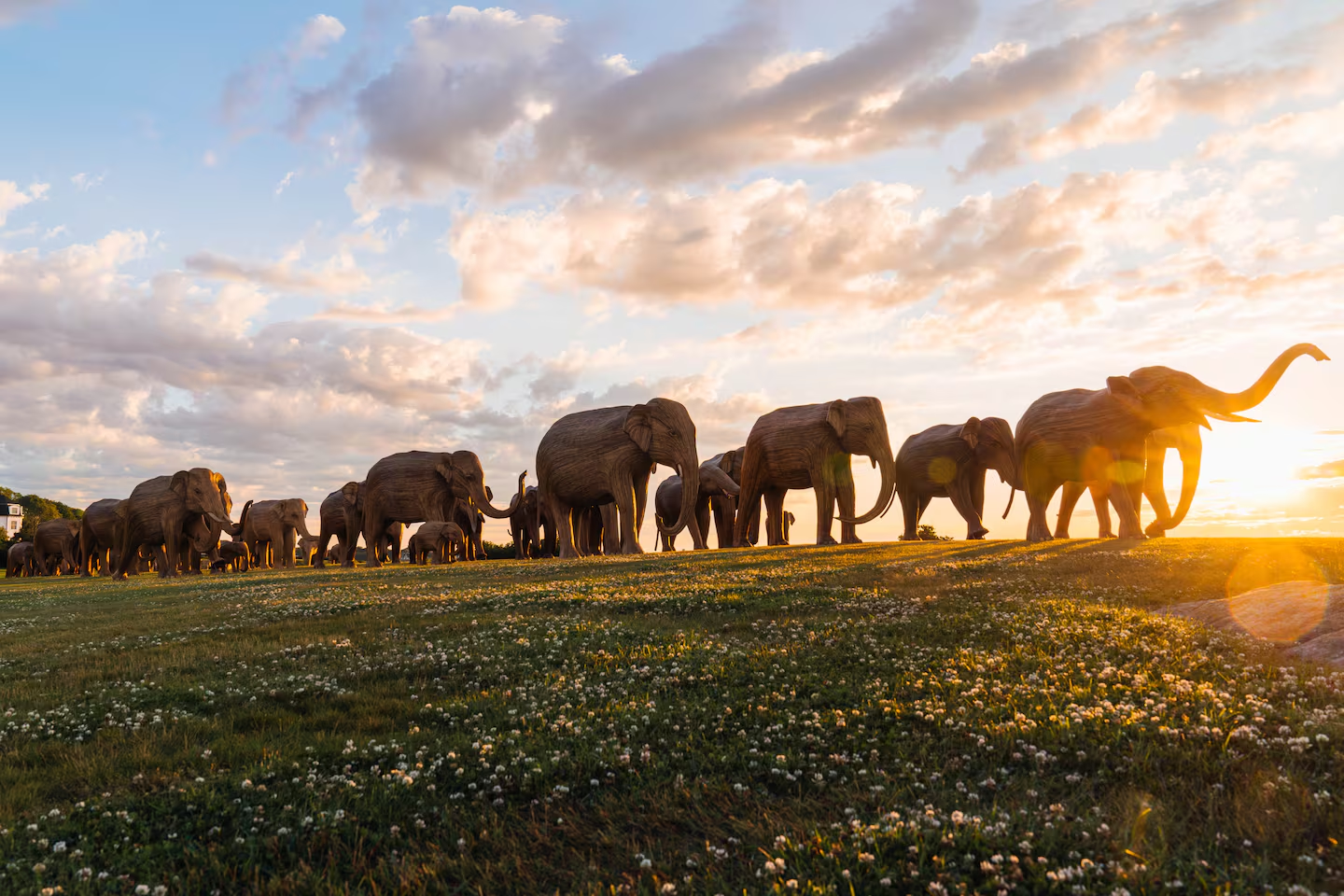
Why elephants are coming to Boston
The Great Elephant Migration — a mobile, global, public art installation — is making its way to Back Bay.
Read more Tariffs: the war Trump might actually win
From Aug. 8-Sept. 13, the Commonwealth Avenue Mall between Arlington Street and Fairfield Street will be home to some new residents, a herd of 100 life-sized elephant sculptures. The exhibit will be free and open to the public, and people will be able to roam through the display.
Organizers say the exhibit is meant to tell the story of coexistence, “demonstrating how art, culture and conservation can work together to inspire peaceful relationships between people, animals and the natural world.”
The elephant statues are crafted by hundreds of artists in India and are made out of an invasive plant, Lantana camara. The exhibit has previously traveled to Newport (in 2024), New York City, Miami, and Beverly Hills, among other cities. (Last year, Newport announced that two of the elephants would be on permanent display in Aquidneck Park.)
Ruth Ganesh, the Great Elephant Migration’s cofounder, who kickstarted the idea in 2015, said the elephants aren’t meant to be an ominous message to industrial cities.
“There’s a lot to be worried about in the world right now,” Ganesh said. “But this exhibition is joyful.”
Tarsh Thekaekara, Ganesh’s partner, had the idea to craft the elephants out of an invasive plant that’s hurting forests near his home in India. The elephant statues would mean turning an ecological threat into a massive work of art.
Read more Trump is set to defend his economic policies in Michigan, where new Canadian tariffs may sting
“[The structures] carry the stories of communities that share space with elephants every day, reminding us that if coexistence is possible there, surely people everywhere can find better ways of living alongside the natural world,” he said.
Members of the Boston herd can be purchased, with prices ranging from $8,000 to $22,000. Since 2024, The Great Elephant Migration has raised millions for conservation efforts around the world.
Every elephant is paired with a conservation organization that benefits from its eventual sale. In Boston, local beneficiaries include the New England Aquarium‘s right whale conservation initiatives and the Boston Public Art Triennial.
Thekaekara said the response to the project has been extraordinary and that the “most inspiring” impact, for him, has been the one at home. The project has employed nearly 300 indigenous artisans.
Though their main location will be on Commonwealth Avenue, be on the lookout for elephants elsewhere in the city. According to the organization, hotels, community organizations, and cultural institutions can “adopt” baby elephants for the five weeks that The Great Elephant Migration is on display.
Read more The New Hampshire primary fight that Massachusetts is watching




Post Comment