Driving Red Auerbach, mourning Len Bias, protecting Larry Bird, and other behind-the-scenes stories from a Celtics lifer
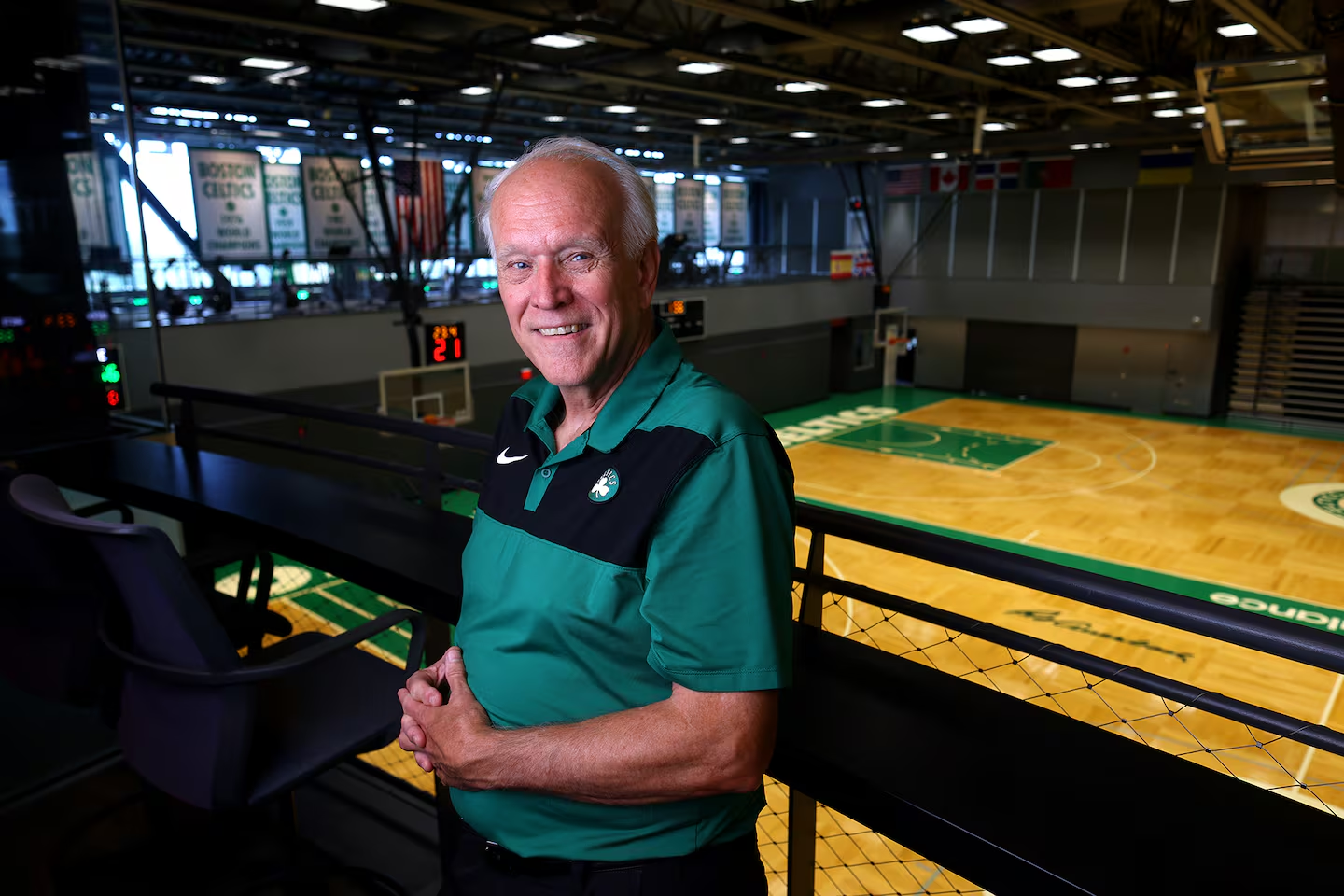
Jeff Twiss landed an internship with the Celtics during his senior year at the University of Vermont in 1976, and has mostly been with the franchise ever since. This weekend the team’s longtime public relations director will receive the Basketball Hall of Fame’s John Bunn Award, its most prestigious honor outside of enshrinement.
Twiss has witnessed five NBA championships, worked with countless Hall of Famers, and served as Red Auerbach’s personal driver and right-hand man. In a recent interview with the Globe, Twiss shared behind-the-scenes stories — from his afternoon with Len Bias a day before his death to a sticky situation with Larry Bird in Los Angeles.
Gone fishin’
The Celtics held training camp at Massachusetts Maritime Academy in Buzzards Bay when Twiss arrived for his internship in the fall of 1976, working under public relations czar Howie McHugh.
When camp opened, though, Twiss noticed that some players were missing, namely star forwards John Havlicek and Paul Silas. Silas was holding out while seeking a new contract. One day, Twiss overheard an agitated Auerbach on the phone in a nearby office.
“Red’s screaming, ‘I’m not paying Silas any more than I’m paying Havlicek!’ ” Twiss said. “He was fired up, but back then Red got fired up about everything. But he’s screaming, ‘I’m not paying!’ And then he slammed the phone down. Soon after that, Silas was traded to Denver. And I said, ‘Wow, I guess this is what pro sports is all about.’ ”
Twiss said that when reporters asked McHugh about Havlicek, who had just won his eighth NBA title, he simply said he’d be back soon. But Twiss learned the truth.
“I go outside and there’s a canal leading toward the bay,” he said. “I look out and see two people standing over the bank, and I get closer and see it’s Howie and Havlicek fishing in the canal. Havlicek spent almost every day of camp fishing.”
Red’s way
Twiss worked as a physical education teacher at Randolph Union High School in Vermont after graduating, but could not stop thinking about the Celtics. After 2½ years he enrolled in a sports management graduate program at UMass Amherst that led to another Celtics internship in 1981. One of Twiss’s primary responsibilities was serving as Auerbach’s chauffeur.
“God bless Red, I love him dearly,” Twiss said, chuckling. “But he was a brutal driver.”
The two were driving back from a preseason game in Providence in October 1981, when Auerbach asked Twiss if he wanted a full-time job with the franchise. Twiss said that he did, and Auerbach told him to meet him at his office at 9 a.m. on Monday. Twiss arrived at 8:30, wearing his best wool suit. Auerbach sauntered in unbothered closer to 9:30.
“He said, ‘All right, here’s what we’re gonna do. Two tickets, company car, $10,500 [a year]. Take it or leave it.’ ” Twiss said. “I stood up, shook his hand, and said I was happy to be with him. And he said, ‘Good, now get your [butt] out of the office and go to work.’ ”
Twiss was an administrative assistant, tasked with everything from unloading equipment to transporting the franchise’s key figures.
When the Celtics played Friday night home games, Twiss would pick up Auerbach at his Copley Square apartment at 6:15 the next morning and take him to Logan Airport so he could fly home to Washington for the weekend. Twiss also was there to pick up Auerbach when he returned.
“After a couple of years, he said to me, ‘Do you know why [you drive me]?’ ” Twiss said. “I said no. He said, ‘First of all, you’re a pretty good kid. But second of all, I hate taxis. Getting into the back of a taxi, Christ, I feel like a sardine. Plus, you’re easier to talk to than a cab driver. They always chew my ear off.’ ”
The loss of Len Bias
On June 17, 1986, the Celtics drafted Maryland star Len Bias second overall. When he arrived in Boston a day later, Twiss helped him get acclimated.
Bias visited Reebok headquarters to discuss a shoe deal, and later that night he and Twiss went to the Blades and Boards Club restaurant in Boston Garden, where Bias completed one-on-one interviews with local television stations before a flight back home to Washington.
“I remember shaking Lenny’s hand and I said, ‘It was a pleasure working with you today. We’ll have some fun times, man. See you later,’ ” Twiss said. “And that was it. That was the one hour of my life I ever talked with Len Bias.”
The next day Bias, 22, died of a heart attack caused by a cocaine overdose. Twiss, who was then the team’s public relations director, went to Auerbach to determine the franchise’s response.
“I walked into his office and he’s sitting there by himself smoking a cigar and he goes, ‘Sit down,’ ” Twiss said. “We both sat there for almost a half-hour and didn’t say a word. Finally, he says, ‘I should probably put out a statement and be available, huh?’ I said, ‘Coach, they’ll all want to talk to you. You were instrumental in scouting and knowing Lenny. We might want to do something when you’re ready for it.’ ”
About an hour later, Auerbach met with reporters.
“It was tough for him, but he was ironclad in that regard,” Twiss said. “He could somehow process it and keep the emotional part away and concentrate on what Lenny could have been, what he saw in his eyes. He was very even keel and matter of fact.
“ ‘Here’s what I saw in the kid, here’s what he gave to us. But now we’ve lost him.’ ”
A Bird threat
Bird had a strong connection to McHugh, the PR director who had been with the Celtics for 33 years when Bird was drafted in 1979.
“When I came along, I said, ‘Larry, I’m not Howie. I’m just some hick from Vermont,’ ” Twiss said. “He said, ‘Yeah, well, I’m a hick from French Lick.’ So, we hit it off, and I think the more he trusted me the more our bond strengthened.”
Journalists from all over the country sought an audience with Bird. Twiss was tasked with filtering them. He would check with NBA sources and other team PR departments to determine whether a reporter was likely to be fair to Bird.
Read more Ranking the Patriots position groups from least to most concerning
“Most of the time, thank God, I was right,” Twiss said.
Sometimes, Twiss was responsible for protecting Bird in more unusual ways. During an NBA Finals game against the Lakers in Los Angeles, Twiss was summoned to a quiet area of the Forum by an arena security official and told that Bird was the subject of a death threat. Twiss quickly informed Auerbach and general manager Jan Volk.
“Red looks at me and goes, ‘Eh, I used to get that all the time. To hell with it,’ ” Twiss said. “Typical Red.”
Twiss also debriefed coach K.C. Jones, and soon after that he saw Jones explaining the situation to Bird, who nodded as he digested the news. Within minutes, Bird walked over to Twiss.
“He thinks about it a bit and turns to me and says, ‘Where are ya sittin’?’ ” Twiss said. “I said, ‘Right behind you on the bench.’ He said, ‘That’s what I thought. Well, if anyone tries to get me, they’re gonna hit you first.’ Then he turned and walked onto the court.”
Reggie Lewis and his giving side
On July 27, 1993, Twiss rushed to Waltham-Weston Hospital when Celtics star Reggie Lewis was taken there after collapsing during an offseason workout at Brandeis University. Twiss was in a room with Celtics Rick Fox and Dee Brown when they learned that Lewis had died.
“We all started crying,” Twiss said. “It was terrible. It was cruel to take a life that young, vibrant, generous, and humble.”
Twiss said it was ironic that Lewis died from a heart condition, because his heart was as big as they came. The Northeastern graduate was proud of being a fixture in the Boston community.
“He never said no,” Twiss said. “He was always generous to whoever it was, whatever the cause or need.”
Twiss recalled a Thanksgiving turkey giveaway that Lewis organized at Northeastern. He cautioned Lewis that if no limits were set, the crowd could become overwhelming.
“And he didn’t bat an eye,” Twiss said. “He said, ‘If we run out of food we’ll get more; we’re here to help whoever needs it.’ ”
Connecting Pierce and Doc
Paul Pierce had made three consecutive All-Star teams and led the Celtics to one conference finals appearance before Doc Rivers was hired as coach in 2004. Pierce was confident in his role as one of the NBA’s rising stars, but Rivers was equally confident in his ability to help the team take another step. Twiss became the mediator between old and new.
“Sometimes I was in the middle of it, and Paul would come to me and say, ‘Man, Doc just doesn’t understand,’ ” Twiss said. “Or Doc would say to me, ‘Geez, can you talk to Paul? He’s got to start doing this or that more.’ ”
Twiss said Pierce initially viewed Rivers as a threat rather than a valuable resource. But he willingly relayed their messages to help bridge the early gap.
“I just kind of listened to them,” Twiss said. “I remember telling Paul, ‘Talk to Doc about it.’ And he’d say, ‘Nah, Doc won’t listen.’ ”
So, Twiss would emphasize Pierce’s strengths to Rivers.
“Doc would say, ‘Yep, I understand, but I want him to do this,’ ” Twiss said. “So I’d go back and say to Paul, ‘Here’s what Doc wants you to try.’ ”
Before long, Pierce and Rivers had opened their own efficient lines of communication. And in 2008, with the help of Kevin Garnett and Ray Allen, the Celtics captured the NBA title that had eluded them.
Classic Cousy
Twiss is now the Celtics’ vice president of alumni relations, and there is no Celtics alumnus more prominent than Hall of Fame point guard Bob Cousy.
Twiss said their friendship began to blossom about 25 years ago when he and longtime Celtics play-by-play announcer Mike Gorman joined Cousy at a golf tournament at his home course, Worcester Country Club.
Over the years, Twiss has sent Cousy Celtics paraphernalia and checked in often. The two spoke last month for Cousy’s 97th birthday.
“He’s a comforting person to know,” Twiss said, “and a real trusting soul.”
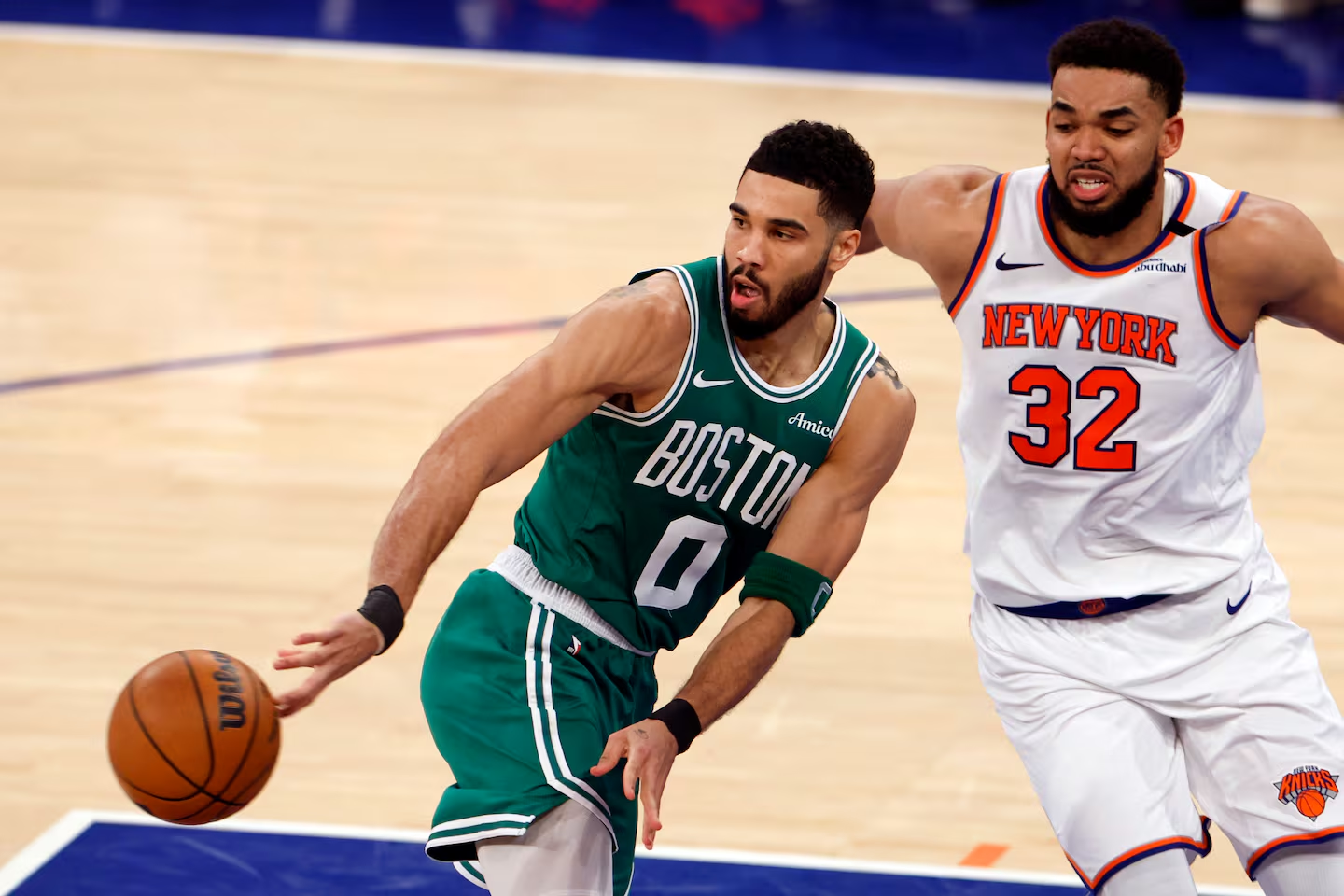
Last summer, Twiss and Celtics lead governor Wyc Grousbeck drove to Cousy’s home in Worcester and presented him with a 2024 NBA championship ring. But they wanted him to be part of more pomp and circumstance, so they also invited him to opening night against the Knicks, when Banner 18 was raised to the rafters.
Twiss was asked to guide Cousy through the pregame ceremony, including pushing his wheelchair on the court for the banner raising. Twiss said he was surprisingly nervous as he prepared to maneuver one of the NBA’s all-time greats onto the parquet floor in front of 20,000 people.
“Then Cous, in his way, looks back at me from the seat of the wheelchair,” Twiss said. “He just says, ‘Don’t [expletive] this up.’ That just broke me down laughing. OK, now I’m relaxed. Let’s go.”


Post Comment