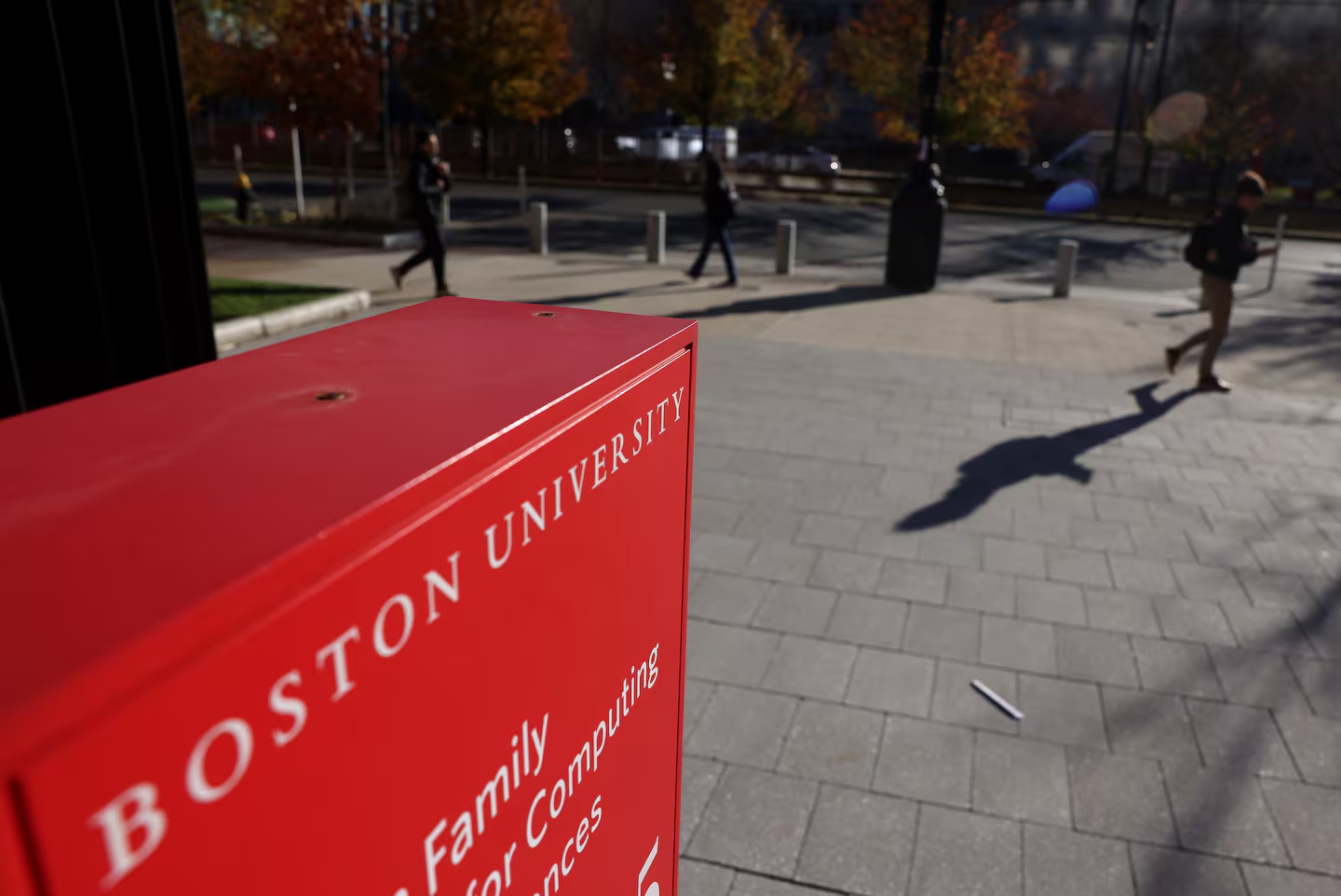
BU to pay city of Boston more than $104 million over five years in record deal
Boston University will pay the city of Boston more than $104 million in cash and other benefits over the next five years as part of a newly signed deal, the largest of its kind for a tax-exempt nonprofit in the city’s history, Mayor Michelle Wu’s office said Tuesday.
Read more The World Cup was beautiful, but soccer’s rules could use some improving
Under the so-called “payment in lieu of taxes” agreement, the university will make annual cash payments to the city, starting with $6.7 million in payments covering fiscal year 2026, which ended last month, and up to $8.3 million a year by fiscal year 2030.
BU will also increase the amount of so-called “community benefits” it contributes to the city, such as scholarships for Boston Public Schools students and other services. It will pay $12.7 million in the first year of the deal and up to $14 million annually.
That will bring BU’s total yearly contribution to the city to about $22.3 million in fiscal year 2030, a 19 percent jump from the $18.7 million the university paid in fiscal year 2025, according to the city’s . The deal is also the first written PILOT agreement between the city and BU in more than 25 years, Wu’s office said Tuesday.
The city has grappled with increasingly strained finances. Wu in recent months has pulled $70 million from the city’s emergency reserves to plug deficits in the city’s and BPS’ budgets, and the city has pushed plans to cut hundreds of staff jobs in the school district.
City officials have for years wanted the city’s most prominent tax-exempt institutions — including BU, Harvard University, Massachusetts General Hospital, and others — to voluntarily pony up more money to help cover the costs of city services they use.
In fiscal year 2025, of the five universities the city requested the most money from, BU included, none contributed the full requested amount, according to city data.
Wu on Tuesday thanked Boston University and its president, Melissa Gilliam, saying in a statement that the city’s success “has always depended on strong partnerships between the City and our anchor institutions.”
Those ties are “rooted in the shared understanding that thriving institutions and a strong, well‑resourced city go hand in hand,” Wu said.
Gilliam also celebrated the deal in a statement, saying it “reflects the priority we place on service and partnership with Boston.”
Read more Rested Revolution return to action after nearly two-month break on Wednesday
“We are grateful for Mayor Wu’s leadership and look forward to continuing to work together to strengthen Boston and engage the people and communities that make our city exceptional,” Gilliam said.
The city heavily depends on property taxes to fund its annual budget, but about half of the city’s land is tax-exempt. Roughly 22 percent of that is owned by private nonprofits, according to a 2018 report from the Boston Municipal Research Bureau.
In 2011, the city launched a “payment in lieu of taxes,” or PILOT, program in an effort to recoup some of those lost tax dollars by asking nonprofit institutions to make voluntary contributions to the city — either in cash or other services.
But the city rarely receives the full amount it asks for in PILOT cash payments. Those payments have stayed flat — between $32 million and $36 million total annually — since fiscal year 2016, and negotiations between the city and nonprofits have been further complicated by the Trump administration’s recent attacks on universities and the health care sector.
The city, though, does have leverage in those discussions. Last fall, Boston signed a new PILOT deal with Northeastern while the universitysought City Hall’sapproval to update its 10-year master plan. The agreement hiked Northeastern University’s annual cash payments from $1.9 million in the 2025 fiscal year to $2.6 million a year, and included$37 million in community benefits by 2030.
Stephen Chan, the city’s chief partnerships officer, told the Globe that the city’s PILOT agreement with BU was not tied to any similarnegotiations.
Chan emphasized that the PILOT program is voluntary, and heavily depends on the city’s individual relationships with each tax-exempt institution.
The city is working to expand the PILOT program and secure formal, updated agreements with more nonprofits, Chan said. But he said the city is not planning to make any broader, structural changes in the immediate future.
Some advocates have pushed for a variety of changes, including updating the formula the city uses to calculate how much it asks each nonprofit to contribute in PILOT payments, as well as standardizing what the city will accept as community benefits, with public input.
Read more What a Troy Jackson vs. Susan Collins Maine Senate race matchup might look like


Post Comment