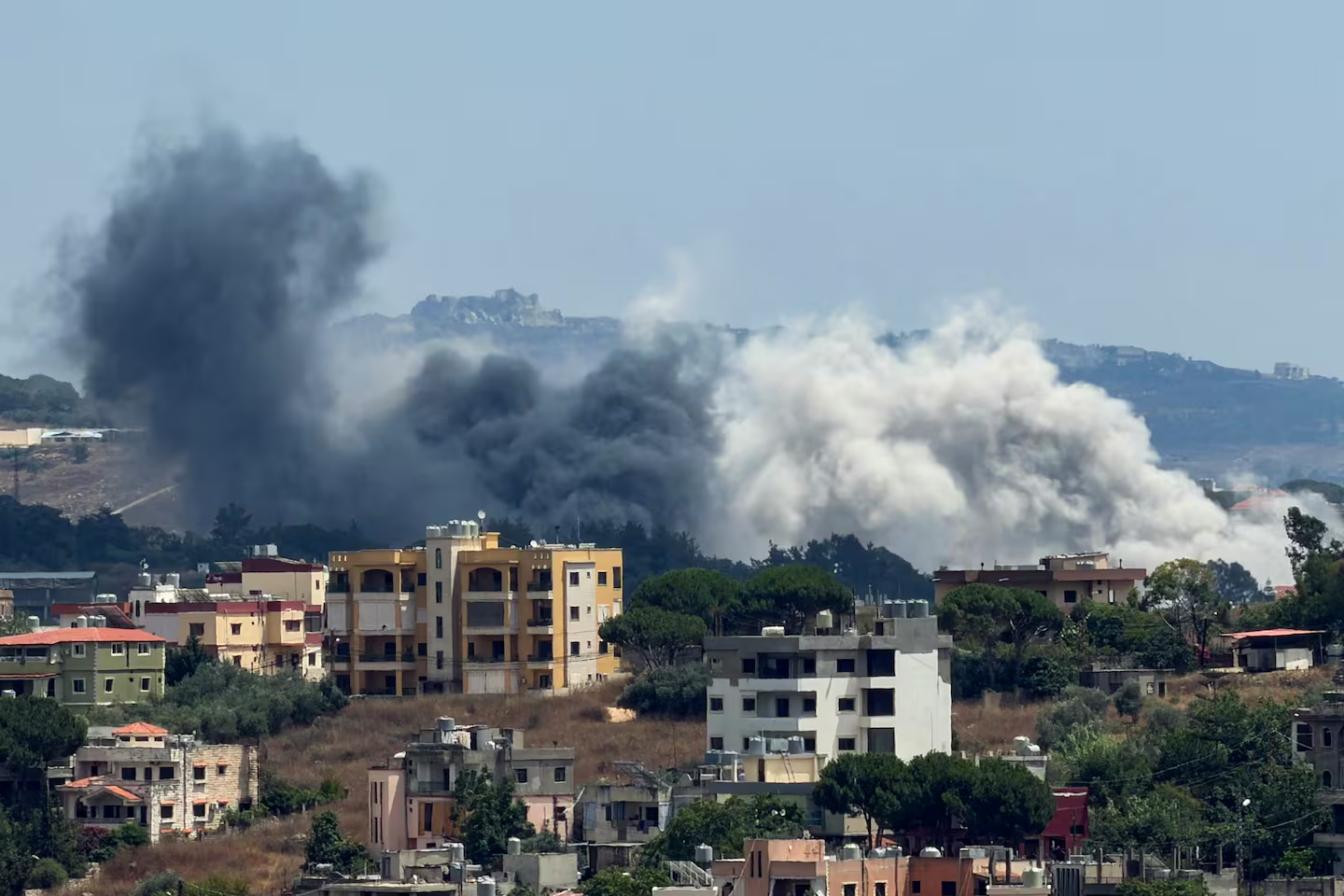
When does the Iran War become a forever war?
It’s been over a year since the United States bombed critical infrastructure related to Iran’s nuclear program. It has been four and a half months since the United States and Israel launched a full-scale war against Iran. It has been a month since the United States and Iran signed a memorandum of understanding that was celebrated as the pathway to a larger peace deal. Instead of lasting the agreed upon 60 days, it didn’t even last a month.
Read more China rejects Trump’s election interference claim as ‘groundless accusations’
Now, instead of looking like a conflict that is winding down, the Iran war increasingly looks like one that could last for years.
Fornearly two weeks, that memorandum of understanding has been scrapped, according to President Trump, in favor of a new understanding: more war. Trump has ordered bombings in Iran nearly every day this week. The same has been true from Iran, which has not only targeted ships trying to pass through the Strait of Hormuz but has also targeted American military installations throughout the region.
There is no end to the war in sight. Only escalation — with potential ground troops eventually becoming necessary — appears capable of delivering a convincing US victory at this point. While Trump very much appeared like someone who wanted to walk away from the conflict earlier this summer, he simply cannot accept walking away if the Strait of Hormuz remains closed, which never happened before this war began.
So the question must be asked: when does this Iran conflict officially become a forever war?
There isn’t a standard definition of a forever war. It’s a label used to describe the second Iraq War and the war in Afghanistan, which lasted more than two decades and became America’s longest-running conflict. Some have also retroactively used the term to describe the Vietnam War, which lasted nearly 20 years.
To be sure, the Iran war is not currently a forever war. It hasn’t even been five months. (It’s also not even officially a legal war in the sense that Congress has neither declared nor authorized it.)
It also differs from Iraq and Afghanistan, where the United States quickly toppled the existing governments, installed governments it preferred, and then spent years battling insurgencies. Here the United States may have hoped for a citizen-led uprising and regime change after the Ayatollah was killed, but didn’t really have a plan when that didn’t happen.
As it stands,the ruling regime is still in place, even if there are new faces. The United States is at war with an actual country, not a decentralized collection of groups like Al Qaeda, ISIS, or even the Taliban.
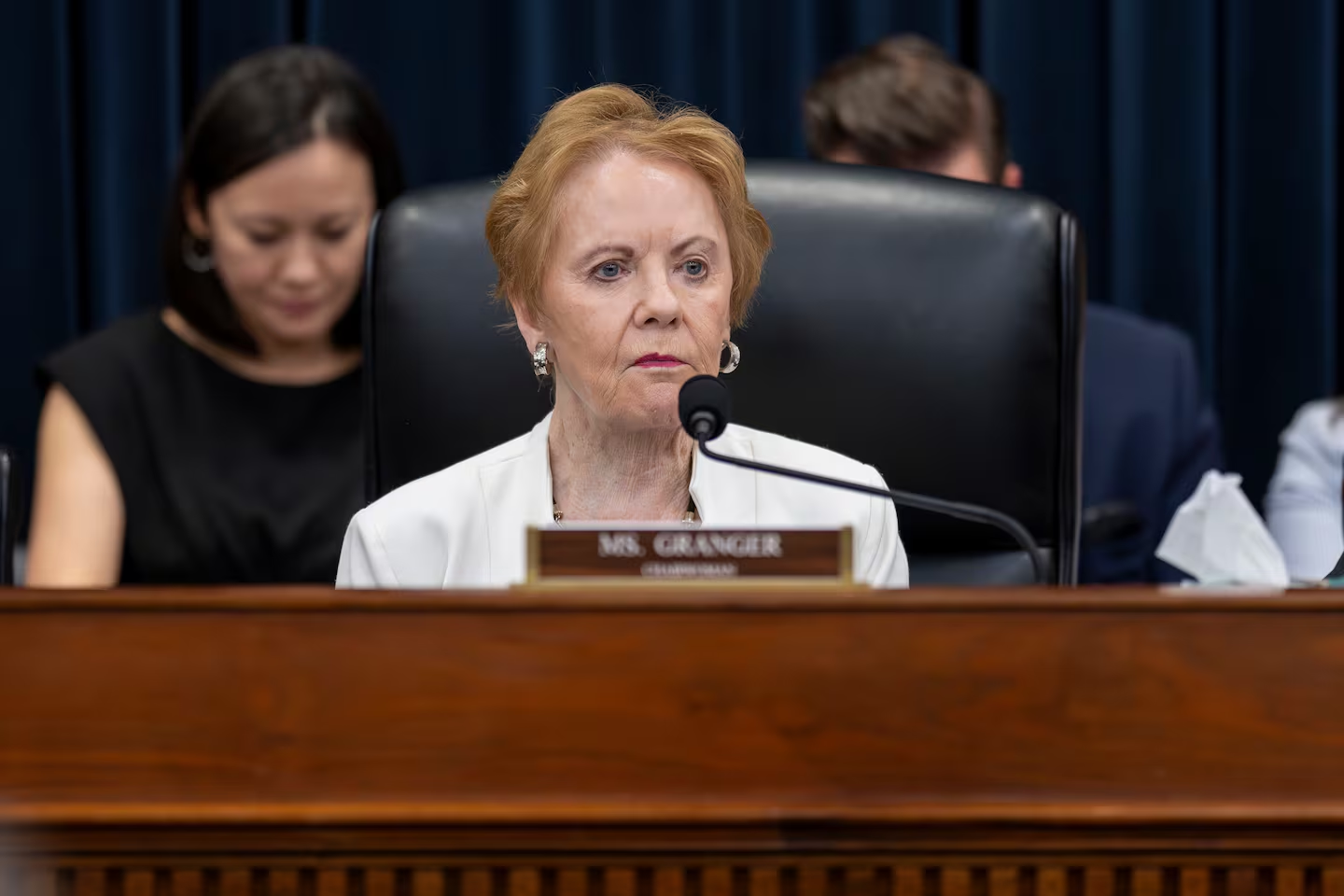
Another important difference is that few in Congress seem eager to fund this war.
Indeed, this week Congress is in the middle of negotiations over another budget resolution. The bulk of it — $73 billion of a $93 billion package — is earmarked for Iran war spending.
Read more Red Sox scheduled to open 2027 season March 25 in Seattle, though work stoppage a possibility
And it’s not going to well for the White House.
That number is already down from the $350 billion in additional defense spending the White House originally requested. Second, the package appears to have little chance of passing the House. (There are other issues also complicating passage in the chamber’s slim Republican majority.) That reality prompted Vice President JD Vance to press House Republicans, many of whom were concerned about the price tag, if not the war itself, to support the package anyway. By all accounts, Vance wasn’t that successful.
Still, there are structural and political incentives for this conflict to continue for a very long time.
More importantly, the United States may no longer control the conditions for ending it. As long as Iran can continue disrupting shipping through the Strait of Hormuz, Washington is likely to feel compelled to remain engaged militarily. That is what makes this conflict increasingly resemble the early stages of a forever war.
For Tehran, everything revolves around the Strait of Hormuz, really the only significant leverage it still possesses, and it is using that leverage for all it can. Iran borders the entire Persian Gulf, including one side of the 22-mile-wide strait, which had long functioned as open international waters through which roughly one-fifth of the world’s oil supply passed.
When Iran targets oil tankers — and even fertilizer ships — it effectively closes the strait, making energy and shipping more expensive around the world, including in the United States. Washington’s response has been to continue bombing Iran in hopes of forcing it into submission, something that has yet to deter Tehran, while also imposing a blockade around the strait. But neither approach solves the underlying problem. As long as Iran retains the ability to disrupt one of the world’s most important shipping lanes, the United States has a powerful economic and strategic incentive to keep forces in the region.
That creates the possibility of an open-ended military commitment. Even if the fighting ebbs and flows, the United States could find itself maintaining a permanent air and naval presence for years simply to pressure Iran to keep the strait open.
History suggests that many American wars ultimately end not because the battlefield changes dramatically but because the politics in Washington do. That is where Democrats come in.
If Democrats regain control of either the House or Senate, they could refuse to continue funding the war. That would not necessarily stop Trump from continuing airstrikes or maintaining a blockade for days or even weeks, but over the long term there is only so much money the administration can shift around without congressional approval.
Even then, Democrats could face enormous pressure. They have spent much of this year talking about affordability, and allowing Iran to impose what amounts to a toll on ships passing through the Strait of Hormuz would continue to raise energy prices and, by extension, the cost of countless other goods. Cutting off funding for the war would therefore come with economic and political consequences of its own.
Iran appears to believe it has entered a new reality in which it can control the Strait of Hormuz indefinitely. Trump, meanwhile, built much of his political brand attacking the forever wars launched by his predecessors and promising to avoid new ones. But if Washington concludes that keeping the strait open requires an indefinite military commitment, then the president who vowed to end America’s forever wars could instead find himself presiding over the next one and, with it, a forever negotiation.
Read more Four takeaways from the first Maine Democratic Senate debate




Post Comment