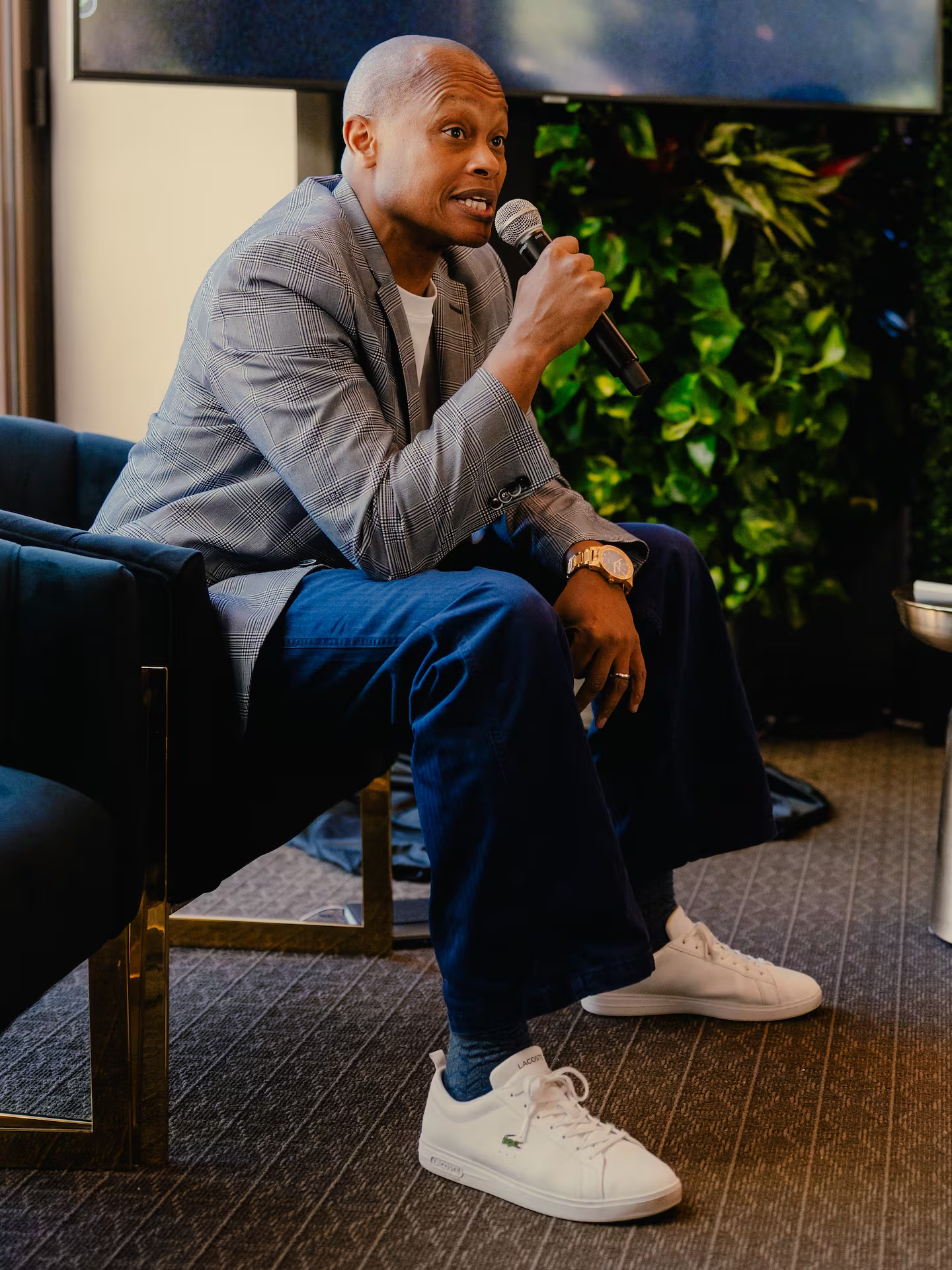
NBPA executive director David Kelly says second apron hurts players, teams, and fans
LAS VEGAS — Celtics majority governor Bill Chisholm lamented last week the impact of the second salary cap apron on his team in recent years, and his sentiments were shared Friday by new NBA players association executive director David Kelly.
Read more Aidan Emmerich heats up in afternoon to win 118th Massachusetts Amateur
In his first official media session since being named head of the NBPA in February, Kelly mentioned the Celtics situation — including their moving of Jaylen Brown for salary reasons — among his issues with the new collective bargaining agreement.
While the trade may also have included basketball concerns, president of basketball operations Brad Stevens said a potential Brown extension and its soaking up 35 percent of the team’s salary cap was impractical if the Celtics wanted to continue to keep a championship-level roster. Stevens said Brown and Jayson Tatum extensions would consume 70 percent of their payroll.
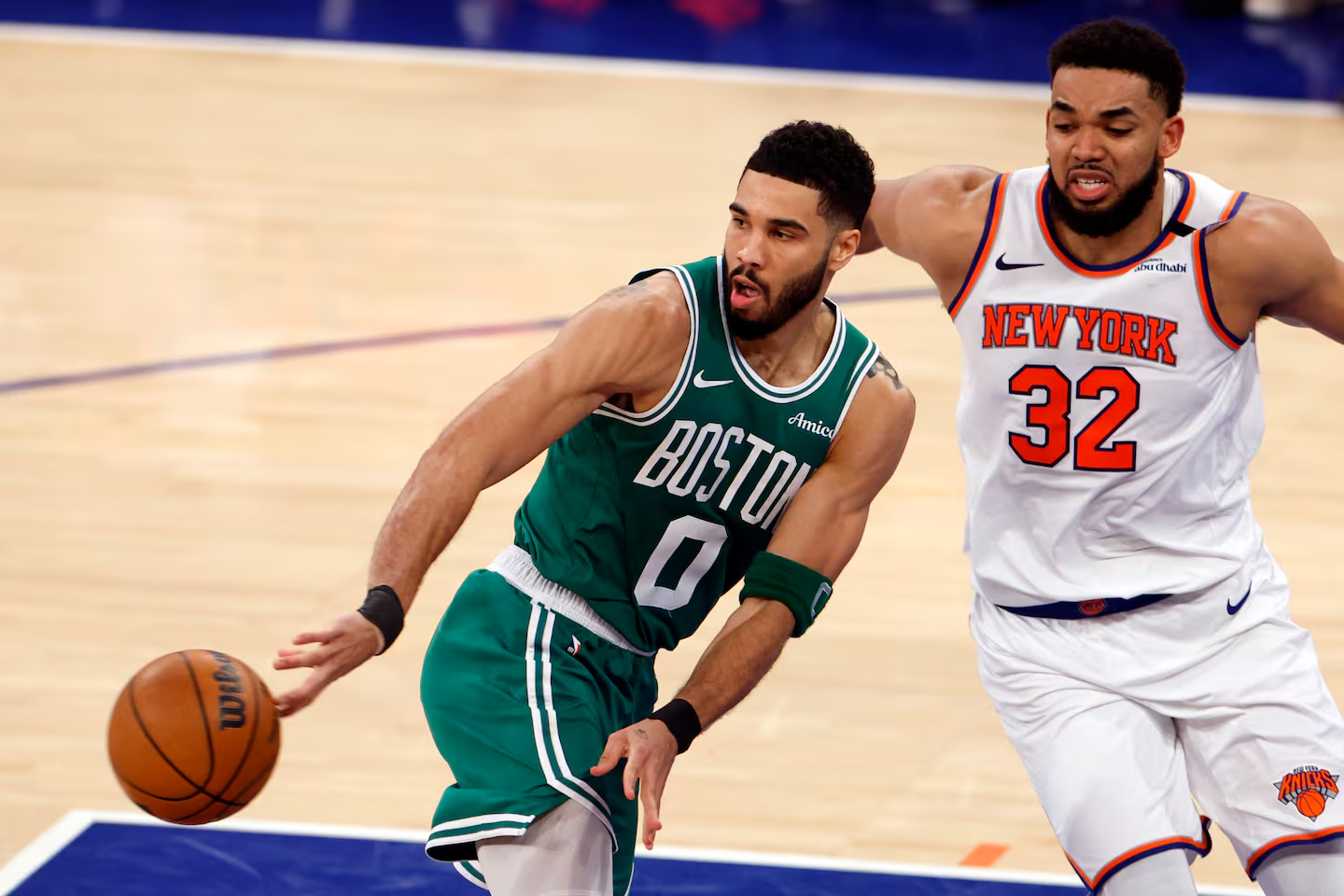
In the summer of 2025, the Celtics traded Jrue Holiday and Kristaps Porzingis and allowed Al Horford and Luke Kornet to leave via free agency to clear the second apron, which limits teams from making certain trades, signing free agents, and aggregating salaries for deals.
It has become an undesirable place financially for NBA teams, and it was one of the primary motivators in the breakup of the 2024 championship team.
“What we are seeing is guys not being able to sign where they want to play, and teams having to break up their team because of the second apron,” Kelly said Friday. “So where a guy like Jrue Holiday is making the same amount of money, but he’s no longer making it in Boston, Porzingis, Jaylen, like these sorts of things. You have a team that just came off of a championship to not have those guys together. We see that as a problem for our members, but also for the fans and for the game.”
The NBPA has an opt-out clause in the current CBA in 2029. It appears that Kelly, who worked as a general counsel for the Warriors for 13 years, and the NBPA board are concerned with the impact of the aprons despite players having unprecedented financial wealth.
The players association will seek to address the apron system before they potentially opt out of their agreement with the owners.
“I would hope so,” Kelly said. “I think it needs to be addressed. Depends on whether or not the league feels it needs to be addressed, and they feel the same sort of pressure that it needs to be addressed that they felt around the draft because of the tanking issue. We will come with our ideas, and there also often are, like, midterm negotiations in which things get tweaked. If we can get some tweaks, that will be fantastic. If not, then we’ll have to wait until the till ’29 or ’30.”
Read more Wellesley’s Michael Thorbjornsen, Matt Fitzpatrick atop leaderboard as fog delays Scottish Open
Stevens brought up an interesting idea during his press conference last week, that if Brown’s salary only counted as 25 percent of the cap instead of 35, the Celtics may not have needed to trade him. There could be a concept where players — like Brown, who was drafted by the Celtics — could count less against the cap as their career progresses as an incentive for drafting well.
Kelly agreed.
“Players getting paid X, but the cap hit is X minus Y. We think that makes sense,” he said. “We actually think that makes sense around some certain issues around a second apron, whether it’s drafted players, whether it’s like a (Larry) Bird exception for certain players around the second apron, the ability to keep teams together, I think, will help fan interest and will help still allow for player movement, but allow players to have the decision of staying where they want to stay.”
When asked about Brown’s situation, in which the Celtics made clear they had no interest in signing him to a two-year, $142 million extension that he had earned, Kelly said teams moving away from homegrown players because of financial reasons is not good for fan bases.
“When I was at the Warriors, one of the best moments there was actually going to Boston during the [2022] Finals and being around some of those fans, and it was the most rabid fan base,” he said. “They care, and to have a story of these two guys [Brown and Tatum] getting drafted, and [people saying] they can’t play together, and then they play together and they win a championship, they bring a championship to that city and that environment with all of that pressure, and to not be able to keep them together because of the system is a problem.
“It’s a problem for the fan base. It’s a problem, and to me, it puts in focus the issues with the system. So that will be a focus going into the next CBA negotiation is how do we make sure that whatever system we’re putting in place does not hurt fan interest and hurt players for the extent of, or to the benefit of some sort of cost control for certain number of owners.
“We have to negotiate better exceptions to that second apron and soften that apron that would allow teams to be able to dip over in certain circumstances for a player like Jaylen Brown.”
While the players are experiencing exponentially higher salaries than their predecessors because of league growth and the television contracts, Kelly wanted to emphasize that all is not well.
“I don’t know that fans in Boston will say that everyone’s making out fine,” he said.
Read more Senator Lindsey Graham has died after a brief and unexpected illness, his office says



Post Comment