Trump lets Warren’s bipartisan housing affordability bill become law
WASHINGTON − Major bipartisan legislation to address housing affordability automatically became law early Saturday when President Trump let a deadline to veto it expire following an unsuccessful showdown with lawmakers over an unrelated bill.
Read more Host of ratings and viewership data show this World Cup to be a winner across the United States
The 21st Century Road to Housing Act, which Massachusetts Senator Elizabeth Warren played a pivotal role in crafting and pushing through Congress, is the most significant federal legislation on the matter since 1990. It seeks to boost the supply of homes and apartments through streamlined regulations, incentives, and innovation to address a key component of the nation’s affordability crisis: high housing prices.
With cost of living concerns among voters paramount in a midterm election year, lawmakers from both parties eagerly embraced the bill after months of complex negotiations on Capitol Hill. The Senate approved it 85-5 on June 22 and the House followed with a 358-32 vote the next day.
“We’re in a full-blown housing crisis,” Warren told the Globe after the legislation’s passage. “Home prices are sky-high, rent is through the roof, and the median age of a first time homebuyer is at an all-time high. That drove home the urgency of making change.”
The stage was literally set for Trump to sign the bill the morning after House passage, with a podium erected in the Capitol’s Statuary Hall and a desk with the presidential seal ready for him to put Sharpie to parchment. But less than two hours before the June 24 ceremony, Trump abruptly called it off and sought to use the bill as leverage.
He insisted he would only sign it if lawmakers also sent him the SAVE America Act, a controversial election restriction bill that is stalled in Congress.
Warren and other supporters of the housing legislation were dumbfounded. Congressional Republican leaders pushed forward anyway. House Speaker Mike Johnson sent the bill to the White House on June 29, triggering a 10-day clock (excluding Sundays) for Trump to sign it or veto it.
If he did neither, the bill became law as stipulated by the Constitution.
That clock expired at the end of Friday. The bill passed with veto-proof majorities in both chambers, but it was unclear if enough Republicans would cross Trump to overturn a veto.
Johnson predicted the day before he sent the bill to Trump that it would eventually become law.
“The housing bill really is a Republican priority because it will lower housing costs,” he told Fox Business on Sunday June 28. “I’m sending it to him on Monday and it will become law. And I certainly want him to take the biggest boldest marker that he has and do that big Trump signature proudly on that legislation because we’re delivering for the people.“
Trump, who has called the affordability crisis a Democratic “hoax,” said Friday he would not sign the billdespite a 2024 campaign promise to lower costs for Americans starting on his first day in office.
Read more The horribly familiar story behind the whole Graham Platner debacle
“I will not sign the Housing Bill, which has been fully approved by Congress and sent to the White House, in PROTEST over the fact that the United States Senate is not capable of passing THE SAVE AMERICA ACT,” Trump wrote on Truth Social.
After it passed Congress, he labeled the housing legislation — the first major bipartisan congressional action since the election to address the soaring cost of living that propelled him back to the White House — a “big yawn” compared to the SAVE America Act.
But the controversial SAVE America Act, which would add new federal restrictions on voting, lacks a realistic path to becoming law this year due to strong Democratic opposition.
Trump had supported the housing legislation as it wound through Congress this year. It includes a ban on private equity firms and other large institutional investors from purchasing single-family homes, a practice that he called out in his State of the Union address.
After the final passage, Trump administration officials touted the bill. White House Press Secretary Karoline Leavitt posted on X that it was “one of the most significant pieces of housing affordability legislation in American history.”
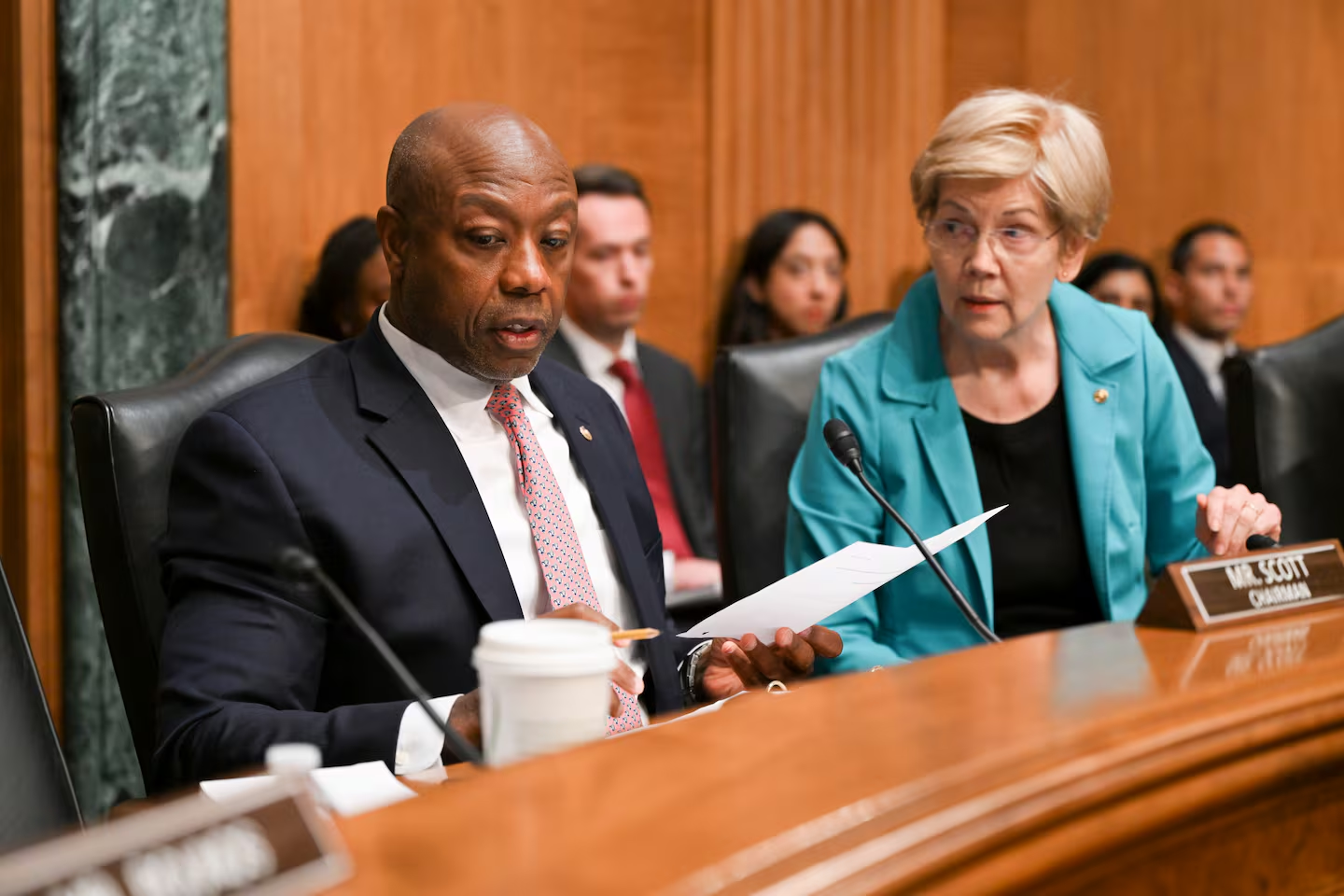
Warren, the top Democrat on the Senate Banking, Housing and Urban Affairs Committee, joined with the panel’s Republican chair, Tim Scott of South Carolina, to craft the Senate version of the bill. There was a similar bipartisan effort by the leaders of the House Financial Services Committee.
The legislation contains 47 initiatives from Democratic and Republican lawmakers, including accelerating environmental approvals for home construction and encouraging communities to develop preapproved building plans to reduce the time and costs to build. One provision is projected to cut the price of manufactured housing unitsby as much as $10,000.
Warren successfully pushed for the bill to include an innovation fund that will provide $1 billion over five years in federal grants for schools and other public infrastructure to communities that increase home construction or change rules to make it easier to build. The US Conference of Mayors backed the bill, as did affordable housing advocates, realtors and the home-building industry.
After her bill became law, Warren issued a scathing statement that both declared and derided Trump’s refusal to sign it.
“At the stroke of midnight, a huge bipartisan bill to lower housing costs became law without the President’s signature, ” Warren said. “Why did President Trump sit on the landmark housing bill for more than 2 weeks? Maybe because there was nothing in it for him personally—no gold-encrusted ballroom, no Qatari jet, no $2 billion crypto deal. Nothing in the 21st Century ROAD to Housing except ways to make housing more affordable.”
Read more How Dan McKee became one of America’s most endangered governors


Post Comment