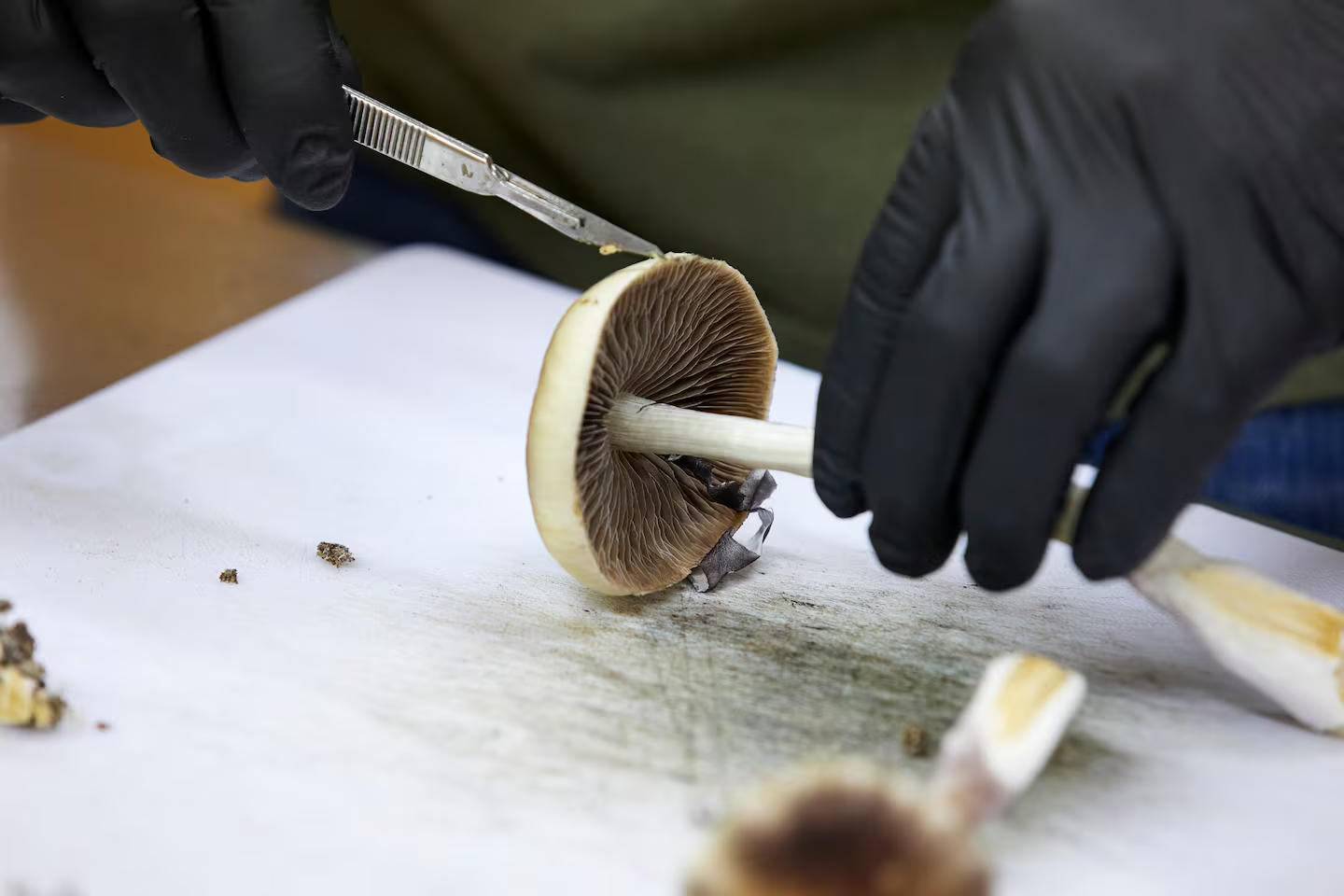
Beacon Hill starting to embrace pilot program for psychedelic mental health treatments
Massachusetts legislators are moving to allow for the supervised use of psychedelic substances in some mental health care settings, embracing a proposal that supporters say would offer critical help to veterans suffering from post-traumatic stress disorder.
Read more Federal election monitors deploying to Mass. and N.H. for September primaries
The Massachusetts House on Wednesday passed language creating a five-year pilot program that would allow licensed mental health care clinics to offer on-site psychedelic treatments.
The measure still needs buy-in in the Senate and sign-off from Governor Maura Healey to become law. But its passage in the House is notable, particularly as the federal landscape around psychedelics is shifting under the Trump administration.
Massachusetts voters in 2024 rejected a more far-reaching proposal at the ballot, which proposed decriminalizing the use of psychedelic substances for people older than 21 and allowing people to grow the hallucinogens at home. The proposal would have decriminalized five psychedelic compounds, most notably psilocybin, or so-called magic mushrooms.
State Representative Marjorie Decker, who sponsored the proposal that cleared the House this week, said she was initially drawn to research supporting psychedelic use in mental health treatments because her father, a Vietnam veteran who died in 2014, suffered from undiagnosed PTSD.
Decker, a Cambridge Democrat, said her father did not use psychedelics in his treatment, but veterans are one of the main groups advocating for psychedelic use to treat mental health.
“It’s pretty mind-blowing to see that psychedelics offer, under the right medical guidance, real treatment, and I want to be bold to say it cures,” Decker said in an interview Thursday. “It’s not a lifetime of treatment. It’s a cure.”
Under the language tucked into the House’s sweeping $561 million economic development bill, the state Department of Public Health could issue up to three permits to establish a pilot program for the use of “naturally occurring psychedelic materials” in mental health care treatments for “clinically appropriate patients.”
The patients would only be allowed to use psychedelics on-site and under the supervision of medical professionals, according to the bill’s language. Decker’s proposal also calls on DPH to craft regulations governing the production and cultivation of “naturally occurring psychedelic materials necessary for the pilot program.”
The department would not be allowed to issue pilot program permits to cannabis industry, pharmaceutical, or “psychedelic molecule development” companies under the measure.
“We’re not interested in people getting into the business of this as much as we’re wanting to look at how can we better treat these really stubborn and very serious conditions that people have — like PTSD, like addiction, like depression,” said state Senator Cindy Friedman, an Arlington Democrat who filed a bill similar to Decker’s proposal. “Those are where we’re seeing these potential positive effects.”
Under the measure, licensed mental health clinics, clinical staff, and patients would not be subject to arrest, prosecution, or civil or professional penalties under state law for “activities expressly authorized under the pilot program.”
Jack Hammond, a retired US Army brigadier general who serves as the executive director of the veterans organization Home Base, said veterans deserve access to “every safe, evidence-based tool available in the fight against invisible wounds — because too often, their lives depend on it.”
“This pilot program provides Massachusetts with a responsible, evidence-driven path to explore treatments that can help veterans heal and, ultimately, save lives,” Hammond said in a statement.
Read more Eight men indicted in alleged planned drone and sniper attack on White House UFC cage-fighting show
The push to use psychedelics in Massachusetts for mental health treatments comes months after President Trump signed an executive order calling on the federal Department of Health and Human Services to direct $50 million to states that have or are developing programs to advance psychedelic drugs for serious mental illness.
That order drew praise from local researchers who expressed optimism that it signaled a growing acceptance of the use of psychedelics in the medical industry.
The federal government still classifies nearly all classic psychedelics as a Schedule 1 substance, which means they have no currently accepted medical use and a high potential for abuse.
But the measure approved in the House tasks the Department of Public Health with expanding federally authorized research on psychedelic-assisted therapies, including on the active ingredient in magic mushrooms, psilocybin, and ibogaine, a naturally occurring psychoactive compound derived from the bark of a West African shrub.
Jerry Rosenbaum, the director of Massachusetts General Hospital’s Center for Neuroscience of Psychedelics, said psychedelic compounds have “therapeutic potential.”
“This bill takes a step in the right direction to observe, study, and gain experience in an intervention that will surely become an asset for the future tool kit of mental health therapeutics,” he said in a statement to the Globe.
Both Decker and Friedman said Trump’s decision to put federal money on the table for states did not play a role in their push for a pilot program.
“It’s great to see that there’s an alignment in which the federal government and state government is moving in the same direction of trying to make people’s lives better,” Decker said. “But we certainly have not been a state … that has been waiting for the winds of change at the federal level to decide how to take care of people in our state.”
The proposal cleared the Democratic-led House nearly two years after Massachusetts voters rejected a ballot question that would have decriminalized the use of psychedelic substances.
After the initiative lost at the ballot box, supporters pledged to keep working with state lawmakers to “find new pathways for all those who struggle with their mental health.”
But backers of the pilot program said the five-year initiative is different from the ballot question.
“This is not making psychedelics legal,” Friedman said. “This is using certain psychedelic drugs in a controlled research setting to understand their effectiveness on certain very serious … health conditions.”
Read more Can Trump’s arch be so tall? A panel may redefine a law to get to yes.
Jon Chesto of the Globe staff contributed reporting.


Post Comment