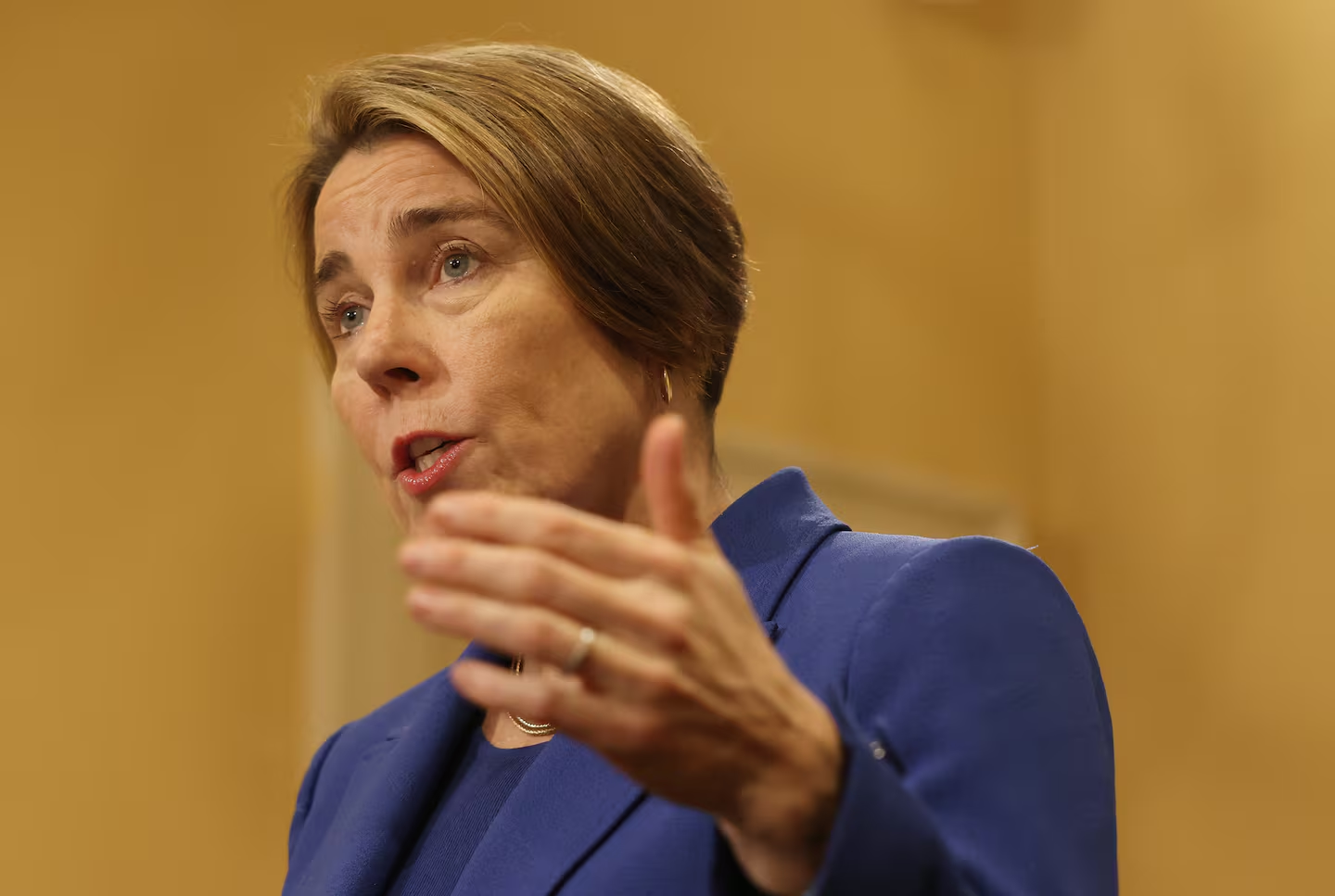
Healey signs $63 billion state budget with no new taxes, no new fees — and no vetoes
Governor Maura Healey on Thursday signed, with no changes, a $63 billion state budget plan that state officials said does not raise taxes and introduces a slew of new laws, including a panel to review how the state funds its local school districts and new protections for victims of sexual assault.
Read more South Florida’s Palm Beach airport renamed President Donald J. Trump International
The first-term governor, who is seeking re-election this fall, didn’t veto any of the spending lawmakers approved earlier this month, nor did she seek to amend any of various policy changes tucked into the plan.
The plan, which covers the fiscal year that began more than a week ago, hikes state spending by 4 percent over the budget Healey signed a year ago.
“This budget is about lowering people’s costs, driving economic growth and supporting our kids, all without raising any taxes or fees,” Healey said in a statement released by her office.
It’s fairly uncommon for a governor to completely forgo slicing any spending or vetoing certain proposals passed by the Legislature. Last year, Healey vetoed $130 million in spending across dozens of line items, including a proposal to scale back coverage for GLP-1 drugs like Ozempic to treat obesity for state employees.
She also held back $125 million in local earmarks — which she released months later — and in warning of potential hard fiscal times ahead, also asked lawmakers to give her the expanded power to cut across state government if revenues went south. Lawmakers ultimately did not agree to that change.
The year before, she slashed $192 million from MassHealth’s managed care program and made smaller cuts across a variety of other areas, ultimately totaling more than $300 million in vetoed spending.
To be sure, the budget lawmakers sent to Healey last week hewed closely to the proposal Healey’s administration had originally put forward in January.
This year’s spending plan funnels roughly $300 million more in so-called Chapter 70 funding to local schools over last year’s budget plan, sends cities and towns $40 million more in direct local aid, and includes $465 million in direct aid to the MBTA, which has continued to struggle financially. That infusion to the T comes on top of another $595 million the Legislature funneled the agency in a separate spending bill this spring.
Healey’s budget chief, Matthew J. Gorzkowicz, said in a statement Thursday that the spending plan “protects the long-term stability of Massachusetts’ finances” while helping prop up sectors that drive the state’s economy.
Read more US star Christian Pulisic fractured his leg in World Cup loss to Belgium
“By keeping spending growth sustainable and strategically utilizing available resources . . . this budget ensures that Massachusetts will continue to thrive,” he said.
The budget is more than a spending plan. Healey also signed off on a slew of policy changes, including a policy eliminating the statute of limitations for rape kits with DNA evidence, reinstating of a commission to reexamine the formula the state uses to fund public school districts, and a policy making it illegal for a mandated reporter, such as a teacher, coach, or police officer, to have sex with a 16- or 17-year-old.
The budget also creates a program to help address a surge of deadly wrong-way driving incidents across the state. It extends an affordable health care pilot program through 2027, sustains insurance coverage for HIV prevention medication, and extends the timeline for a commission examining the embattled Pappas Rehabilitation Hospital for Children into 2027.
In response to a deadly fire at a Fall River assisted living facility last year, the budget also dedicates $500,000 to safety upgrades and emergency preparedness at assisted living homes across the state.
The spending plan would replace funding in some areas that have sustained cuts from federal government programs, such as $36 million for food assistance across different programs, lawmakers have said. The budget also builds in $4 million innew funding for English-language learners, given the drop in enrollment at schools with large immigrant communities amid the ICE enforcement crackdown last year.
Unlike last year, when lawmakers quietly included an $800 million cushion against ongoing financial uncertainty at the federal level, budget writers this year said they did no such thing.
That’s not to say other federal changes are not already impacting the state. MassHealth officials said last month that they recently learned that up to 110,000 people beyond some 300,000 residents they expected to lose coverage under new Trump administration requirements will have to take extra steps to continue their health insurance.
While Massachusetts has been tardier in wrapping up its fiscal planning, the fiscal year still started without a spending plan.
The state has now gone 16 straight years with a late budget, having relied on one or more stopgap spending bills each year to keep state government running and thousands of employees paid. A temporary spending plan lawmakers passed last month was designed to run through the end of July, if need be.
Read more Trump’s loyal defender at the Vatican


Post Comment