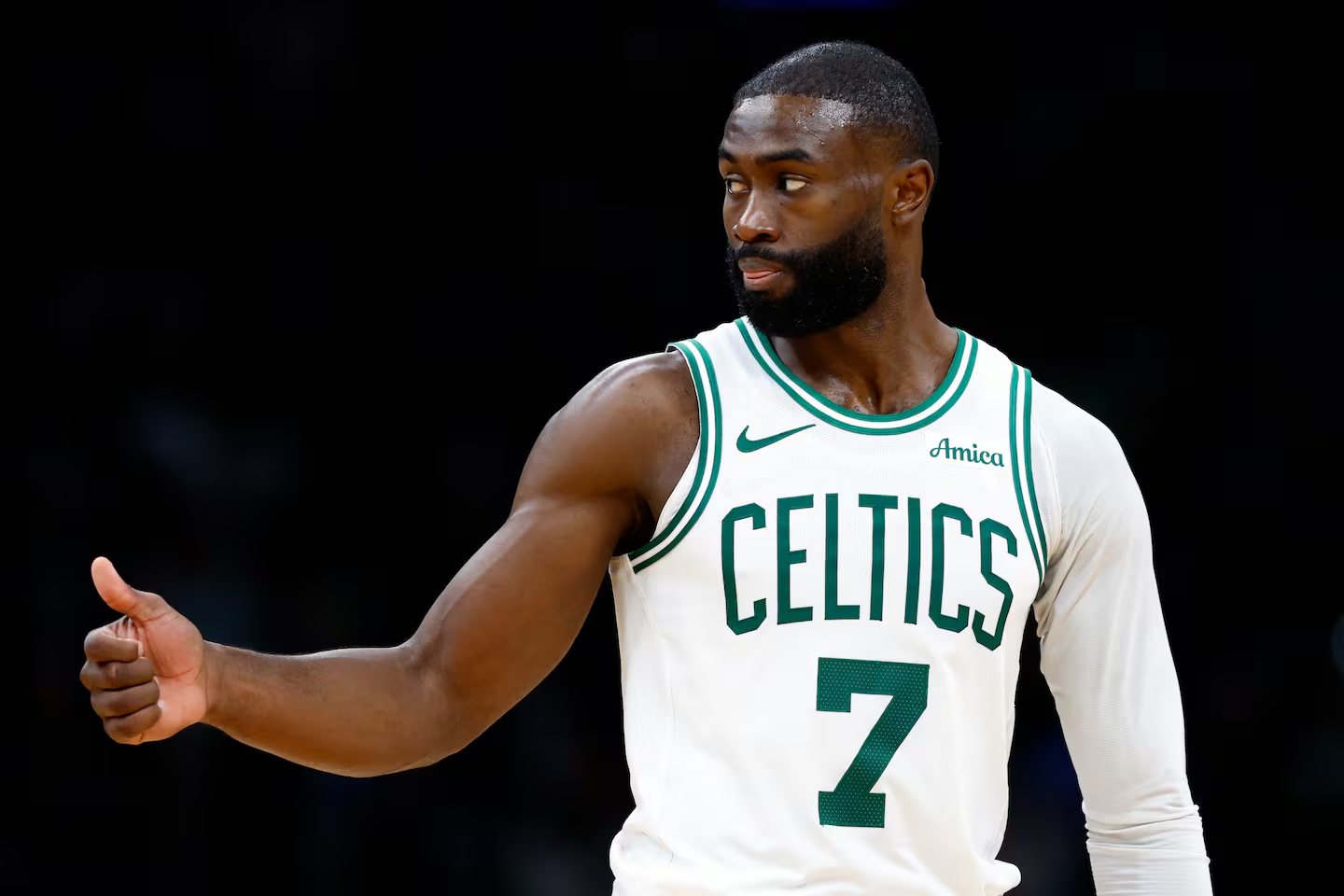
Some thoughts on the Jaylen Brown trade, and how the Celtics move forward without him
A few thoughts on the state of the Celtics right after I look up “optionality” in Zander Hollander’s Complete Corporate Buzzwords Handbook of Pro Basketball …
Read more US support for Israel slips as Democrats grow more critical, poll finds
⋅ There were two questions that I wanted Celtics president of basketball operations Brad Stevens to answer during his press conference, alongside owner Bill Chisholm, on Monday at the Auerbach Center in the aftermath of his, er, unpopular trade of Jaylen Brown:
Why was the return (36-year-old, high-salaried veteran Paul George, two first-round picks, and two second-rounders from division-rival Philadelphia) appealing to him when most of the basketball world treated it as underwhelming?
And why make the trade now rather than later?
Stevens, who clearly has heard from an assortment of disgruntled Celtics fans since making the deal, answered the first question, emphasizing the appeal of the two first-round picks, which he called “potentially premium assets.”
He talked up George, a 10-time All-Star with more injury scars than an inept pirate, noting he’s “a hell of a player … but he’s a much different player than Jaylen,” which notably followed a line about how you need to feature Brown if he’s on your team.
But in the quest to build a deep, well-rounded roster, Stevens sees greater value in those picks than Celtics fans did when the trade was announced. And probably still do.
⋅ There was less clarity on the timing of the deal, and it makes me continue to wonder if there’s a piece we’re still not privy to regarding Brown’s reaction to trade rumors.
Brown said on his Twitch stream last week that Stevens and the front office kept him informed when the rumors about a trade for then-Bucks superstar Giannis Antetokounmpo was being negotiated, but that things “went left” after that.
We all know that going left isn’t Brown’s strong suit — c’mon, allow me that joke, will ya? — but he did not offer much clarity on what that meant, whether he was angry, or how much more communication he needed. It’s possible Stevens didn’t think he’d get a better deal down the road. It’s possible that there was more tension with Brown than he cared to share. Or maybe he just really did love those first-round picks.
⋅ For anyone who spent the hours after the trade trying to figure out why Stevens — who has been exceptional in his role, in the toughest league to succeed as a team builder — made the trade rather than caterwauling that he did, most of his other answers confirmed conclusions that were already suspected.
Under the current collective bargaining agreement, it’s going to be extremely difficult to build a legitimate championship contender when two players have max deals taking up nearly three-quarters of the salary cap. And it’s even harder when one of those players is an excellent but flawed one, and not among the truly elite.
Read more Mikel Merino’s late goal sends Spain to quarterfinals and ends Cristiano Ronaldo’s World Cup career
“I looked at where the league was heading, looked at the way that we’ve finished the last couple years [with disappointing early-round playoff losses] and also looked at the unbelievable way we’ve played in the regular season the last couple years, [and] the path looked a little bit more challenging to me,” said Stevens.
“The path looked a little bit more challenging with 70 percent of our cap and such a high percent of our usage tied into two players. … You have to have the optionality to do a great job of building out depth that can hopefully replace the irreplaceable individual.”
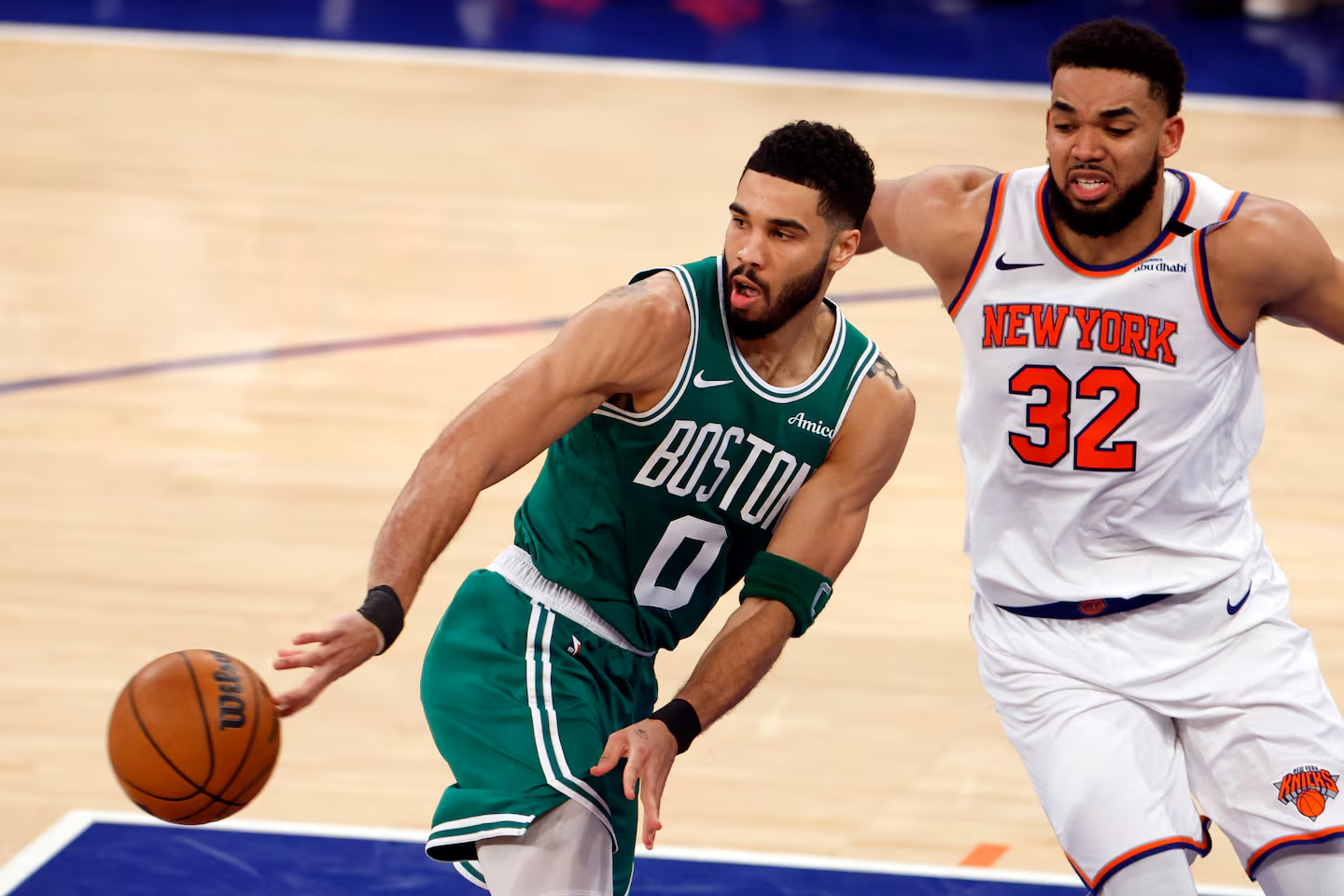
⋅ Stevens kind of/sort of confirmed a realization that I had while the Celtics were falling apart against the Sixers in the first round this past postseason, which followed them falling apart in the second round last year against the Knicks.
Because Brown and Jayson Tatum, as dedicated and talented as they are, played opposite of each other rather than with or off of each other, they needed a specific and scarce kind of teammate to help them reach the mountain top.
Stevens said that after surveying free agency, he recognized that the kind of help the Celtics needed — selfless, well-rounded, high-end players such as Jrue Holiday, Al Horford, and holdover Derrick White — wasn’t available. “I thought our path to getting what we ultimately wanted to do probably looked more like the last couple of years,” he said.
⋅ I get why heartbroken Celtics fans felt the same way about the Brown deal as they did when the Red Sox traded the wonderful Mookie Betts in February 2020. But there is one major difference. When Betts was coming off his age-26 season, the Red Sox had decided they weren’t going to pay him what he was worth, and traded him for a pack of common baseball cards. When Brown was coming off his age-26 season, the Celtics made him the highest-paid player in the history of basketball.
⋅ The Celtics do have a better basketball team than they had to start the 2025-26 season, though one with more risk given natural concerns about Tatum’s Achilles and Mitchell Robinson’s injury history.
⋅ The Sixers? I have no idea what to make of them, but I can’t wait to get a look. Brown, Tyrese Maxey, and VJ Edgecombe could do some damage if they’re allowed to get out and run, but Joel Embiid might have other ideas for the 47 games he’s healthy.
⋅ One last question: How much does Brown’s usage go down? He did not get his own team by any means, and he is a high-volume player whose offensive strengths are mostly limited to his immense scoring ability.
We can admit it now, right? Some of analytics’ skepticism of his value actually is confirmed by the eye test.
Read more Tadej Pogacar wins Stage 3 and takes the Tour de France yellow jersey
Don’t dare me to make that joke about going left again. I’ll do it.



Post Comment