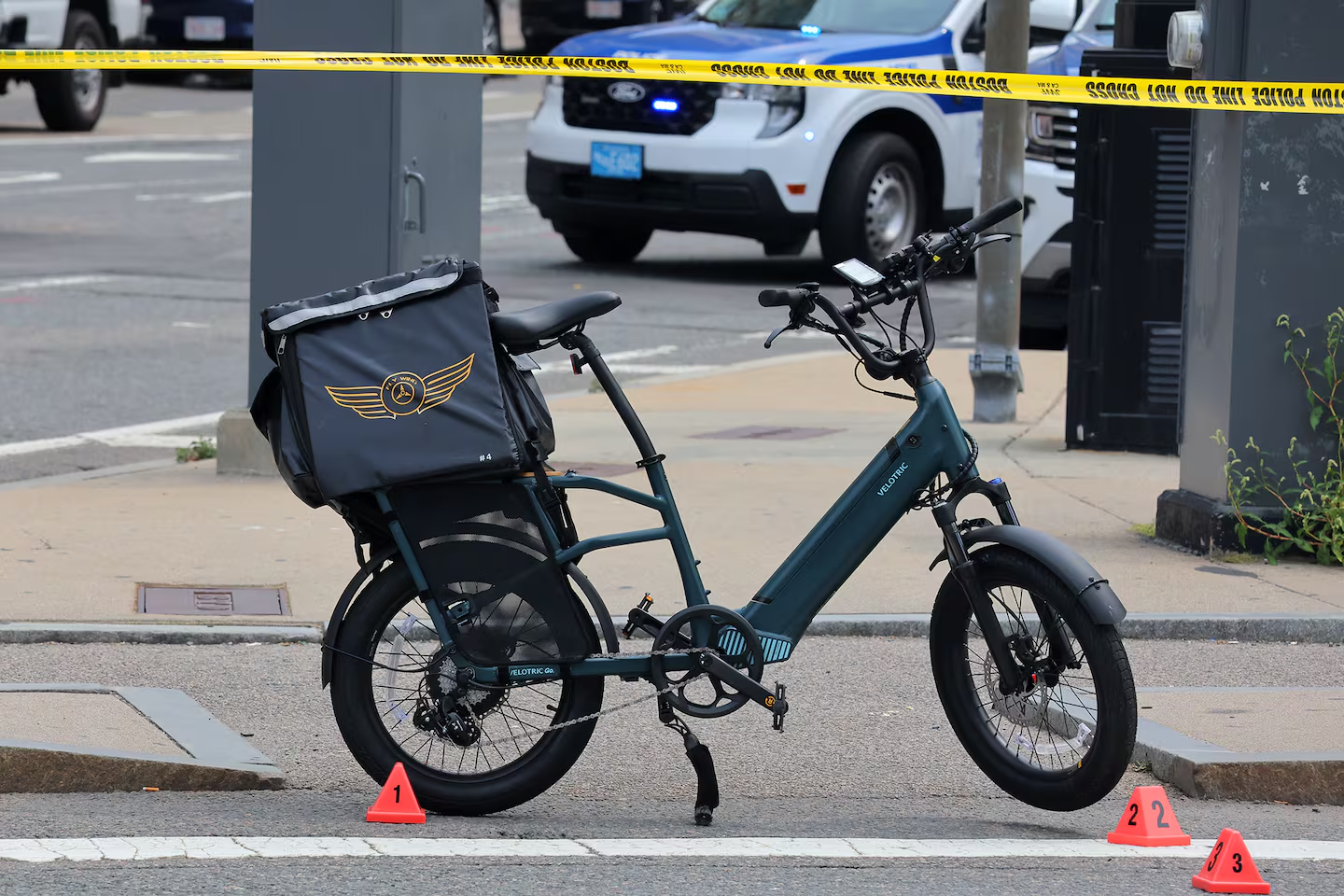
Mass. House seeks to regulate e-bikes in $425 million economic development bill
If you’ve ever found yourself jumping back to avoid a speedinge-bike on a walking path, Massachusetts lawmakers say it’s time for the state to act.
Read more Trump administration denies disaster declaration for record R.I. blizzard
DemocraticHouse leaders included a suite of proposed rules to regulate e-bikes, mopeds, and scooters in Massachusetts in a sweeping $425 million economic development package they released Monday. The 82-page borrowing bill alsoincludes research funding for colleges and universities and would realize a host of new policies, including making it easier to build housing on land owned by religious institutions.
The e-bike language is similar to a bill Governor Maura Healey proposed in May to create a tiered system for where and how users of e-bikes, mopeds, and scooters can operate. Healey administration officials at the time touted the proposal as a first-in-the-nation, speed-based framework.
E-bikes have grown in popularity for their ease of use and have drawn applause for helping to reduce traffic congestion. But a rash of accidents and safety concerns has prompted concerned bikers, drivers, and pedestrians alike to call for better regulation of what qualifies as an e-bike and who’s allowed to use them.
“Something had to be done with the explosion of these devices throughout the state. Especially post-pandemic, we’ve seen a tremendous increase, especially in the cities,” said Representative James Arciero, a Westford Democrat who co-chairs the Legislature’s transportation committee.
The House is scheduled to vote on the bill on Wednesday.
The House proposal would create a tiered system with different sets of rules for four different classes of so-called micromobility devices.
E-bikes that go 21 to 30 miles per hour, for instance, wouldbe classified as tier 1 devices and would be allowed to use bike lanes but not shared-use paths or sidewalks. Mopeds or scooters, for example, that can go over 30 miles per hour, and up to 40 miles per hour, would be prohibited from bike lanes and recreational bike paths, in addition to sidewalks and shared-use paths.
The House will also bar anyone under the age of 16 from operating a motorized bicycle that can go faster than 20 miles per hour. Arciero cited the “most moving testimony” he heard from pediatric surgeons who reported seeing young patients come in “every week” because of e-bike crashes.
“As a father, as a state representative, as a neighbor, this is what I hear,” Arciero said. “There’s a lot of conversation about looking towards getting our arms around this issue and keeping our kids safe.”
The bill would also require riders of any age to wear “protective headgear” as determined by the registrar while operating a higher-speed e-bike, which would include any vehicle beyond a human-powered bicycle or motorized wheelchair and other so-called mobility aid devices.
Healey’s own proposal built on recommendations from a statewide commission on micromobility devices that released its report in January.
Read more Michigan Democrats face a stark choice between a progressive and a moderate
That commission found that e-bike-related injuries have “trended upward” since 2017. That included several major incidents throughout 2025, includingthat of a 13-year-old in Stoneham who was killed after his electric dirt bike crashed into a car.
Some advocates who back creating more regulations to protect pedestrians said they wished the bill had gone even further.
Brendan Kearney, the executive director of the nonprofit WalkMassachusetts, said his group pushed to expand data the state collects on fatal crashes to include those that involve e-bikes, not just a motor vehicle.
“We’re encouraging more people to be on smaller devices, faster devices, and people are excited. But we need to make sure that there are places they can do that safely and pedestrians still have a safe space to … be out in their communities, too,” Kearney said.
“I’m glad they’re getting something done,” he added.
The House’s wider economic development bill also included a slew of measures that House Speaker Ron Mariano and Representative Aaron Michlewitz, the chamber’s budget chair, said in a statement would “help to expand the Commonwealth’s housing supply … and position Massachusetts for long-term economic success.”
Among them was a policy that would, for the first time, allow multifamily housing to be built on land owned by religious institutions.
The House also proposed to increase the amount of funding the state could use from a relatively new Federal Matching and Debt Reduction Fund to make up for losses in federal funding, particularly for hospitals and community health centers. The fund uses interest collected on the state’s rainy day fund to help put up the matching funds needed to compete for federal grants.
Lawmakers also included $200 million inborrowing to support colleges and universities that had faced research funding losses due to federal cuts.
House leaders did not, however, include Healey’s proposal in the economic development bill she filed in April to place new guardrails on artificial intelligence, including transparency and reporting requirements — though it did include Healey’s proposed $75 million for the state’s investment in artificial intelligence development.
It’s possible the House, and later the Senate, may add even more policy changes to the legislation before it makes it to Healey’s desk. Such economic development packages often serve as a late-session catch-all for ideas from other bills that haven’t worked their way through the legislative gears.


Post Comment