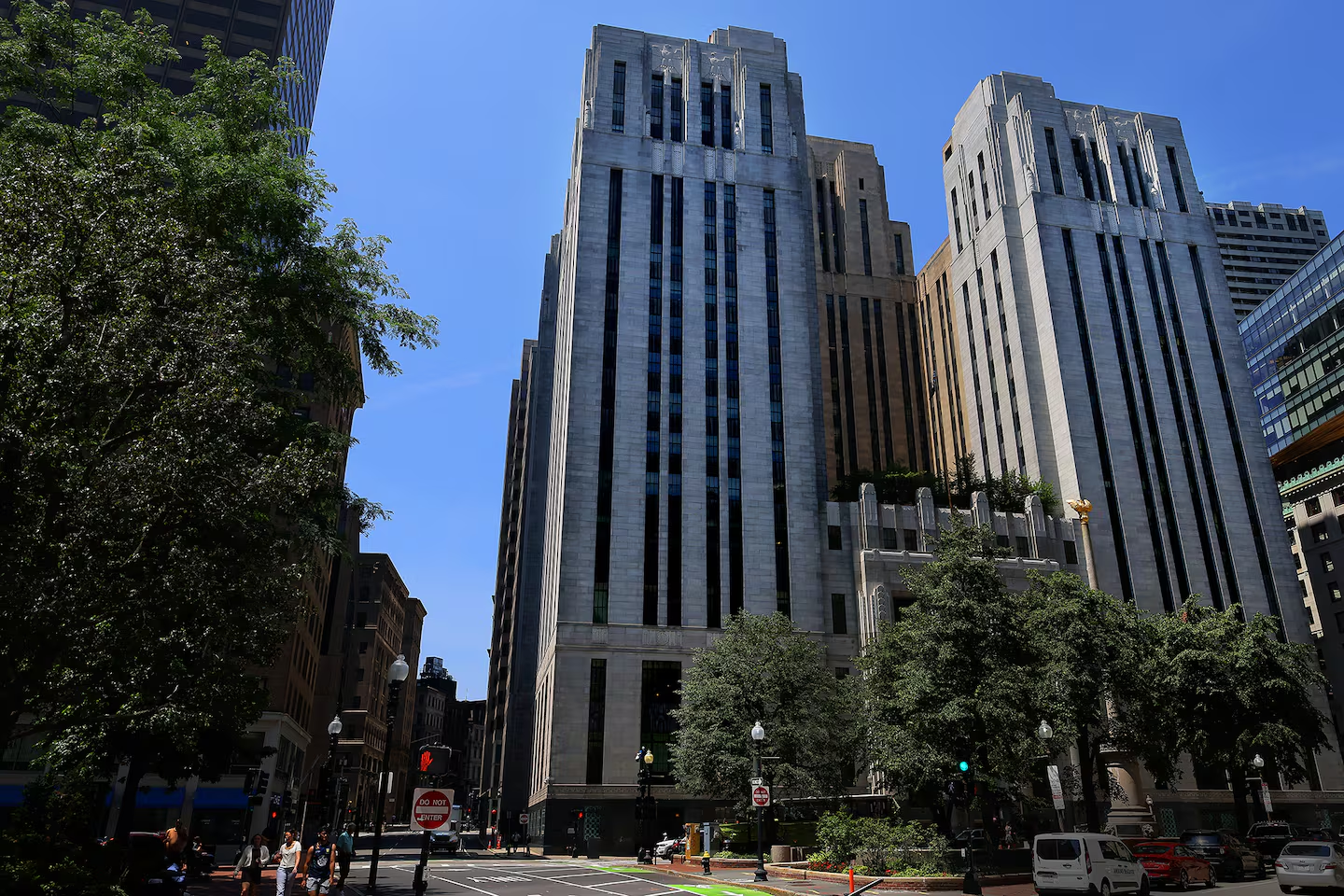
Could downtown Boston’s McCormack courthouse become housing?
An independent board advising the federal government on the future of property within its vast real estate portfolio is likely to recommend selling downtown Boston’s McCormack building — a deal that could perhaps become the city’s grandest office-to-residential conversion yet.
Read more Seeing a strong demand for local news, Veteran R.I. journalists launch South County Star
The Public Buildings Reform Board, a bipartisan group due to shutter at the end of the year, said at a recent public hearing that it would recommend selling eight federal properties and was considering recommending an additional 26 buildings — including the John W. McCormack US Post Office and Courthouse in Boston and the US Custom House in Portland, Maine. Selling those properties would cut 7.34 million square feet from the federal real estate portfolio and save up to $1.2 billion in building maintenance and upkeep across a 30-year period, the board said.
“American taxpayers are paying a premium for federal office space, but many of these spaces are aging, underused or vacant, and in dire need of investment and repair,” said D. Talmage Hocker, a commercial real estate executive serving as the PBRB’s acting chair, in a statement.
Former Democratic Massachusetts congressman Michael Capuano also serves on the PBRB, which last year said it was considering recommending selling three substantial federal properties downtown — the McCormack, the John F. Kennedy Federal Building, and the Thomas P. O’Neill Jr. Federal Building.
Beyond those three buildings, the government has already approved the recommended sale of the eight-story Coast Guard building on Fort Point Channel. All four properties are less than one-third full on a good day, and have substantial deferred maintenance requirements, said David L. Winstead, a PBRB member, in an interview.
“The average of all these properties, in terms of daily utilization, is 27 percent,” Winstead said. “We’re way below the mark, and the carry costs for the federal taxpayer to maintain this number of people in these buildings … it’s just not cost effective.”
The PBRB recommends building sales to the federal Office of Management and Budget, which then approves or denies the suggestion.
Read more Chris Gotterup wins John Deere Classic with a 62 and late help from Ben Kohles
In March, the PBRB alerted Boston officials that it would recommend selling the McCormack, according to Brittany Comak, a spokesperson for the Planning Department. The city would support converting the complex, which spans 727,000 square feet across three towers forming a U shape, into housing, she said.
“We welcome the chance to collaborate on a strategy that strengthens the federal workforce’s presence in Downtown Boston, while also unlocking opportunities for new housing in buildings that may no longer be suited for office functions,” Comak said in a statement. “Expanding housing opportunities in the urban core aligns directly with Boston’s goals to increase the affordable housing supply, reduce vacancy, and support a vibrant, mixed-use Downtown neighborhood.”
The PBRB partnered with commercial real estate firm Jones Lang LaSalle to study federal real estate holdings and whether it makes financial and logistical sense to move federal employees and prepare a building for sale versus keeping the properties as-is. Selling the McCormack property would save an estimated $185.6 million; comparatively, Portland’s Custom House would save around $10.2 million, according to a PBRB analysis. Other buildings that could represent substantial cost savings include the Minton-Capehart Federal Building in Indianapolis ($131.5 million) and the Wilshire Federal Building in Los Angeles ($110.2 million).
There are more hurdles to clear. Despite not having a majority of its facility in daily use, the McCormack building does house the active US Bankruptcy Court. Still, there’s “tremendous demand” for a McCormack sale, said PBRB member Dan Mathews in an interview.
“The building is mostly empty, but bankruptcy is in there, and those are historic federal courthouses,” Mathews said. “That’s a unique issue that would have to be worked through. It’s not insurmountable, but it’s an issue.”
The PBRB anticipates finalizing its recommendations in September to give OMB time to review before the group’s scheduled disbandment at the end of this year.





Post Comment