Haverhill’s shoe legacy steps into spotlight with new exhibit
For decades, Haverhill was known as the “Queen Slipper City,” a manufacturing powerhouse whose factories helped define the American shoe industry. On June 27, that history will take center stage again with the opening of “Shoe Stories: Past, Present, Future,” a multimedia exhibition inside the brand new Historic New England Center, located in a former shoe factory in the city’s downtown.
Read more The father-daughter wedding dance gets an upgrade
“Shoe Stories” is the inaugural exhibit at the center, which is part of Historic New England’s larger vision for the city to transform a long-underutilized industrial complex into a community space that the organization hopes will catalyze the revitalization of downtown Haverhill.
Covering over three centuries of history, “Shoe Stories” traces New England’s role in the global shoe industry while platforming contemporary shoe designers and manufacturers from the region.
“Haverhill was one of the shoe manufacturing capitals of the world,” said Vin Cipolla, president and CEO of Historic New England. “Our inspiration to really open our new exhibition center in Haverhill is dialing back into the shoe manufacturing history of the city itself and of the region and bringing those roots all the way up to the present.”
For Michelle Finamore, one of the exhibition’s co-curators, that connection between past and present was at the heart of the exhibit.
“What I wanted to do was really think about how we highlight and emphasize that shoes are still being made today in our region,” Finamore said. “How do we celebrate that past, bring it into the present, and then think about what the future of New England shoemaking looks like as well?”
The exhibition is divided into sections examining the New England shoe industry, fashion and design, sporting footwear, the career of designer Stuart Weitzman, who started his shoe-making journey in Haverhill, and the experiences of workers whose labor powered the industry.
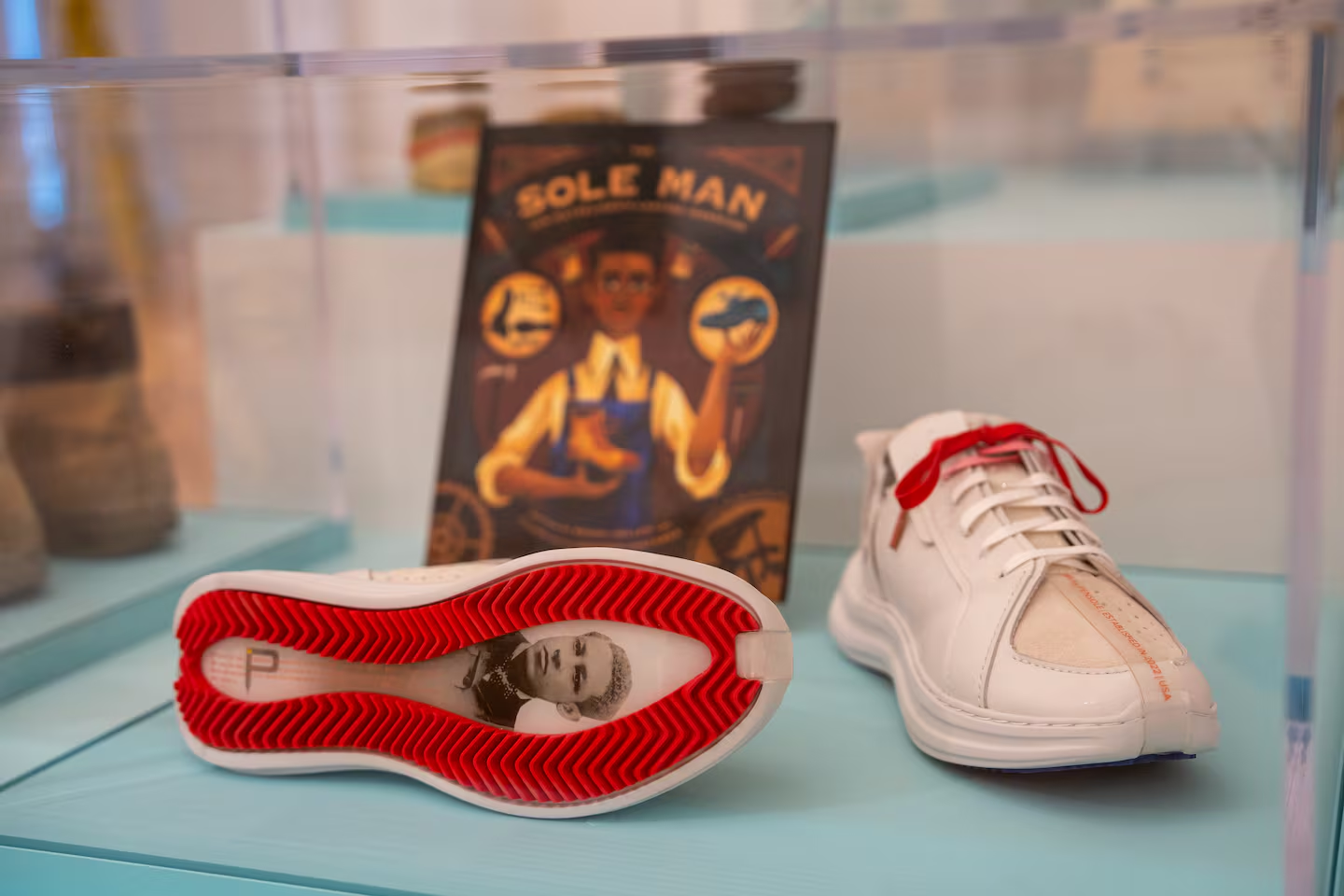
Among the highlights are selections from Historic New England’s extensive Stuart Weitzman collection, including the designer’s famous “million-dollar” sandals and gold cowboy boots created for Beyoncé. Other pieces range from 18th-century footwear crafted by Boston cordwainer Winthrop Gray to contemporary sneakers produced by JEMS, the nation’s first Black-owned sneaker factory.
Read more Christians in tech step into the light
Finamore hopes visitors leave with a greater appreciation for the craftsmanship behind everyday objects like the shoe.
“Even something as simple as a basic sneaker has this very, very deep and interesting story,” she said. “It can be related to both the past and the present and the future. I really want people to appreciate the craft behind the making of these shoes, and it’s something that we as contemporary consumers are very much removed from.”
Historic New England also looked to highlight the next generation of shoemakers through a student design competition which invited high school juniors and seniors from Massachusetts’ 26 Gateway Cities to design footwear inspired by contemporary social issues. Students submitted designs in either high-fashion or sneaker categories, drawing on causes ranging from environmentalism and women’s rights to autism awareness and racial justice.
Six finalists were selected by a panel that included Weitzman and Olympic gymnast Aly Raisman, with two $10,000 scholarships and four runner-up prizes to be awarded at the exhibition’s public opening. The finalists’ work is featured in the exhibition, alongside a digital display of submissions from students across the state.
For Finamore, the competition became one of the exhibition’s most memorable elements. “I was reading their commentary and their inspiration. It was so inspiring,” she said. “They are so engaged in contemporary life and contemporary issues, and you see that in these shoe designs.”
Finamore hopes visitors leave seeing shoes differently.
“I really want people to appreciate the craft behind the making of these shoes,” she said. “It’s something that we as contemporary consumers are very much removed from.”
Read more In backing President Trump’s policies, Justice Alito finds his moment





Post Comment