
Mass. Senate seeks to regulate social media use by targeting ‘most addictive’ features
Governor Maura Healey and the Massachusetts House took a stab at restricting when and how kids can use social media. Now, the stateSenate is targeting teens’ use of the popular platforms.
Read more Boston bars and restaurants see biggest spending jump among World Cup host cities, report finds
Democratic Senate leaders on Thursday unveiled legislation that would require social media platforms to put restrictions on minors’ use of their “most addictive” features, such as infinite scroll.
The bill, lawmakers said, would also require platforms to add privacy safeguards, such as disabling minors’ precise geolocation data, and to implement age verification methods but without requiring a government ID. The bill would leave it to the state attorney general’s office to craft regulations specifying how a person’s age would then be verified.
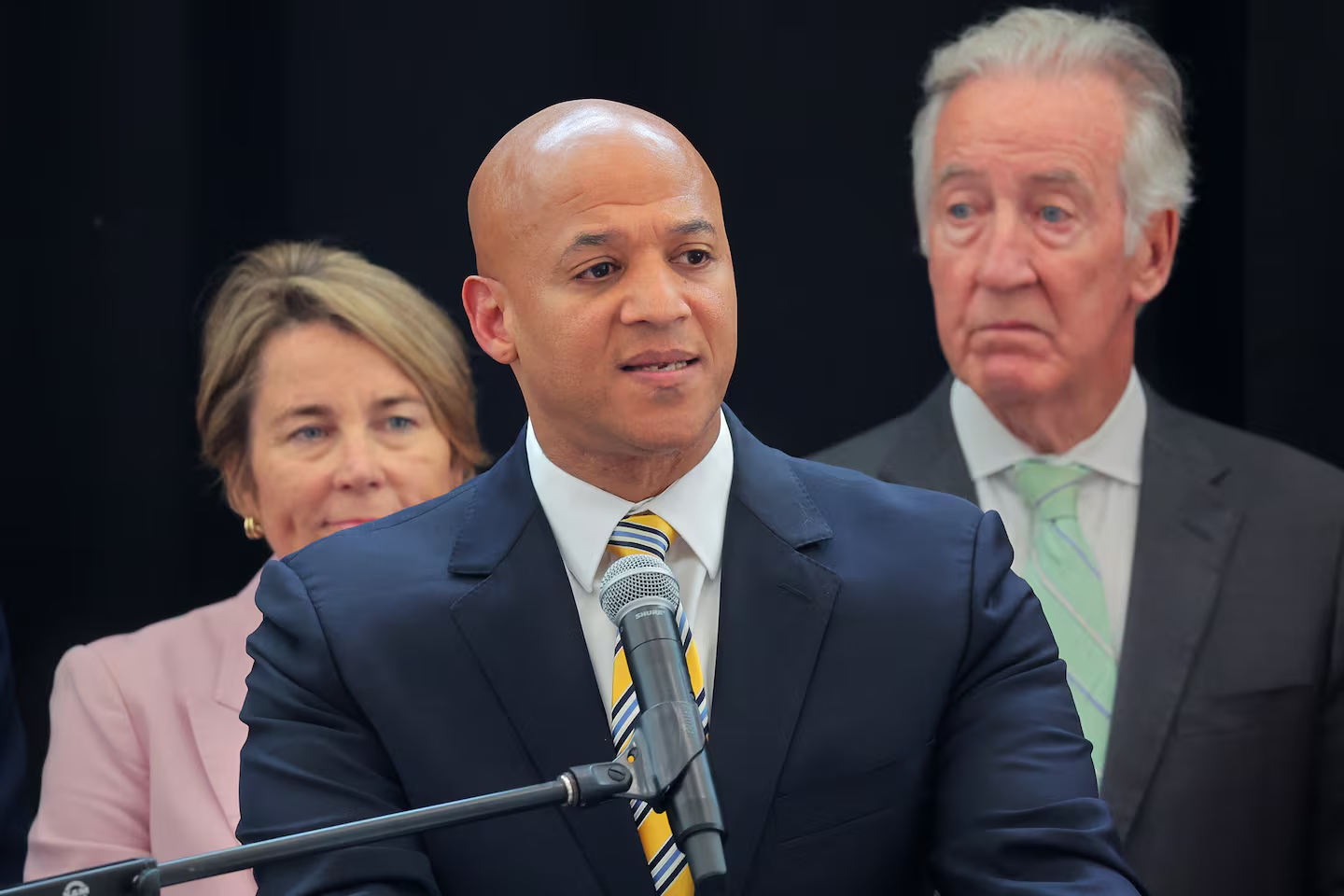
Social media platforms would face fines of up to $5,000 per user if they did not adopt default features that state Senator Julian Cyr described as “more like the OG social media” settings of decades prior. They would also face penalties up to $1 million if they don’t provide the state attorney general with “de-identified aggregate” data on minors’ use of their platform each quarter.
“This is a complicated issue, which requires a careful balance between keeping kids safe online and allowing them to express themselves and find community,” said state Senator Cynthia Stone Creem, the chamber’s majority leader, who filed the legislation. “We believe this bill strikes a thoughtful note between the two.”
The bill, which senators plan to vote on next week, representsa less far-reaching attempt to regulate social media for users under 18 than those from Healey and the House, which drew immediate backlash from critics who argued those bills would face constitutional, privacy, and practical challenges.
The House bill included a social media ban for children under 14 and a requirement that parents give “verifiable consent” for children who are 14 or 15 years old to use the platforms.
Healey attached her ownproposed social media regulations to a spending bill in April. Her version more closely aligned with the Senate in seeking to restrict which platform features kids could access. But it also sought to restrict the amount of time minors can spend on platforms to two hours per day, across all platforms, a measure that experts said could be difficult to enforce in practice.
Senators said they constructed their bill separately from the governor’s and the House’s approaches.
“We chose what we thought would be the best way to do it if we could start from scratch,” Creem said.
The Senate said it would require social media platforms to implement default features for users under 18 that adults could also opt into.
Those changes would include disabling infinite scroll and auto-play features, as well as the algorithmic feed, which uses user data to recommend more content. It would also require that users receive a reminder after using an app for one hour within 24 hours, with additional reminders every 30 minutes afterward. And it would require that notifications be turned off between 12 a.m. and 6 a.m.
Senators said the bill would also require platforms to disable visibility and sharing of minors’ precise geolocation data, as well as restrict direct messaging and the visibility of users’ posts to accounts they are connected with, such as “friends” on Facebook.
Creem emphasized that the Senate bill would allow users to skip age verification measures, a controversial component included in the House’s version of the bill that could require users to provide personal data, such as a government ID, to verify their age.
Read more Ocasio-Cortez endorses Abdul El-Sayed in crucial Michigan Senate race
At least one organization that had criticized proposals from Healey and the House responded more favorably to the Senate bill — albeit with some caveats.
“It’s clear that the Senate took that backlash into consideration when drafting their proposal,” said Evan Greer, director of the digital rights advocacy group Fight for the Future.
That said, Greer said the bill “still raises concerns for civil liberties and could harm LGBTQ+ youth and other marginalized communities” and that her organization plans to analyze the bill further in coming days.
How exactly chambers would work out the legislation, should it pass next week, remains to be seen. Under the Legislature’s new rules implemented last year, bills need to enter a conference committee — the often closed-door negotiations between leaders in both chambers — by July 31.
But the House tacked its version of a social media bill onto legislation that would implement a bell-to-bell cell phone ban in K-12 schools, which is already in conference committee, complicating how exactly legislative leaders will negotiate a final product.
Nonetheless, Creem said she has “hope that we will be able to work it out procedurally.”
Lawmakers on Beacon Hill sought to implement social media regulations this session, with support from teachers’ unions, physicians, and groups that haveadvocated for limiting technology use among young people. They’vepointed to research that shows early social media use can contribute to heightened mental health problems and worsen academic performance.
A pair of juries earlier this year awarded millions of dollars in damages following lawsuits that found children faced harm from using Facebook and YouTube.
Critics of lawmakers’ approach havecountered that social media also provides community for young people, particularly those of color or who identify as LGBTQ. Restricting young people’s use, they argue,could prevent them from finding safe spaces.
“If we get this policy wrong, we risk cutting off exactly the young people who most need those connections,” said Cyr, a Provincetown Democrat.
Cyr, a member of the LGBTQ+ Legislative Caucus, said the Senate’s bill “walks a careful line.”
“While we strengthen privacy defaults, we also ensure that minors retain the ability to broaden who they communicate with and where they receive content from online,” he said.
Read more GOP Senate candidates quietly move to gain an extra cash edge



Post Comment