GOP Senate candidates quietly move to gain an extra cash edge
WASHINGTON — For the past decade, Republican nominees for Senate have been given stern warnings about seeking too much of their own money.
Read more Soccer fans are into this year’s World Cup, but the US still isn’t a soccer nation, new poll finds
When those candidates explored organizing their own super political action committees — which would allow them to accept checks with unlimited zeros — they were usually dissuaded from doing so by allies of a powerful Republican super PAC tied to party leaders in Washington. That group, the Senate Leadership Fund, functionally oversaw general-election spending for Republican Senate nominees.
But a quiet change has unfolded in the world of big money in the 2026 midterm elections.
For the first time, most Republican nominees in battleground states are drawing support from their own well-funded super PACs. The little-noticed shift allows them to raise more money, adding to the party’s advantage in super PAC cash over Democrats. That edge could prove important in the midterms, even if the Supreme Court’s major recent campaign-finance decision shakes up how much candidates rely on super PACs.
The move could also make Republican candidates less reliant on the Senate Leadership Fund. There is often drama each fall when the group makes difficult decisions about which states to prioritize — or abandon.
“Not all, but many, campaigns are going to need their own super PACs,” said Mark Harris, a top adviser on David McCormick’s Senate campaign in Pennsylvania in 2024. A former hedge fund executive, McCormick won with help from his own well-funded super PAC. “In a big Senate race,” Harris added, “you need everything you can get.”
In Maine, Iowa, Alaska, Ohio, North Carolina and Michigan — which have six of the top Senate races this year — the Republican nominees or presumptive nominees have big-spending super PACs, advertising records show.
The change also reflects turnover at SLF. Under the 11-year reign of Steven Law, a former chief of staff to Sen. Mitch McConnell of Kentucky, the main Senate Republican super PAC covered most of a nominee’s general-election spending. But that norm has loosened under Alex Latcham, a former aide to President Donald Trump who succeeded Law after the 2024 election.
Latcham said that he was generally OK with candidates having their own super PACs. It’s not clear that he could stop them, anyway, in a Trump-led party where the president has his own enormous super PAC.
“Our mission is to beat Democrats, and any efficient, competent efforts that aid in this goal are welcomed,” he said. But, he added, “Everyone wants a super PAC until it’s time to raise the money.”
Law’s logic had been to not only oversee the chess board, but also protect the interests of major Republican donors who often needed SLF’s expertise on where to spend money.
The main Democratic Senate super PAC, called Senate Majority PAC and aligned with Sen. Chuck Schumer of New York, the minority leader, generally still operates this way. Democratic nominees in top races this year do not have their own well-funded super PACs.
Read more During traffic stop, Dianna Russini appeared to show off her NFL access
Law said in an interview that at the outset, SLF had “really followed the Chuck Schumer model, frankly, which was to strongly discourage people from forming candidate-specific super PACs, and equally discourage donors from dissipating resources.”
But his position, he said, had “evolved” away from “a place of active resistance.”
By the 2024 election cycle, a few Republicans with ties to big donors did things differently. In Pennsylvania, McCormick’s allies ran a $60 million group.
That successful strategy left some other Republicans jealous.
“I can’t tell you how many candidates have come to us and said, ‘Hey, can you put together the Dave McCormick super PAC?’” said Brooks Kochvar, who ran the McCormick group in 2024. His response is a question back: “Are you really good friends with these eight megadonors in the Republican Party?”
For candidates, an individual super PAC also creates an insurance policy in case SLF pulls back from their race.
In the fall of 2022, the Republican nominee for Senate in Arizona, Blake Masters, was apoplectic when SLF pulled millions worth of ads for him. He lost narrowly.
Masters said it was a good idea for some candidates to start their own groups.
“If you’re an establishment Republican who promises to do what leadership says, you’re probably safe relying on SLF,” he said. “But if you bring new ideas and any sense of independence to the table, then SLF will not only not help, but they’ll actively root against you.” ( Latcham declined to respond.)
Most of the Republican super PACs have friendly relations with SLF.
But in Michigan, SLF and its donors have a frosty relationship with a super PAC supporting Mike Rogers, the presumptive Republican nominee, according to three people with knowledge of the matter who spoke on the condition of anonymity to discuss private conversations. In statements, the two organizations praised their relationship.
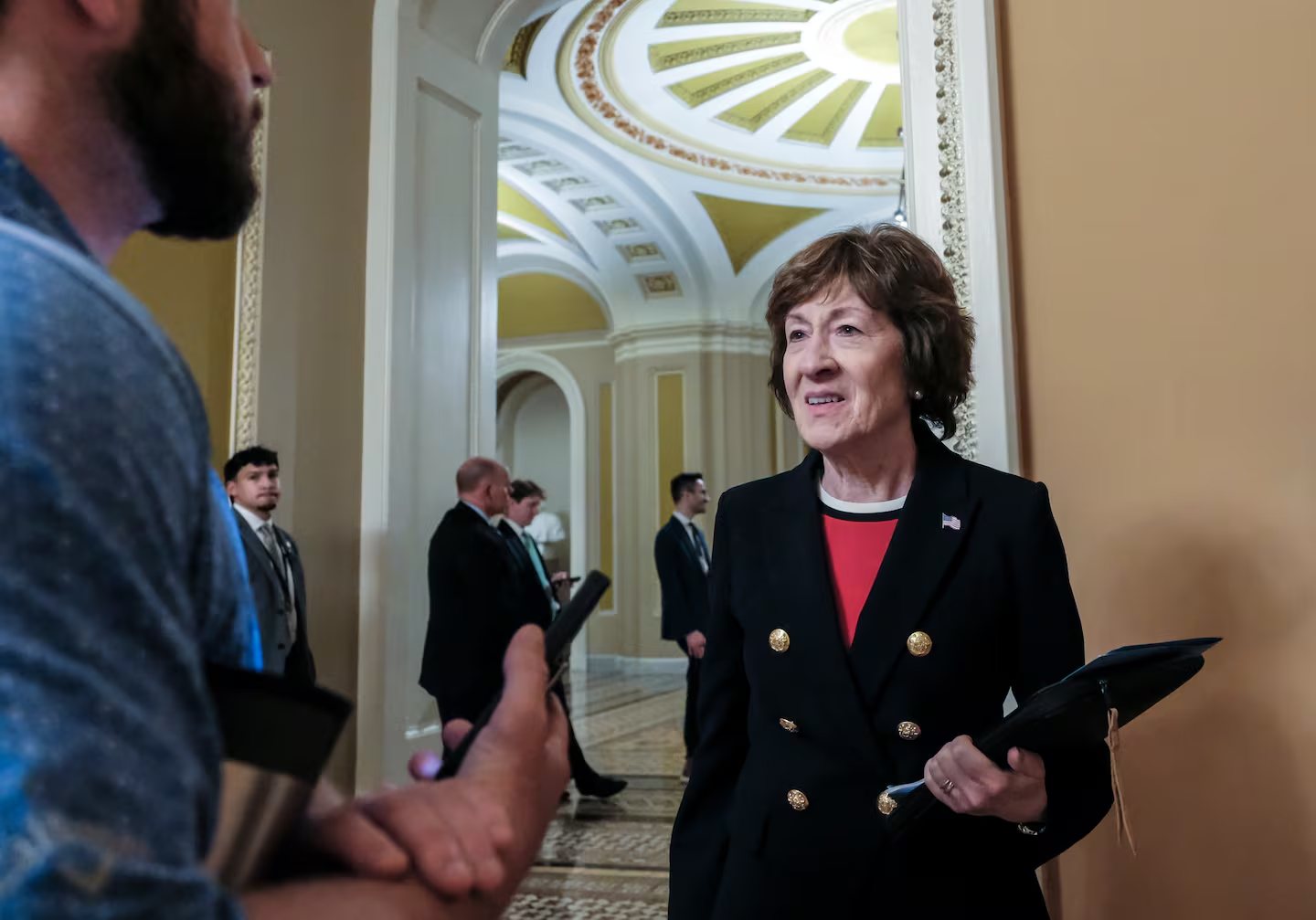
In Maine, the super PAC for Sen. Susan Collins, Pine Tree Results, coordinates with SLF on the timing of ads and shares polling.
Collins’ super PAC has booked close to as much money on ads as SLF has. The same is true for super PACs in Iowa and Alaska.
Read more Finally, Mass. legislators close the loophole that gave cover to sexual predators
This article originally appeared in The New York Times.


Post Comment